Hepatic Surgery Center, Tongji Hospital, Tongji Medical College, Huazhong University of Science and Technology, Wuhan, 430030, China.
Hubei Province for the Clinical Medicine Research Center of Hepatic Surgery, Wuhan, 430030, China.
J Exp Clin Cancer Res. 2019 Jan 3;38(1):3. doi: 10.1186/s13046-018-1007-9.
Heme oxygenase 1 (HO-1) has been reported to be very important in the pathogenesis or progression of multiple types of cancer. Identification of novel hmox1 binding proteins may reveal undefined oncogenes, tumor suppressors, signaling pathways, and possible treatment targets.
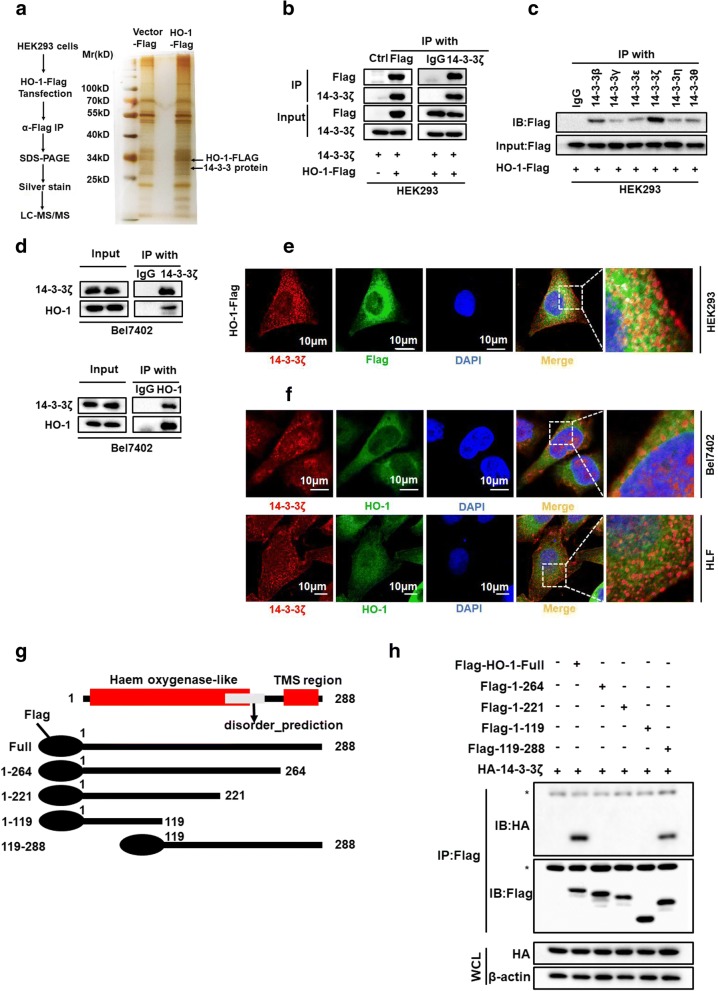
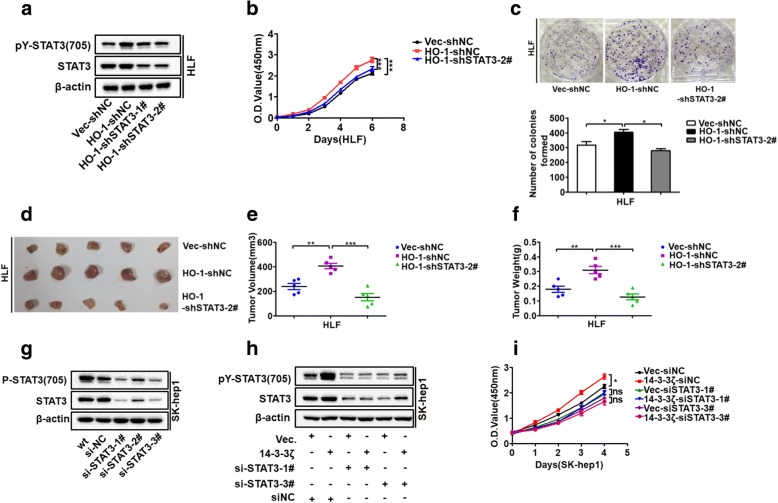
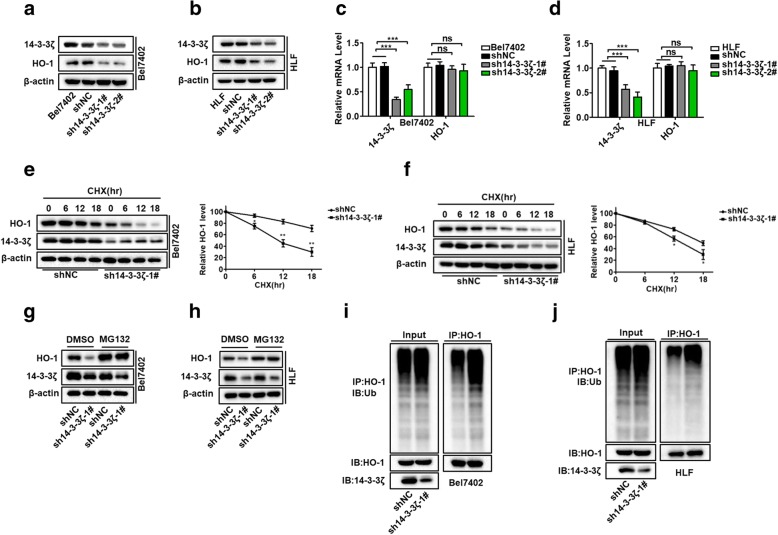
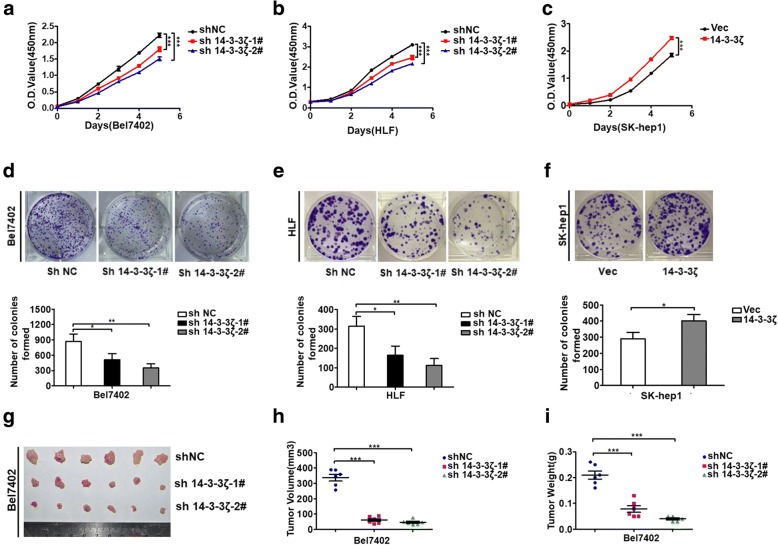
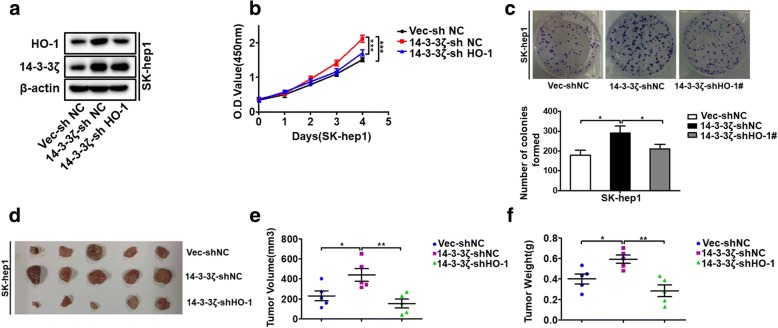
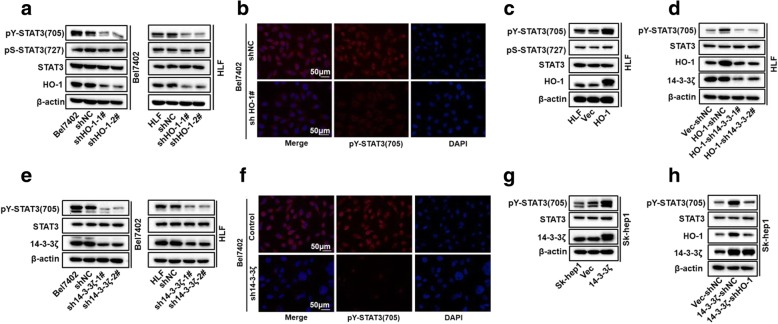
Immunoprecipitation and mass spectrometry analyses were used to identify novel regulators of HO-1. The association of the 14-3-3ζ protein with HO-1 and modulation of the stability of HO-1 were investigated by co-immunoprecipitation, immunofluorescence, western blotting, and quantitative RT-PCR. Degradation and in vivo ubiquitination assays were utilized to examine whether 14-3-3ζ stabilizes the HO-1 protein by inhibiting its ubiquitination. The effect of 14-3-3ζ on proliferation was investigated by function assays conducted in vitro using the CCK-8 and colony formation assays and in vivo in a xenograft mouse model. The biological functions of the 14-3-3ζ/HO-1 axis were demonstrated by western blotting and rescue experiments. Using gain-of-function and loss-of-function strategies, we further clarified the impact of 14-3-3ζ/HO-1 complex on the signal transducers and activators of transcription 3 (STAT3) signaling pathway in cancer cells.
We identified 14-3-3ζ as a novel HO-1 binding protein. The binding inhibited the ubiquitination and proteasome-mediated degradation of HO-1, thus facilitating its stabilization. Enforced expression of 14-3-3ζ significantly promoted cell proliferation in vitro, as well as tumorigenesis in vivo, while 14-3-3ζ knockdown had opposite effects. The data indicated that 14-3-3ζ can stabilize HO-1 expression and thus influence cancer cell proliferation. We further demonstrated the involvement of the STAT3 pathway in 14-3-3ζ/HO-1 regulation of hepatocellular carcinoma cell proliferation.
Collectively, these data show that 14-3-3ζ regulates the stability of HO-1 to promote cancer cell proliferation and STAT3 signaling activation. The data establish the 14-3-3ζ-HO-1-STAT3 axis as an important regulatory mechanism of cancer cell growth and implicate HO-1 and 14-3-3ζ as potential therapeutic targets in hepatocellular carcinoma.
血红素加氧酶 1(HO-1)已被报道在多种类型癌症的发病机制或进展中非常重要。鉴定新的 hmox1 结合蛋白可能揭示未定义的癌基因、肿瘤抑制因子、信号通路和可能的治疗靶点。
使用免疫沉淀和质谱分析来鉴定 HO-1 的新调节因子。通过共免疫沉淀、免疫荧光、Western blot 和定量 RT-PCR 研究 14-3-3ζ 蛋白与 HO-1 的关联及其对 HO-1 稳定性的调节。利用降解和体内泛素化测定来研究 14-3-3ζ 是否通过抑制其泛素化来稳定 HO-1 蛋白。通过 CCK-8 和集落形成测定等体外功能测定以及异种移植小鼠模型中的体内实验来研究 14-3-3ζ 对增殖的影响。通过 Western blot 和挽救实验证明了 14-3-3ζ/HO-1 轴的生物学功能。使用功能获得和功能丧失策略,我们进一步阐明了 14-3-3ζ/HO-1 复合物对癌细胞中信号转导和转录激活因子 3(STAT3)信号通路的影响。
我们鉴定出 14-3-3ζ 是一种新的 HO-1 结合蛋白。该结合抑制了 HO-1 的泛素化和蛋白酶体介导的降解,从而促进其稳定。强制表达 14-3-3ζ 可显著促进体外细胞增殖以及体内肿瘤发生,而 14-3-3ζ 敲低则有相反的效果。数据表明,14-3-3ζ 可以稳定 HO-1 的表达,从而影响癌细胞的增殖。我们进一步证明了 STAT3 途径参与了 14-3-3ζ/HO-1 调节肝细胞癌细胞增殖。
总之,这些数据表明,14-3-3ζ 通过调节 HO-1 的稳定性来促进癌细胞增殖和 STAT3 信号激活。数据确立了 14-3-3ζ-HO-1-STAT3 轴作为癌细胞生长的重要调节机制,并暗示 HO-1 和 14-3-3ζ 可能是肝细胞癌的潜在治疗靶点。