Department of Microbiology, Icahn School of Medicine at Mount Sinai, New York, NY 10029.
Department of Neuroscience, Icahn School of Medicine at Mount Sinai, New York, NY 10029.
Proc Natl Acad Sci U S A. 2019 Jan 22;116(4):1384-1393. doi: 10.1073/pnas.1812449116. Epub 2019 Jan 3.
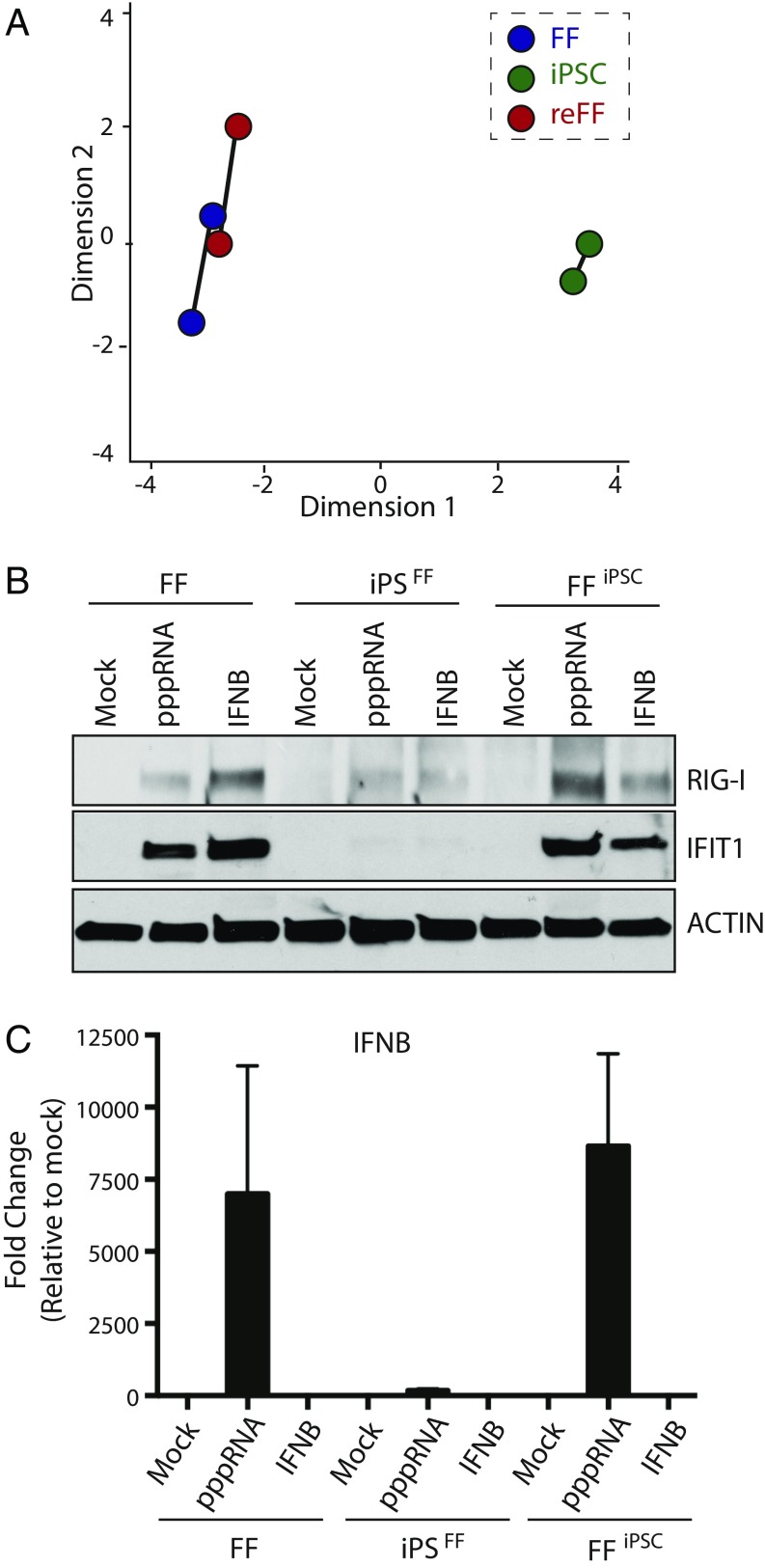
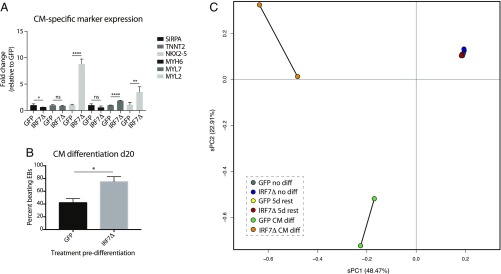
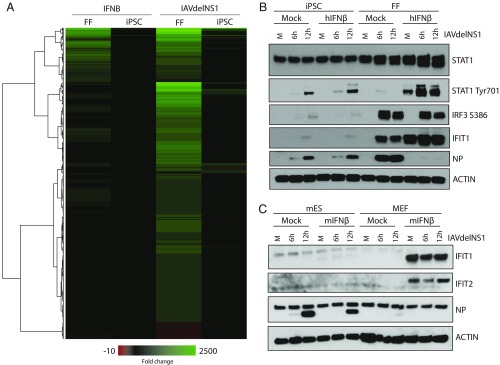
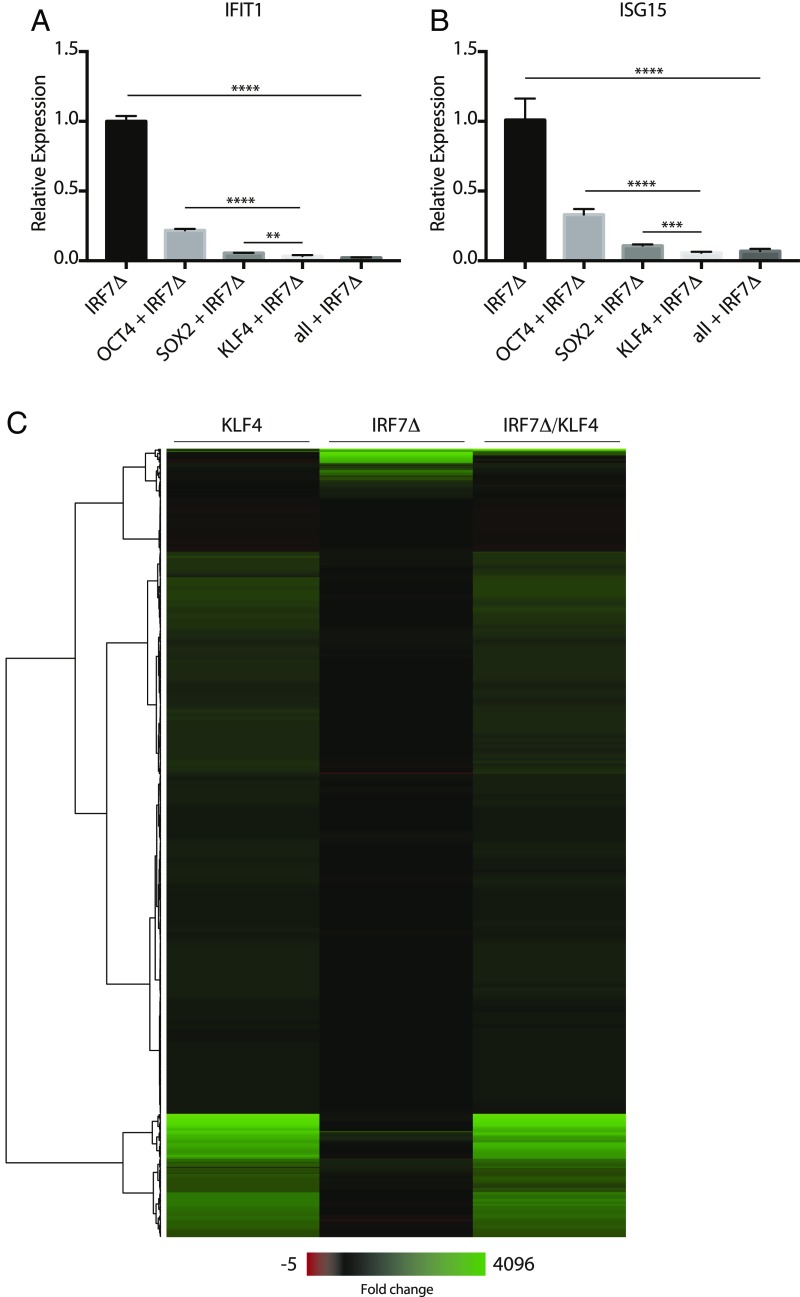
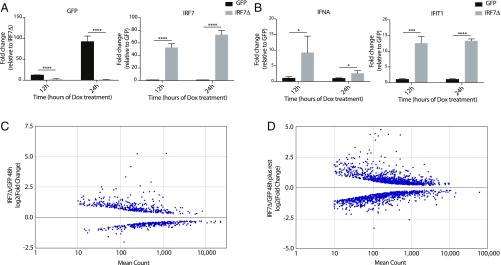
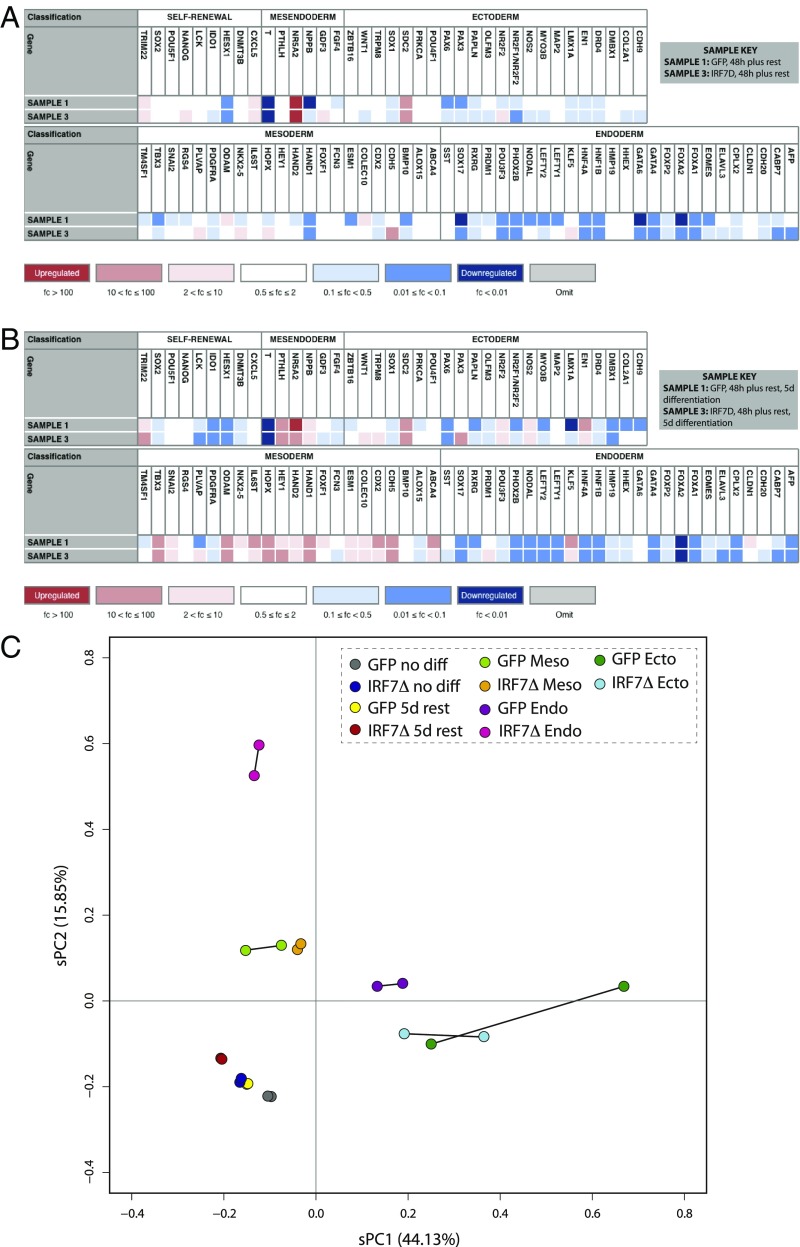
Upon virus infection, pluripotent stem cells neither induce nor respond to canonical type I interferons (IFN-I). To better understand this biology, we characterized induced pluripotent stem cells (iPSCs) as well as their differentiated parental or rederived counterparts. We confirmed that only iPSCs failed to respond to viral RNA, IFN-I, or viral infection. This lack of response could be phenocopied in fibroblasts with the expression of a reprogramming factor which repressed the capacity to induce canonical antiviral pathways. To ascertain the consequences of restoring the antiviral response in the context of pluripotency, we engineered a system to engage these defenses in iPSCs. Inducible expression of a recombinant virus-activated transcription factor resulted in the successful reconstitution of antiviral defenses through the direct up-regulation of IFN-I-stimulated genes. Induction of the antiviral signature in iPSCs, even for a short duration, resulted in the dysregulation of genes associated with all three germ layers despite maintaining pluripotency markers. Trilineage differentiation of these same cells showed that engagement of the antiviral defenses compromised ectoderm and endoderm formation and dysregulated the development of mesodermal sublineages. In all, these data suggest that the temporal induction of the antiviral response primes iPSCs away from pluripotency and induces numerous aberrant gene products upon differentiation. Together these results suggest that the IFN-I system and pluripotency may be incompatible with each other and thus explain why stem cells do not utilize the canonical antiviral system.
病毒感染后,多能干细胞既不诱导也不响应经典的 I 型干扰素 (IFN-I)。为了更好地理解这种生物学特性,我们对诱导多能干细胞 (iPSC) 及其分化的亲本或再衍生细胞进行了特征分析。我们证实只有 iPSC 对病毒 RNA、IFN-I 或病毒感染没有反应。这种无反应性可以通过表达一种重编程因子的成纤维细胞来模拟,该因子抑制了诱导经典抗病毒途径的能力。为了确定在多能性背景下恢复抗病毒反应的后果,我们设计了一种在 iPSC 中激活这些防御系统的系统。诱导表达一种重组病毒激活转录因子,通过直接上调 IFN-I 刺激基因,成功重建抗病毒防御。尽管维持多能性标志物,但 iPSC 中诱导抗病毒特征即使持续很短时间,也会导致与所有三个胚层相关的基因失调。这些相同细胞的三系分化表明,抗病毒防御的激活会损害外胚层和内胚层的形成,并使中胚层亚系的发育失调。总之,这些数据表明,抗病毒反应的时间诱导使 iPSC 远离多能性,并在分化时诱导许多异常的基因产物。这些结果表明,IFN-I 系统和多能性可能相互排斥,这也解释了为什么干细胞不利用经典的抗病毒系统。