Jones Salene M W, Chennupati Shasank, Nguyen Trung, Fedorenko Catherine, Ramsey Scott D
Fred Hutchinson Cancer Research Center, Seattle, WA.
Medicine (Baltimore). 2019 Jan;98(1):e14004. doi: 10.1097/MD.0000000000014004.
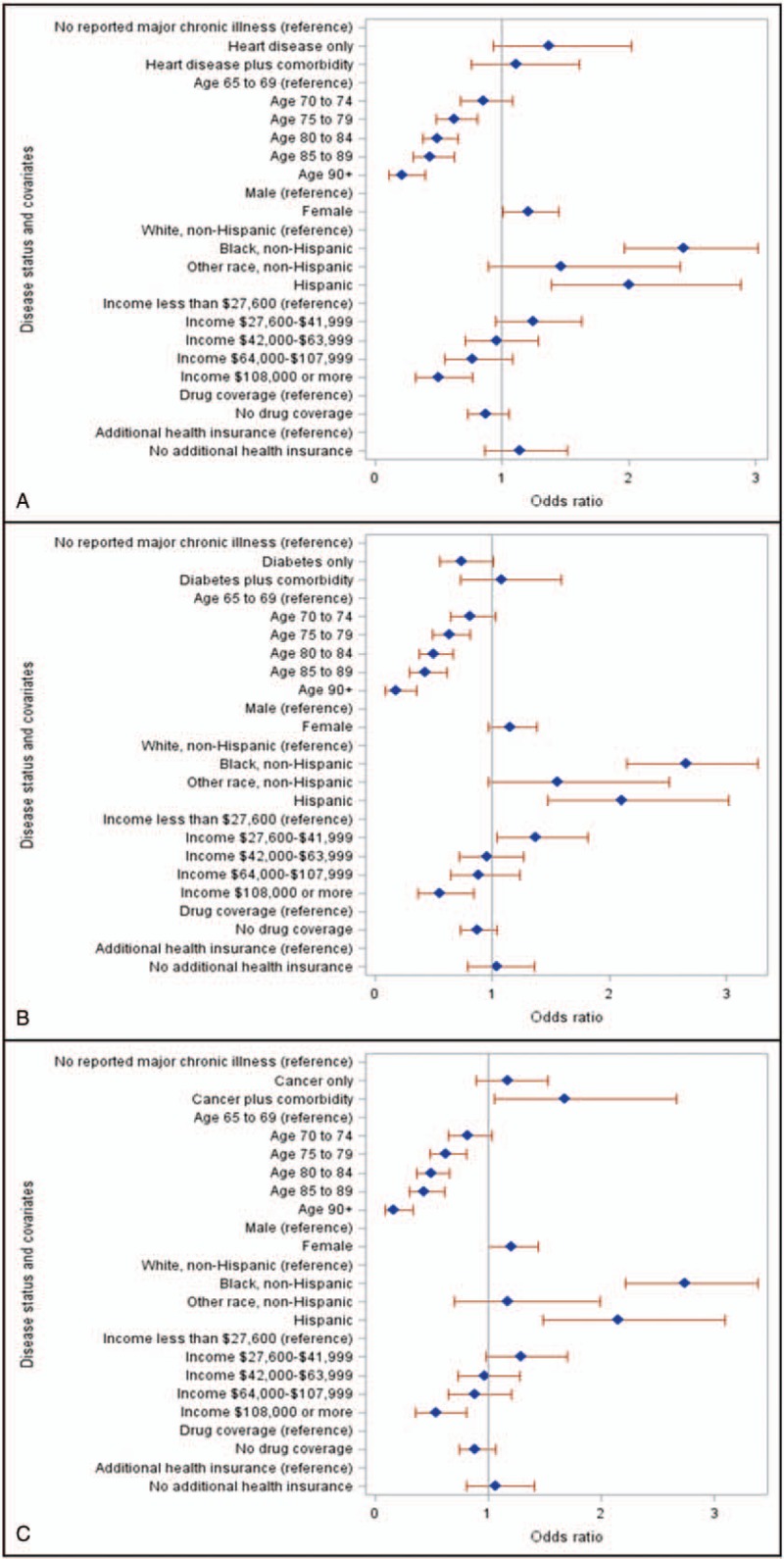
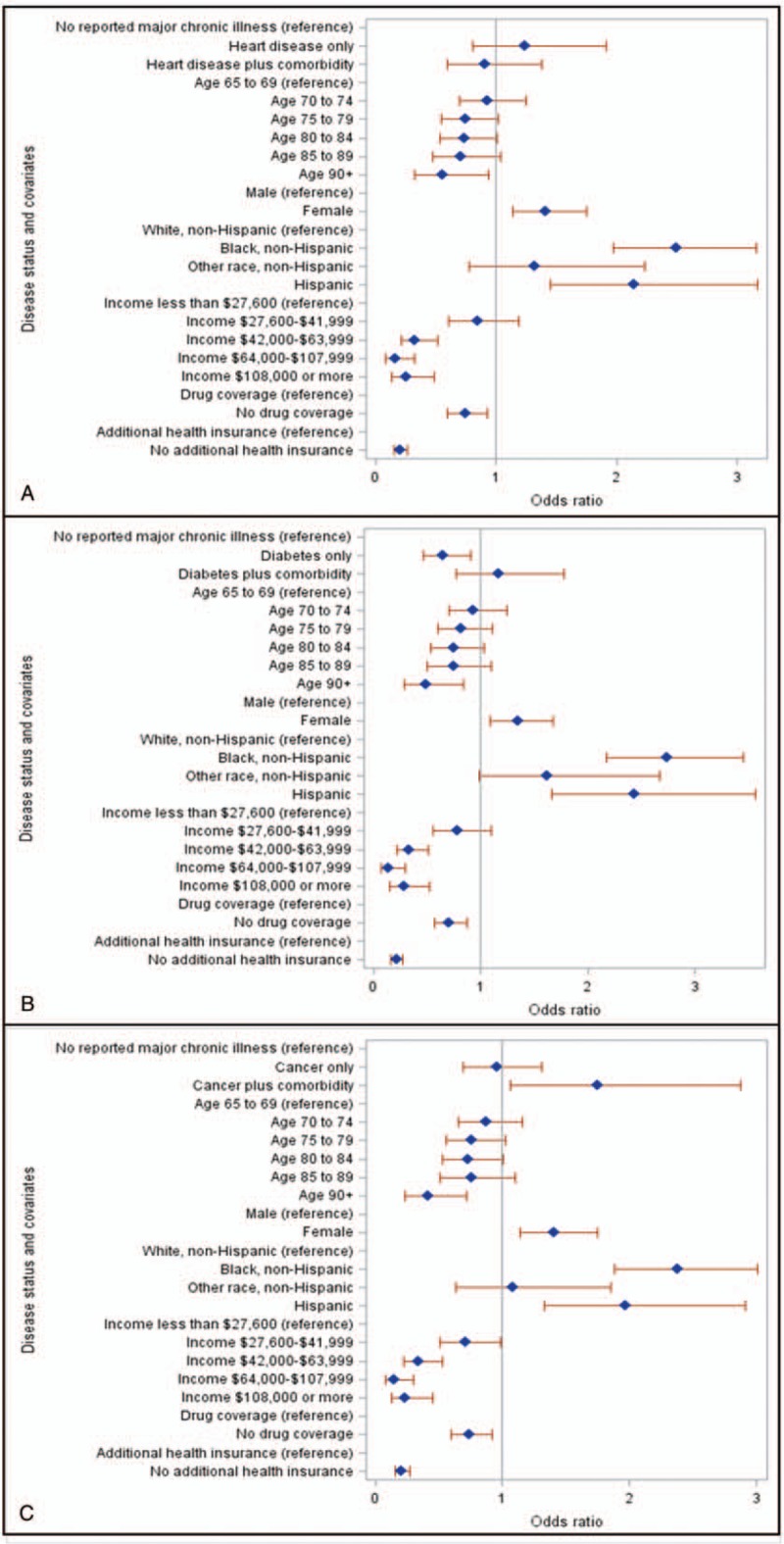
The aim of the study was to examine how multimorbidity influences the prevalence of financial burden among older adults with heart disease, diabetes, or cancer.The study was a cross-sectional analysis of prospective observational cohort survey study.Older adults (age 65 or older) who did not report 1/6 major chronic illnesses (n = 2773; reference group), reported 1/3 major chronic illnesses without comorbidity (heart disease n = 206; diabetes n = 460; cancer n = 417), and reported 1/3 major chronic illnesses with comorbidity (heart disease n = 232; diabetes n = 202; cancer n = 109).The measures were presence of chronic diseases (heart disease, diabetes, cancer), comorbid chronic diseases (stroke, lung disease, dementia), medical-related financial burden (credit card debt due to medical costs, paying medical bills over time), and overall financial burden (financial help from family, credit card debt, help with food, utilities, and other necessities).The proportion reporting financial burden ranged from 15% to 27% across samples. Heart disease was unrelated to medical or overall financial burden, regardless of comorbidity. Diabetes was unrelated to financial burden except diabetes without comorbidity was associated with lower odds of overall financial burden compared to healthy older adults (odds ratio [OR] = 0.655, 95% confidence interval [CI]: 0.468-0.917). Cancer with comorbidity, but not cancer without comorbidity, was associated with greater odds of medical related (OR = 1.678, 95% CI: 1.057-2.664) and overall financial burden (OR = 1.748, 95% CI: 1.064-2.872).The association of multimorbidity with financial burden likely varies based on specific diseases. Future research on financial burden should focus on specific disease combinations such as cancer with comorbidity.
该研究的目的是探讨多病共存如何影响患有心脏病、糖尿病或癌症的老年人的经济负担患病率。该研究是对前瞻性观察队列调查研究的横断面分析。未报告六种主要慢性病中的任何一种的老年人(n = 2773;参照组),报告患有三种主要慢性病中的一种且无合并症的老年人(心脏病n = 206;糖尿病n = 460;癌症n = 417),以及报告患有三种主要慢性病中的一种且有合并症的老年人(心脏病n = 232;糖尿病n = 202;癌症n = 109)。测量指标包括慢性病(心脏病、糖尿病、癌症)的存在情况、合并慢性病(中风、肺病、痴呆症)、与医疗相关的经济负担(因医疗费用产生的信用卡债务、长期支付医疗账单)以及总体经济负担(来自家庭的经济帮助、信用卡债务、食品、水电费及其他生活必需品方面的帮助)。各样本中报告有经济负担的比例在15%至27%之间。无论是否存在合并症,心脏病与医疗或总体经济负担均无关。糖尿病与经济负担无关,但与无合并症的糖尿病患者相比,健康老年人总体经济负担的几率较低(优势比[OR] = 0.655,95%置信区间[CI]:0.468 - 0.917)。有合并症的癌症患者,而非无合并症的癌症患者,与更高的医疗相关经济负担几率(OR = 1.678,95% CI:1. .057 - 2.664)和总体经济负担几率(OR = 1.748,95% CI:1.064 - 2.872)相关。多病共存与经济负担之间的关联可能因具体疾病而异。未来关于经济负担的研究应聚焦于特定的疾病组合,如伴有合并症的癌症。