Qian Wenjuan, Shan Jinjun, Shen Cunsi, Yang Rui, Xie Tong, Di Liuqing
Jiangsu Key Labortory of Pediatric Respiratory Disease, Institute of Pediatrics, Nanjing University of Chinese Medicine, Nanjing 210023, China.
Medical Metabolomics Center, Nanjing University of Chinese Medicine, Nanjing 210023, China.
Metabolites. 2019 Jan 1;9(1):6. doi: 10.3390/metabo9010006.
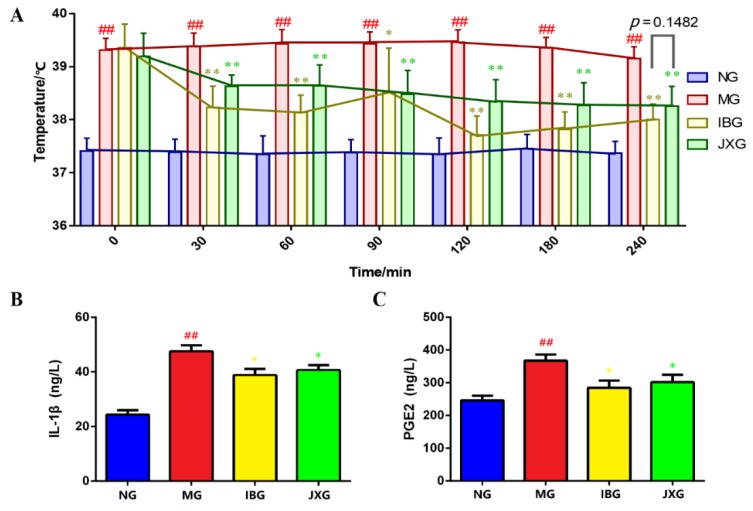
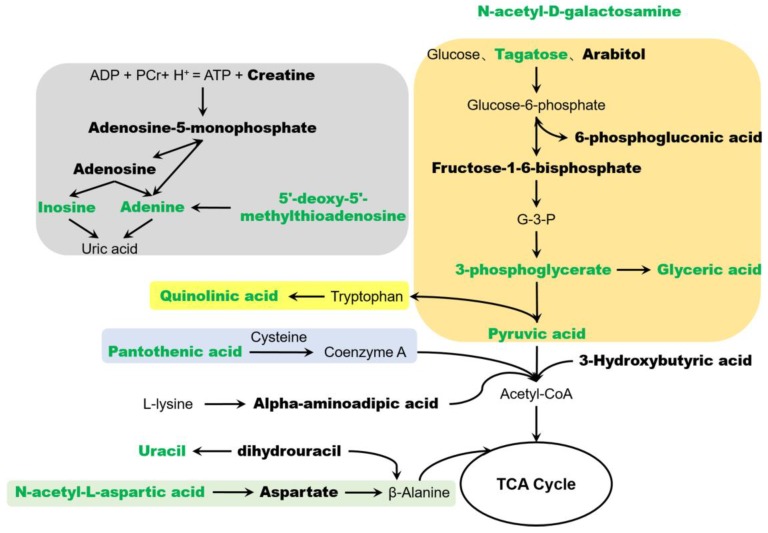
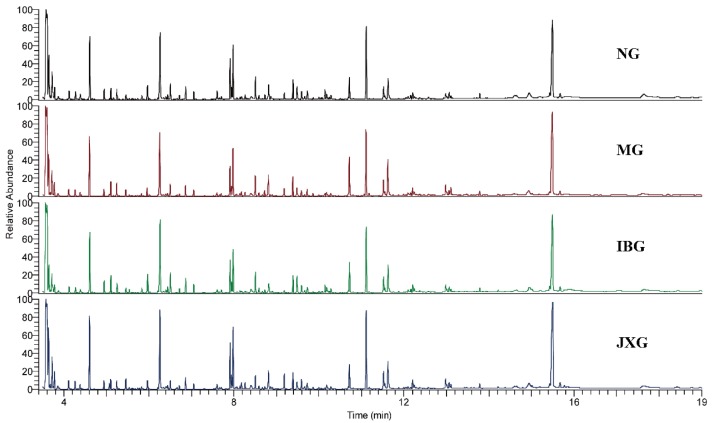
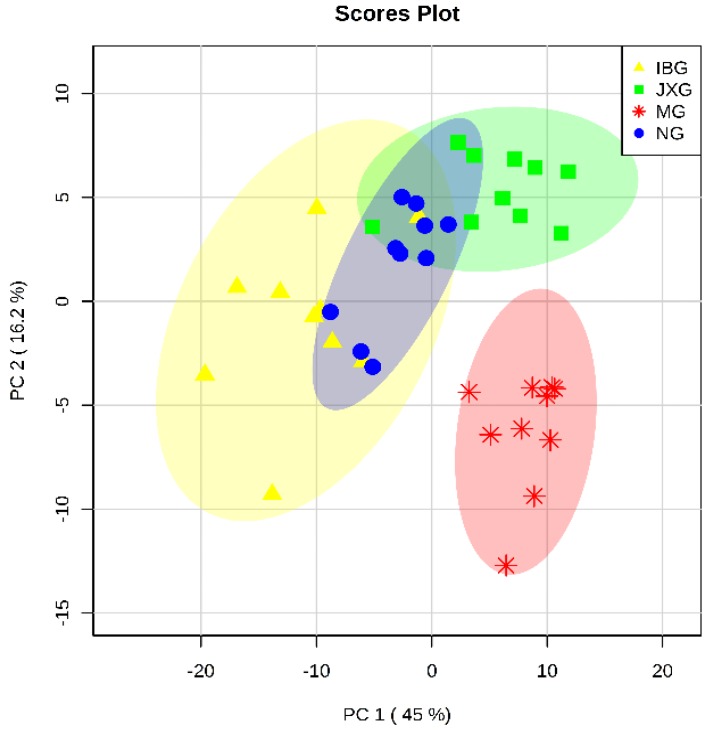
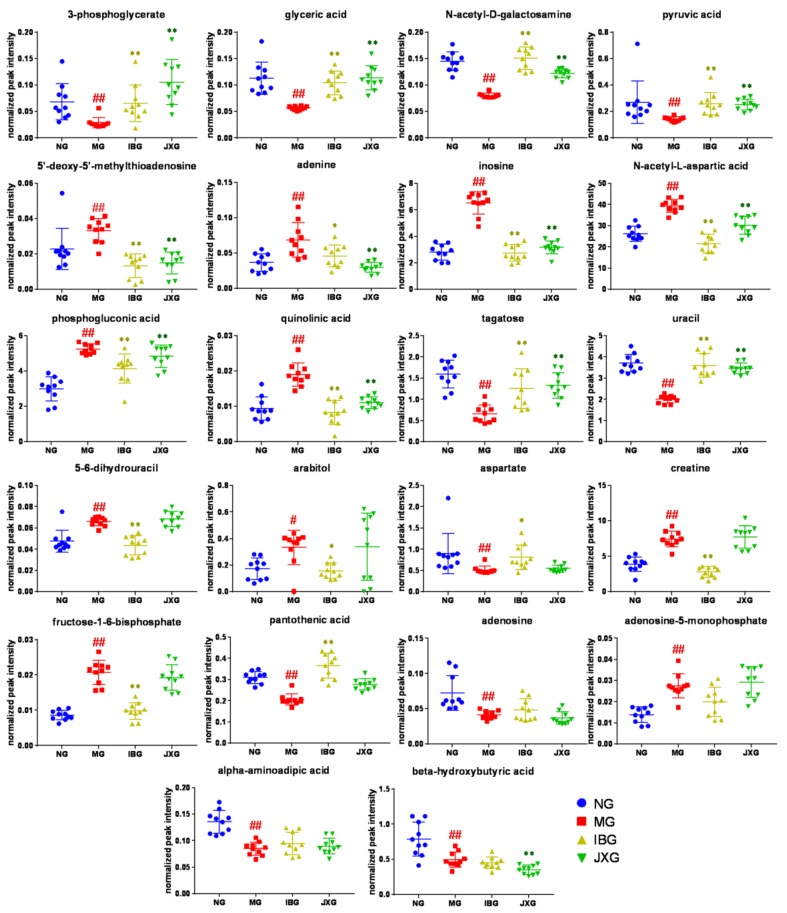
Pyrexia is considered as a part of host's defense response to the invasion of microorganisms or inanimate matter recognized as pathogenic or alien, which frequently occurs in children. Jinxin oral liquid (JXOL) is a traditional Chinese medicine formula that has been widely used to treat febrile children in China. Experimental fever was induced by injecting yeast into young male Sprague-Dawley rats (80 ± 20 g) and the rectal temperature subsequently changed. Four hours later, the excessive production of interleukin (IL)-1β and prostaglandin (PG) E2 induced by yeast was regulated to normal by JXOL administration. A rat brain metabolomics investigation of pyrexia of yeast and antipyretic effect of JXOL was performed using gas chromatography-mass spectrometry (GC-MS). Clear separation was achieved between the model and normal group. Twenty-two significantly altered metabolites were found in pyretic rats as potential biomarkers of fever. Twelve metabolites, significantly adjusted by JXOL to help relieve pyrexia, were selected out as biomarkers of antipyretic mechanism of JXOL, which were involved in glycolysis, purine metabolism, tryptophan mechanism, etc. In conclusion, the brain metabolomics revealed potential biomarkers in the JXOL antipyretic process and the associated pathways, which may aid in advanced understanding of fever and therapeutic mechanism of JXOL.
发热被认为是机体对微生物或被视为致病或外来的无生命物质入侵的一种防御反应,在儿童中经常发生。金辛口服液(JXOL)是一种中药配方,在中国已被广泛用于治疗发热儿童。通过向年轻雄性Sprague-Dawley大鼠(80±20克)注射酵母诱导实验性发热,随后直肠温度发生变化。4小时后,酵母诱导的白细胞介素(IL)-1β和前列腺素(PG)E2的过度产生通过给予JXOL被调节至正常。使用气相色谱-质谱联用(GC-MS)对酵母发热和JXOL的解热作用进行大鼠脑代谢组学研究。模型组和正常组之间实现了清晰的分离。在发热大鼠中发现了22种显著改变的代谢物作为发热的潜在生物标志物。12种经JXOL显著调节以帮助缓解发热的代谢物被选为JXOL解热机制的生物标志物,它们参与糖酵解、嘌呤代谢、色氨酸机制等。总之,脑代谢组学揭示了JXOL解热过程中的潜在生物标志物及相关途径,这可能有助于深入了解发热和JXOL的治疗机制。