Missig Galen, Robbins James O, Mokler Emery L, McCullough Kenneth M, Bilbo Staci D, McDougle Christopher J, Carlezon William A
Basic Neuroscience Division, Department of Psychiatry, Harvard Medical School, McLean Hospital, Belmont, MA, USA.
Lurie Center for Autism, Massachusetts General Hospital, Lexington, MA, USA.
Mol Psychiatry. 2020 Oct;25(10):2330-2341. doi: 10.1038/s41380-018-0346-4. Epub 2019 Jan 4.
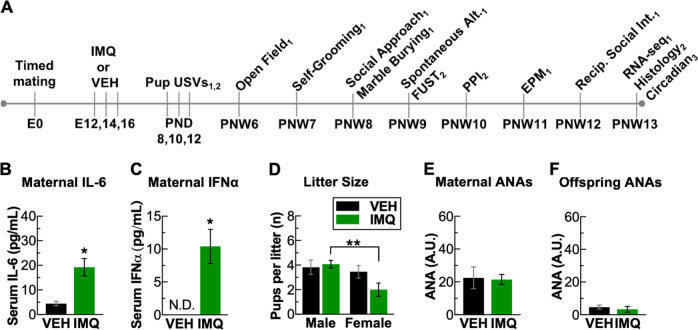
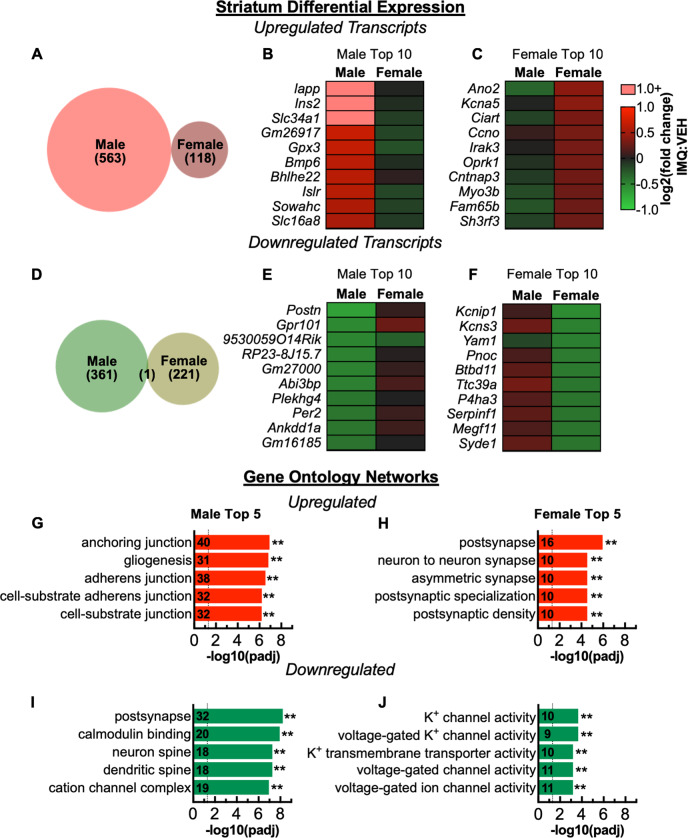
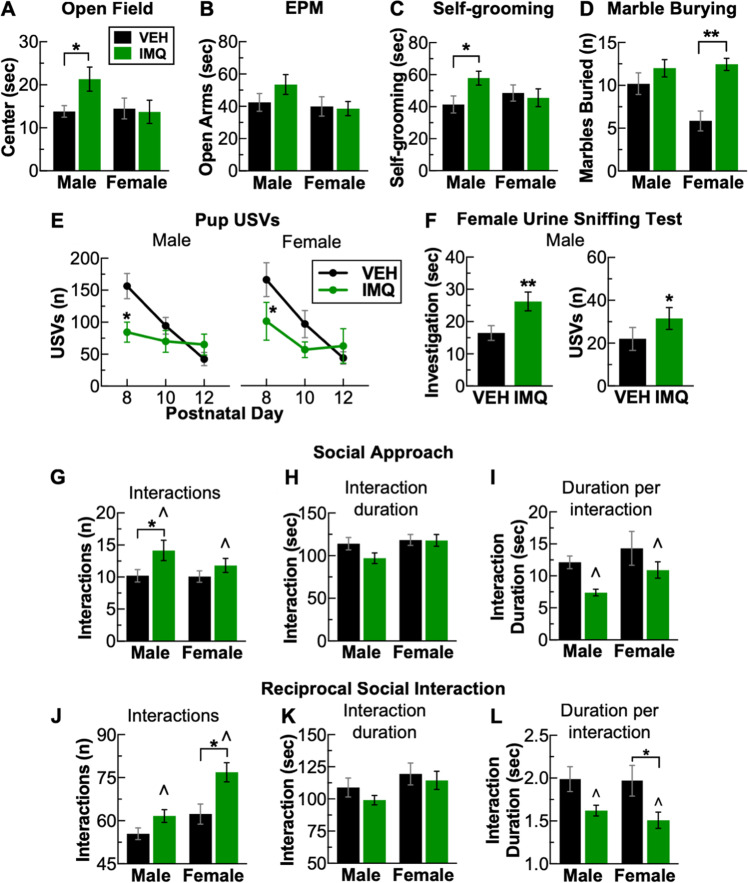
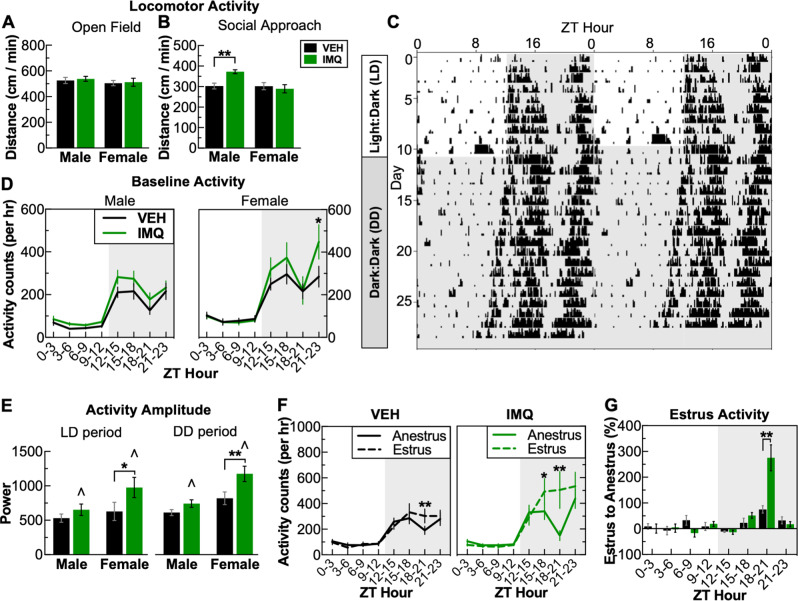
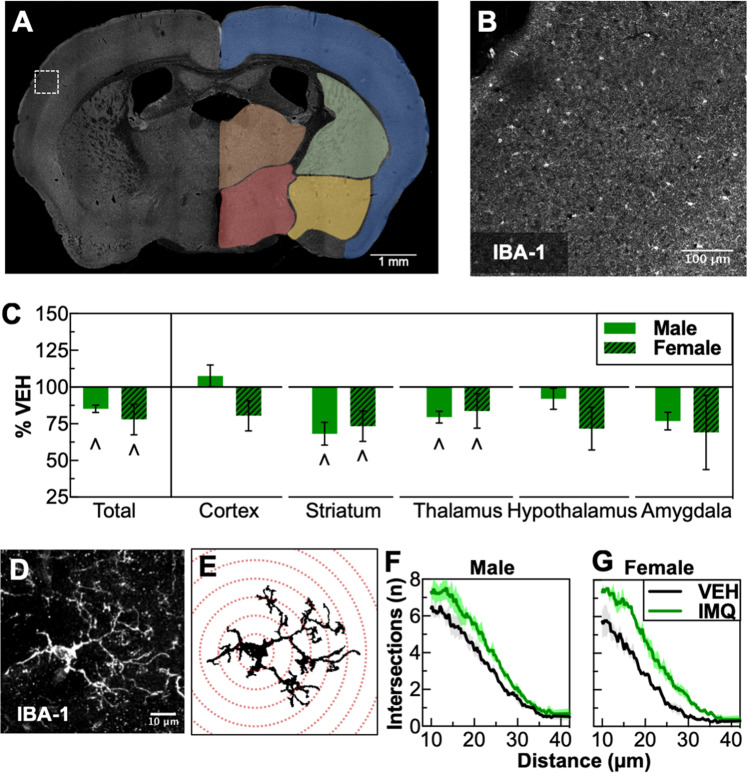
Immune activation during pregnancy via infection or autoimmune disease is a risk factor for neuropsychiatric illness. Mouse models of prenatal immune activation often involve maternal administration of agents that activate toll-like receptors (TLRs), a class of pattern recognition receptors that initiate innate immune responses. Such studies have focused primarily on activating the TLR3 or TLR4 subtypes, to mimic immune responses to viral or bacterial infections, respectively. Here, we characterize the effects of prenatal activation of TLR7, which is implicated in the pathogenesis of autoimmune disease. Prenatal TLR7 activation via administration of the selective agonist imiquimod (5.0 mg/kg) induces a phenotype in offspring characterized by reduced anxiety-like behavior, fragmented social behavior, and altered ultrasonic vocalization patterns at 6-12 weeks of age. The characteristics of this phenotype are readily distinguishable from-and in some ways opposite to-those seen following prenatal activation of TLR3 and/or TLR4. Prenatal TLR7-activated mice have normal baseline locomotor activity, but are hyperresponsive to stimuli including social partners, circadian cues, and gonadal hormone fluctuations. These alterations are accompanied by decreases in microglia density but increases in ramifications. RNA-sequencing of dorsal striatum, a region showing profound changes in microglial markers, indicates that prenatal TLR7 activation induces differential expression of hundreds of genes at 13 weeks of age, with virtually no overlap in differentially expressed genes between males and females. Our findings demonstrate that prenatal immune activation can promote a wide range of developmental trajectories, depending on the type and/or pattern of TLR activation and the sex of the offspring.
孕期因感染或自身免疫性疾病导致的免疫激活是神经精神疾病的一个危险因素。产前免疫激活的小鼠模型通常涉及母体给予激活Toll样受体(TLR)的药物,TLR是一类启动先天免疫反应的模式识别受体。此类研究主要集中于激活TLR3或TLR4亚型,分别模拟对病毒或细菌感染的免疫反应。在此,我们描述了产前激活TLR7的影响,TLR7与自身免疫性疾病的发病机制有关。通过给予选择性激动剂咪喹莫特(5.0 mg/kg)进行产前TLR7激活,可在子代中诱导出一种表型,其特征为6至12周龄时焦虑样行为减少、社交行为碎片化以及超声发声模式改变。这种表型的特征与产前激活TLR3和/或TLR4后所观察到的特征易于区分,且在某些方面相反。产前TLR7激活的小鼠具有正常的基线运动活动,但对包括社交伙伴、昼夜节律线索和性腺激素波动在内的刺激反应过度。这些改变伴随着小胶质细胞密度降低但分支增加。对背侧纹状体进行RNA测序,该区域在小胶质细胞标志物方面显示出深刻变化,结果表明产前TLR7激活在13周龄时诱导数百个基因的差异表达,雄性和雌性之间差异表达的基因几乎没有重叠。我们的研究结果表明,产前免疫激活可促进多种发育轨迹,这取决于TLR激活的类型和/或模式以及子代的性别。