Department of Medicine, Division of Hematology/Oncology, University of California Irvine, 204 Sprague Hall, Irvine, CA, 92697, USA.
Chao Family Comprehensive Cancer Center, University of California Irvine, Irvine, CA, USA.
Support Care Cancer. 2019 Sep;27(9):3301-3310. doi: 10.1007/s00520-018-4617-z. Epub 2019 Jan 5.
Benefits of social support (SS) during cancer survivorship are complex. This study examines change in SS over time in cervical cancer (CXCA) survivors who have completed definitive treatment and how changing SS impacts quality of life (QOL) and T-helper type 2 (Th2) cytokines.
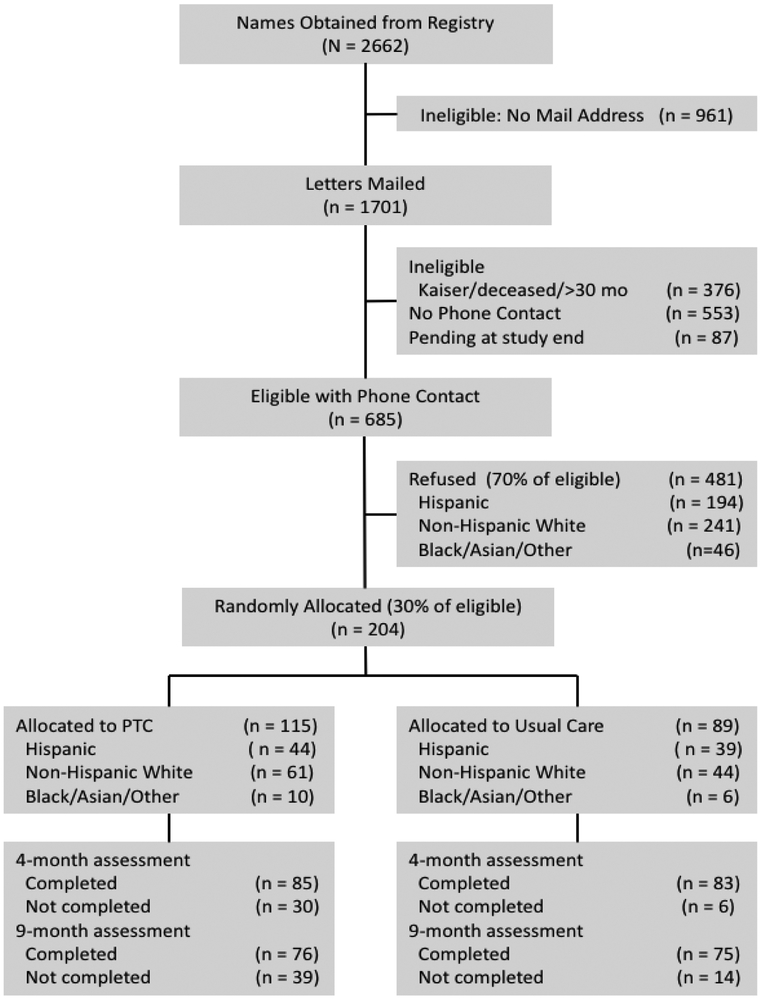
We conducted a randomized trial in 204 CXCA survivors to test if psychosocial telephone counseling (PTC) could improve QOL compared to usual care (UC). Although PTC did not target SS, data were collected at baseline, 4 and 9 months post-enrollment using the Medical Outcomes Survey Social Support scale. Biospecimens were collected to investigate associations with patient-reported outcomes. Data were analyzed using multivariate linear models and stepwise regression.
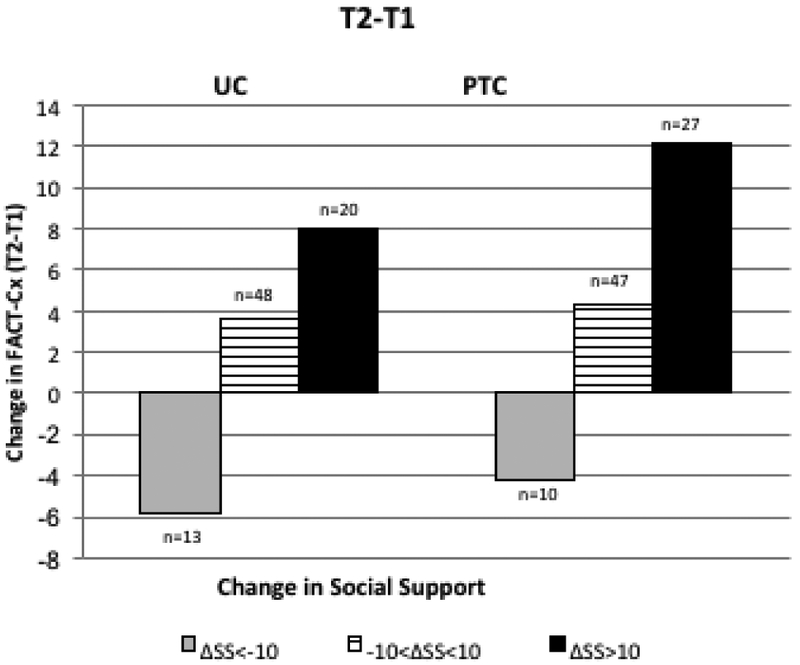
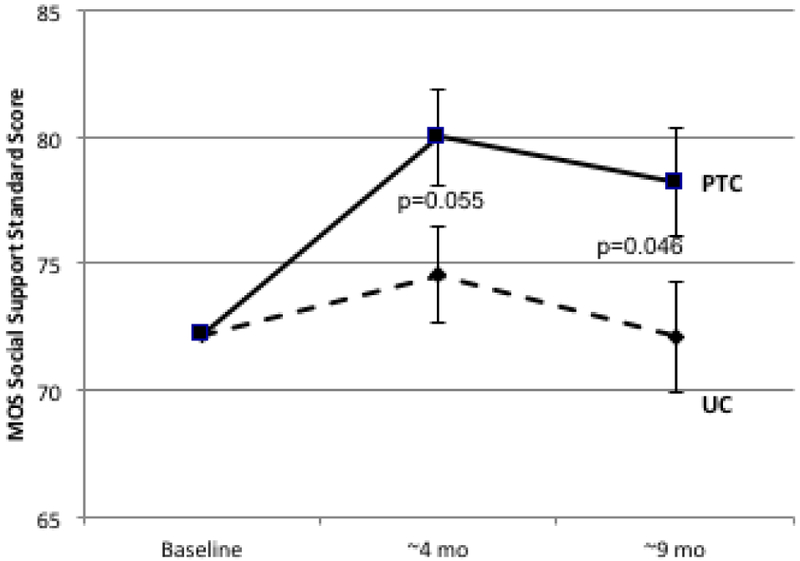
Participants' mean age was 43. PTC participants experienced increasing SS compared to UC at 4 months (PTC-UC = 5.1; p = 0.055) and 9 months (PTC-UC = 6.0; p = 0.046). Higher baseline SS and increasing SS were independently associated with improved QOL at 4 and 9 months after adjusting for patient characteristics (p < 0.05). Differences between study arms were not statistically significant. Improvements in QOL at 4 months were observed with increases in emotional/informational and tangible SS. Increasing SS predicted significant longitudinal decreases in IL-4 and IL-13 at 4 months that were larger in the PTC arm (interactions p = 0.041 and p = 0.057, respectively).
Improved SS was significantly associated with improved QOL independent of patient characteristics and study arm. Decreasing Th2 cytokines with increasing SS and QOL are consistent with a biobehavioral paradigm in which modulation of the chronic stress response is associated with shifts in immune stance.
癌症生存者社会支持(SS)的益处较为复杂。本研究旨在探讨完成根治性治疗后宫颈癌(CXCA)生存者的 SS 随时间的变化情况,以及 SS 的变化如何影响生活质量(QOL)和 T 辅助型 2(Th2)细胞因子。
我们对 204 名 CXCA 生存者进行了一项随机试验,以测试心理社会电话咨询(PTC)是否能改善 QOL,与常规护理(UC)相比。尽管 PTC 并未针对 SS,但在入组后 4 个月和 9 个月时,使用医疗结局调查社会支持量表收集了基线、4 个月和 9 个月的数据。采集生物标本以研究与患者报告结局的关联。使用多元线性模型和逐步回归进行数据分析。
参与者的平均年龄为 43 岁。与 UC 相比,PTC 组在 4 个月(PTC-UC=5.1;p=0.055)和 9 个月(PTC-UC=6.0;p=0.046)时 SS 增加。在调整患者特征后,较高的基线 SS 和 SS 增加与 4 个月和 9 个月后 QOL 的改善独立相关(p<0.05)。研究组之间的差异无统计学意义。在 4 个月时,观察到 QOL 的改善与情感/信息和有形 SS 的增加有关。4 个月时 SS 的增加预示着 IL-4 和 IL-13 的纵向显著降低,在 PTC 组中更为显著(交互作用 p=0.041 和 p=0.057)。
与患者特征和研究组无关,SS 的改善与 QOL 的改善显著相关。随着 SS 和 QOL 的增加,Th2 细胞因子减少,这与一种生物行为范式一致,即慢性应激反应的调节与免疫状态的转变有关。