School of Biological and Health Systems Engineering, Virginia G. Piper Biodesign Center for Personalized Diagnostics, The Biodesign Institute, Arizona State University, Tempe, AZ 85281, USA.
Tianjin Medical University Cancer Institute and Hospital, National Clinical Research Center for Cancer, Key Laboratory of Cancer Prevention and Therapy, Tianjin's Clinical Research Center for Cancer, Tianjin 300060, PR China.
Theranostics. 2018 Nov 13;8(21):5986-5994. doi: 10.7150/thno.26650. eCollection 2018.
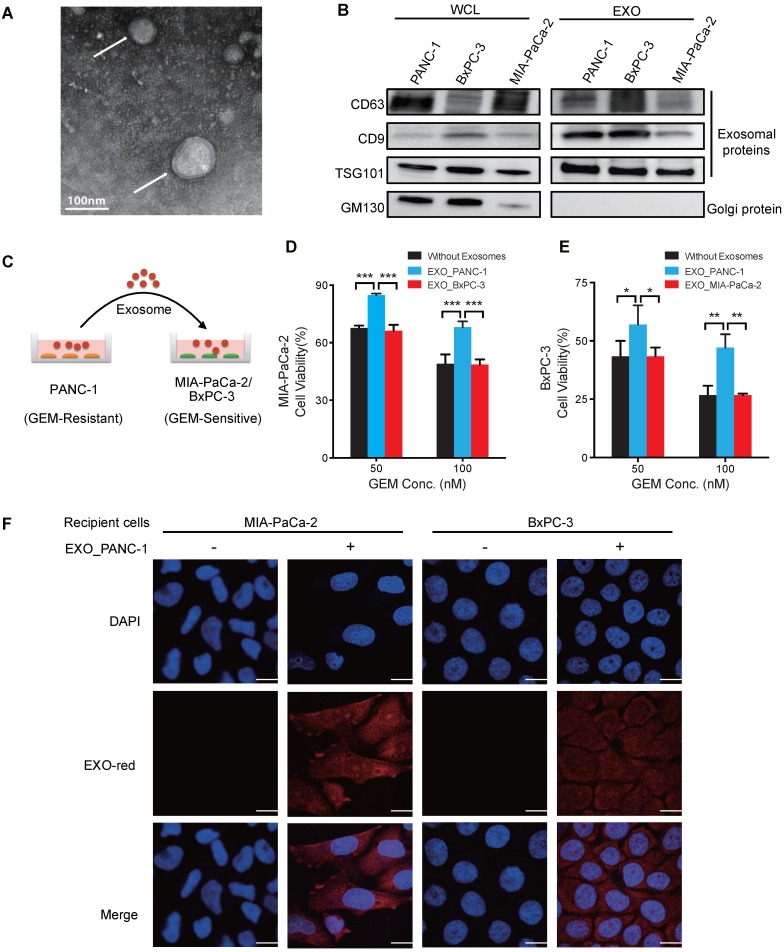
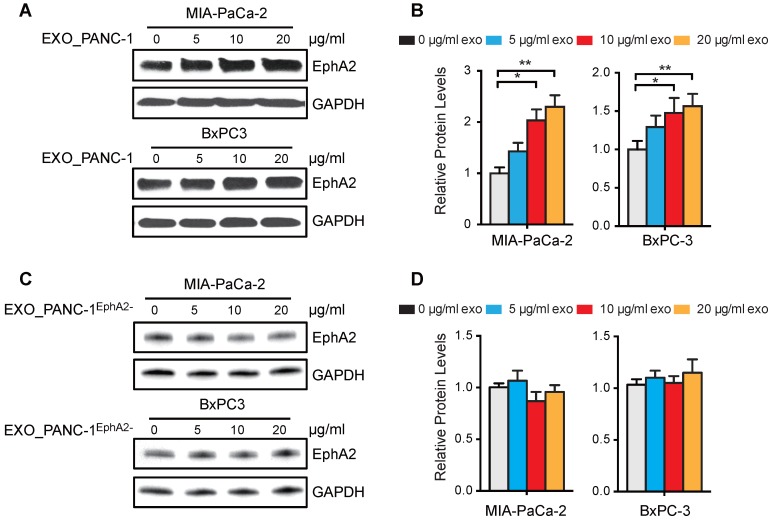
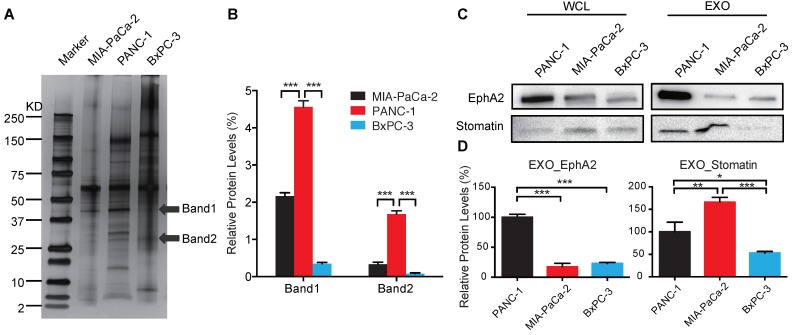
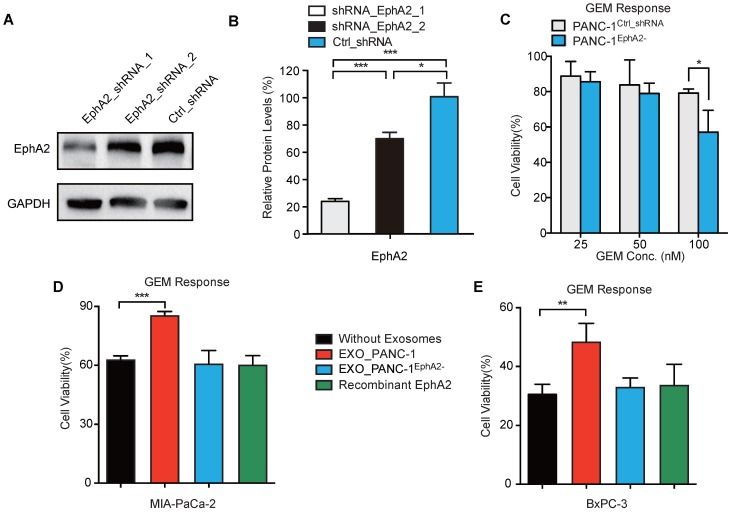
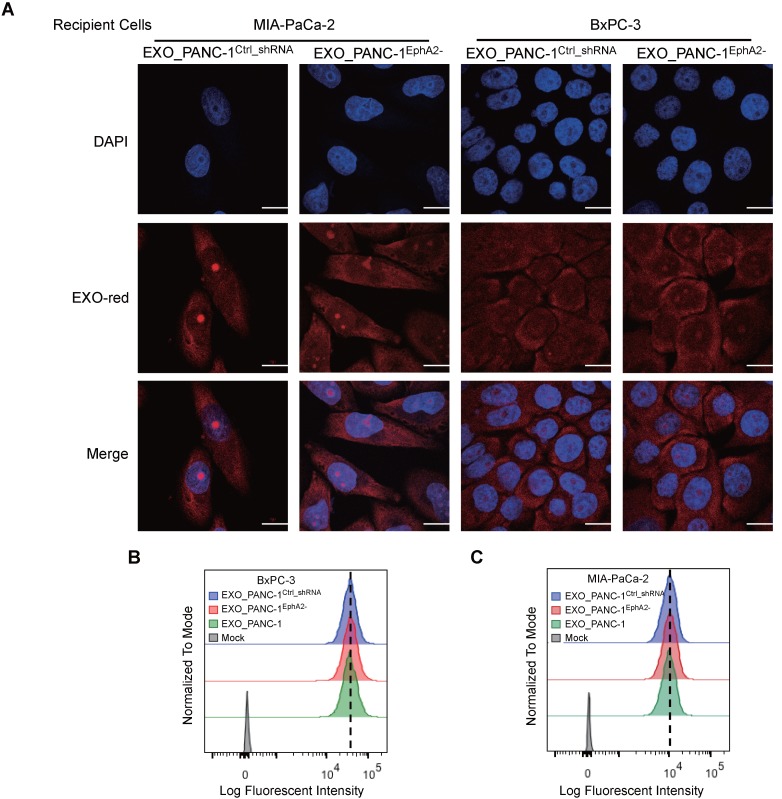
Exosomes are small extracellular vesicles secreted by most cells that are found in blood and other bodily fluids, and which contain cytoplasmic material and membrane factors corresponding to their cell type of origin. Exosome membrane factors and contents have been reported to alter adjacent and distant cell behavior in multiple studies, but the impact of cancer-derived exosomes on chemoresistance is less clear. Exosomes isolated from three pancreatic cancer (PC) cell lines displaying variable gemcitabine (GEM) resistance (PANC-1, MIA PaCa-2, and BxPC-3) were tested for their capacity to transmit chemoresistance among these cell lines. Comparative proteomics was performed to identify key exosomal proteins that conferred chemoresistance. Cell survival was assessed in GEM responsive PC cell lines treated with recombinant Ephrin type-A receptor 2 (EphA2), a candidate chemoresistance transfer factor, or exosomes from a chemoresistant PC cell line treated with or without EphA2 shRNA. Exosomes from chemoresistant PANC-1 cells increased the GEM resistance of MIA PaCa-2 and BxPC-3 cell cultures. Comparative proteomics determined that PANC-1 exosomes overexpressed Ephrin type-A receptor 2 (EphA2) versus exosomes of less chemoresistant PC cell lines MIA PaCa-2 and BxPC-3. EphA2-knockdown in PANC-1 cells inhibited their ability to transmit exosome-mediated chemoresistance to MIA PaCa-2 and BxPC-3, while treatment of MIA PaCa-2 and BxPC-3 cells with soluble EphA2 did not promote chemoresistance, indicating that membrane carried EphA2 was important for the EphA2 chemoresistance effect. Exosomal EphA2 expression could transmit chemoresistance and may potentially serve as a minimally-invasive predictive biomarker for PC treatment response. Further work should address whether additional exosomal factors regulate resistance to other cancer therapeutic agents for PC or other cancer types.
外泌体是大多数细胞分泌的小细胞外囊泡,存在于血液和其他体液中,包含细胞质物质和与其细胞起源相对应的膜因子。多项研究报道,外泌体膜因子和内容物可改变相邻和远处细胞的行为,但癌症来源的外泌体对化疗耐药性的影响尚不清楚。从三种对吉西他滨(GEM)耐药性不同的胰腺癌细胞系(PANC-1、MIA PaCa-2 和 BxPC-3)中分离出的外泌体,用于测试它们在这些细胞系之间传递化疗耐药性的能力。进行比较蛋白质组学以鉴定赋予化疗耐药性的关键外泌体蛋白。用重组 Ephrin 型-A 受体 2(EphA2)处理对 GEM 有反应的胰腺癌细胞系,或用 EphA2 shRNA 处理或不处理耐药性胰腺癌细胞系的外泌体,评估细胞存活情况。来自耐药性 PANC-1 细胞的外泌体增加了 MIA PaCa-2 和 BxPC-3 细胞培养物的 GEM 耐药性。比较蛋白质组学确定 PANC-1 外泌体相对于低耐药性胰腺癌细胞系 MIA PaCa-2 和 BxPC-3 的外泌体过表达 Ephrin 型-A 受体 2(EphA2)。在 PANC-1 细胞中敲低 EphA2 抑制了它们将外泌体介导的化疗耐药性传递给 MIA PaCa-2 和 BxPC-3 的能力,而用可溶性 EphA2 处理 MIA PaCa-2 和 BxPC-3 细胞则不能促进化疗耐药性,表明膜结合的 EphA2 对于 EphA2 化疗耐药性效应很重要。外泌体 EphA2 的表达可以传递化疗耐药性,并且可能潜在地作为胰腺癌细胞治疗反应的微创预测生物标志物。进一步的工作应该解决其他外泌体因子是否调节胰腺癌细胞或其他癌症类型对其他癌症治疗药物的耐药性。