Kim Yikwon, Han Dohyun, Min Hophil, Jin Jonghwa, Yi Eugene C, Kim Youngsoo
Departments of Biomedical Engineering, Medical Research Center, Seoul National University College of Medicine, Seoul 110-799 Korea.
Departments of Biomedical Engineering, Medical Research Center, Seoul National University College of Medicine, Seoul 110-799 Korea ; Institute of Medical and Biological Engineering, Medical Research Center, Seoul National University College of Medicine, Seoul 110-799 Korea.
Mol Cells. 2014 Dec 31;37(12):888-98. doi: 10.14348/molcells.2014.0207. Epub 2014 Dec 11.
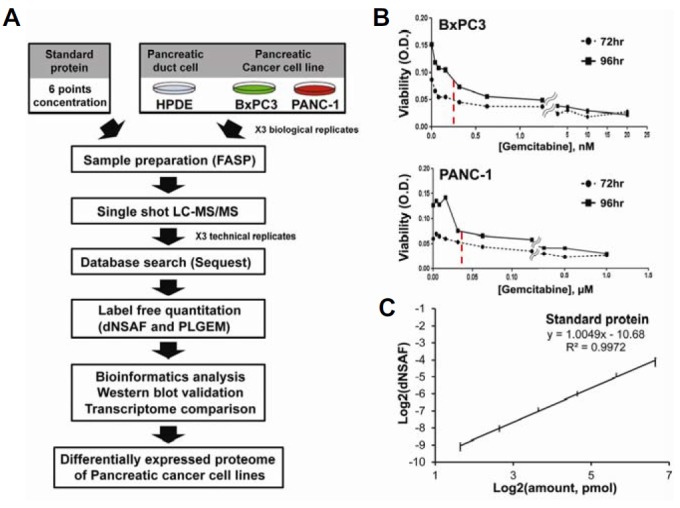
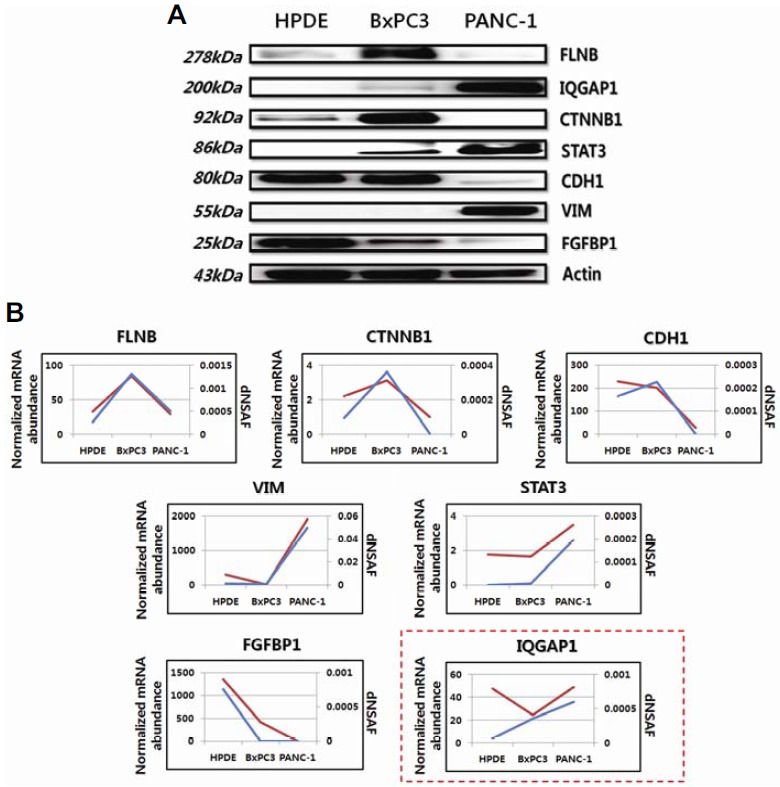
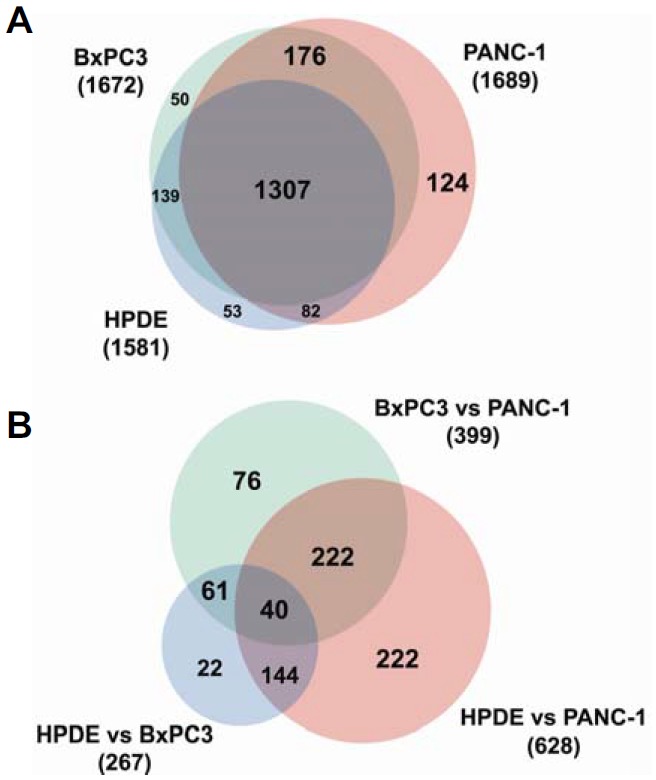
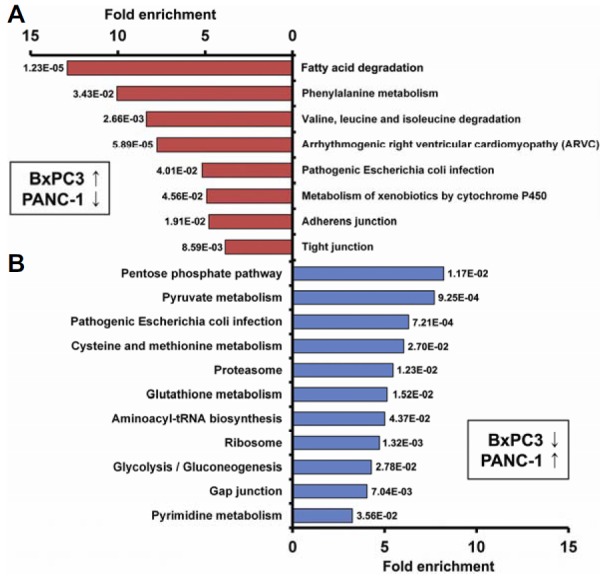
Pancreatic cancer is one of the most fatal cancers and is associated with limited diagnostic and therapeutic modalities. Currently, gemcitabine is the only effective drug and represents the preferred first-line treatment for chemotherapy. However, a high level of intrinsic or acquired resistance of pancreatic cancer to gemcitabine can contribute to the failure of gemcitabine treatment. To investigate the underlying molecular mechanisms for gemcitabine resistance in pancreatic cancer, we performed label-free quantification of protein expression in intrinsic gemcitabine-resistant and - sensitive human pancreatic adenocarcinoma cell lines using our improved proteomic strategy, combined with filter-aided sample preparation, single-shot liquid chromatography-mass spectrometry, enhanced spectral counting, and a statistical method based on a power law global error model. We identified 1931 proteins and quantified 787 differentially expressed proteins in the BxPC3, PANC-1, and HPDE cell lines. Bioinformatics analysis identified 15 epithelial to mesenchymal transition (EMT) markers and 13 EMT-related proteins that were closely associated with drug resistance were differentially expressed. Interestingly, 8 of these proteins were involved in glutathione and cysteine/methionine metabolism. These results suggest that proteins related to the EMT and glutathione metabolism play important roles in the development of intrinsic gemcitabine resistance by pancreatic cancer cell lines.
胰腺癌是最致命的癌症之一,其诊断和治疗方式有限。目前,吉西他滨是唯一有效的药物,也是化疗的首选一线治疗药物。然而,胰腺癌对吉西他滨的高水平内在或获得性耐药可能导致吉西他滨治疗失败。为了研究胰腺癌对吉西他滨耐药的潜在分子机制,我们使用改进的蛋白质组学策略,结合过滤辅助样品制备、单次液相色谱-质谱联用、增强光谱计数以及基于幂律全局误差模型的统计方法,对人胰腺腺癌内在吉西他滨耐药和敏感细胞系中的蛋白质表达进行了无标记定量。我们在BxPC3、PANC-1和HPDE细胞系中鉴定出1931种蛋白质,并对787种差异表达蛋白质进行了定量。生物信息学分析确定了15种上皮-间质转化(EMT)标志物和13种与耐药密切相关的EMT相关蛋白差异表达。有趣的是,其中8种蛋白质参与了谷胱甘肽和半胱氨酸/甲硫氨酸代谢。这些结果表明,与EMT和谷胱甘肽代谢相关的蛋白质在胰腺癌细胞系内在吉西他滨耐药的发生中起重要作用。