Yang Liu, Yan Yan, Wang Yonghao, Hu Xiaochen, Lu Jie, Chan Piu, Yan Tianyi, Han Ying
Department of Neurology, Xuanwu Hospital, Capital Medical University, Beijing, China.
School of Life Science, Beijing Institute of Technology, Beijing, China.
Front Neurosci. 2018 Dec 20;12:975. doi: 10.3389/fnins.2018.00975. eCollection 2018.
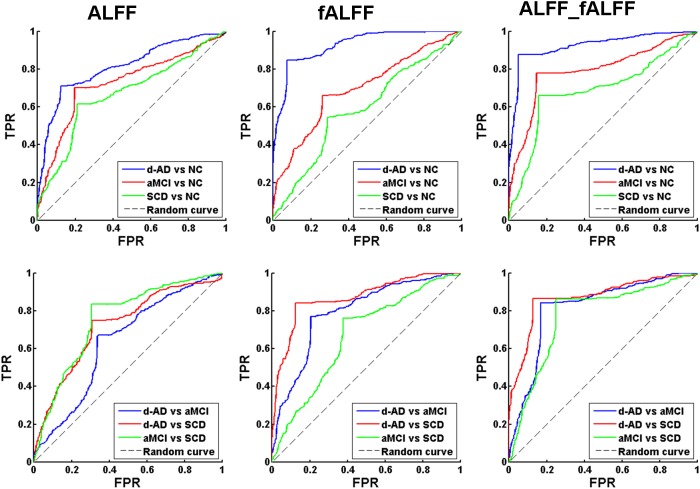
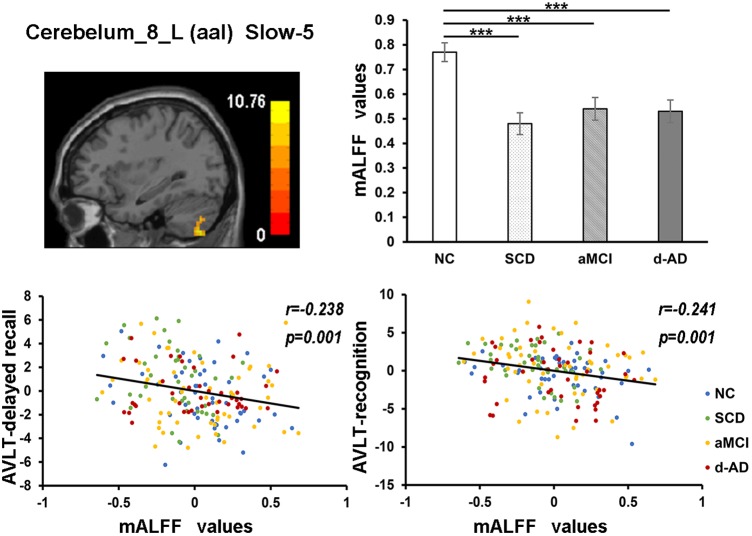
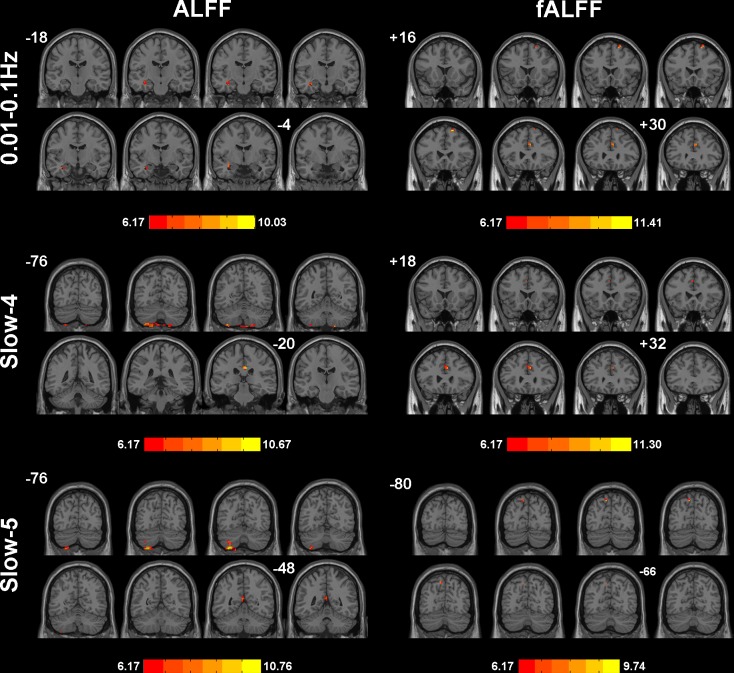
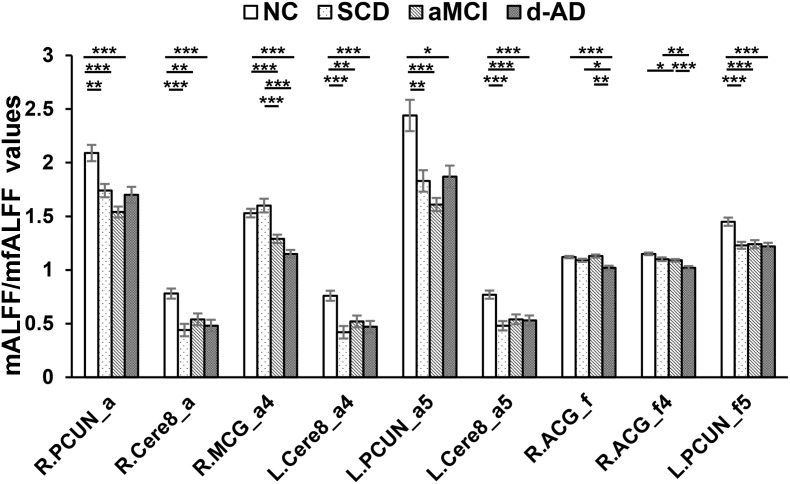
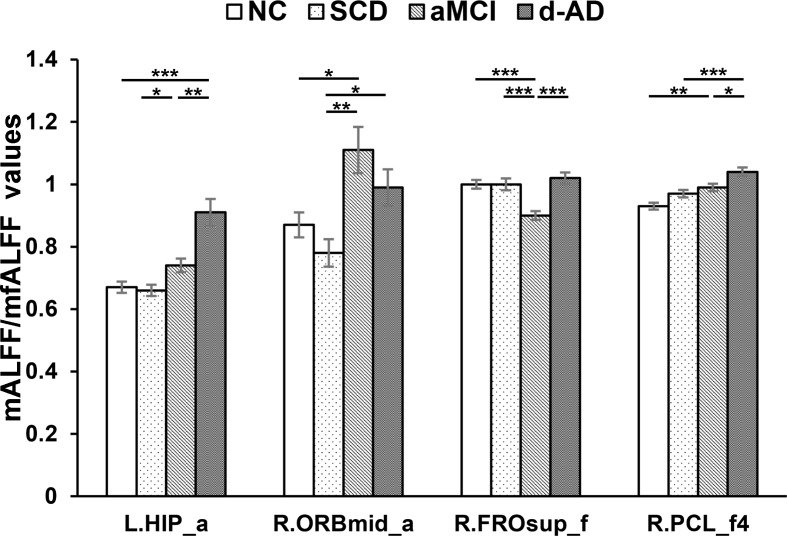
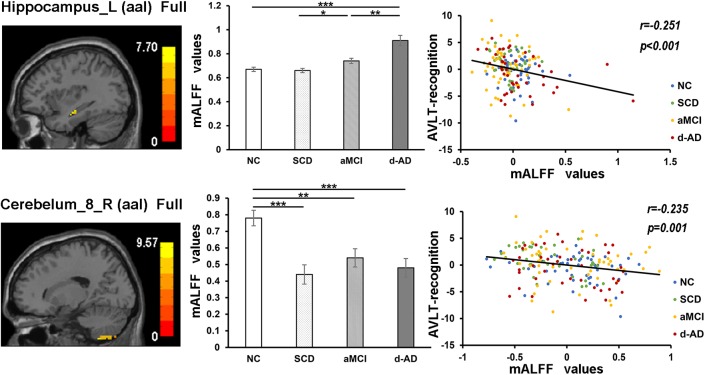
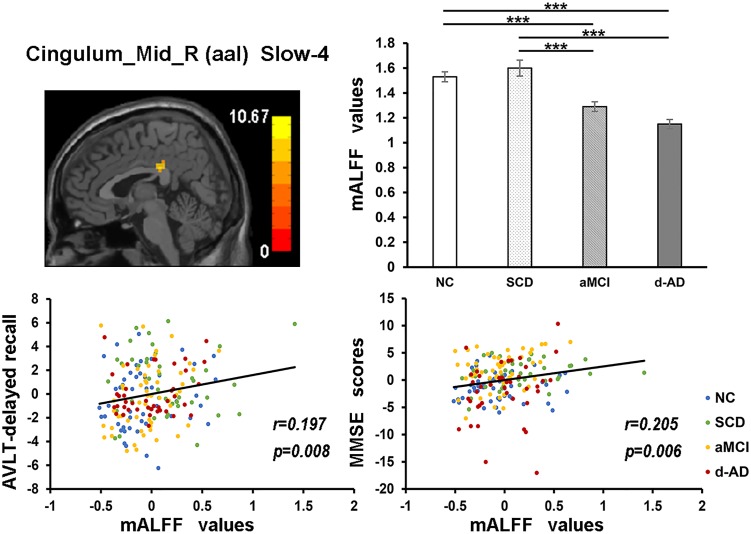
Alzheimer's disease (AD) is a common neurodegenerative disease in which the brain undergoes alterations for decades before symptoms become obvious. Subjective cognitive decline (SCD) have self-complain of persistent decline in cognitive function especially in memory but perform normally on standard neuropsychological tests. SCD with the presence of AD pathology is the transitional stage 2 of Alzheimer's continuum, earlier than the prodromal stage, mild cognitive impairment (MCI), which seems to be the best target to research AD. In this study, we aimed to detect the transformational patterns of the intrinsic brain activity as the disease burden got heavy. In this study, we enrolled 44 SCD, 55 amnestic MCI (aMCI), 47 AD dementia (d-AD) patients and 57 normal controls (NC) in total. A machine learning classification was utilized to detect identification accuracies between groups by using ALFF, fALFF, and fusing ALFF with fALFF features. Then, we measured the amplitude of the low-frequency fluctuation (ALFF) and fractional ALFF (fALFF) levels in three frequency bands (classic: 0.01-0.1 Hz; slow-5: 0.01-0.027 Hz; and slow-4: 0.027-0.073 Hz) and compared alterations in patients with NC. In the machine learning verification, the identification accuracy of SCD, aMCI, d-AD from NC was higher when fused ALFF and fALFF features (76.44, 81.94, and 91.83%, respectively) than only using ALFF or fALFF features. Several brain regions showed significant differences in ALFF/fALFF within these bands among four groups: brain regions presented decreasing trend of values, including the Cingulum_Mid_R (aal), bilateral inferior cerebellum lobe, bilateral precuneus, and the Cingulum_Ant_R (aal); increasing trend of values were detected in the Hippocampus_L (aal), Frontal_Mid_Orb_R (aal), Frontal_Sup_R (aal) and Paracentral_Lobule_R (aal) as disease progressed. The normalized ALFF/fALFF values of these features were significantly correlated with the neuropsychological test scores. This study revealed gradual disturbances in intrinsic brain activity as the disease progressed: the normal objective performance in SCD may be dependent on compensation; as disease advanced, the cognitive function gradually impaired and decompensated in aMCI, severer in d-AD. Our results indicated that the ALFF and fALFF may help detect the underlying pathological mechanism in AD continuum. ClinicalTrials.gov, identifier NCT02353884 and NCT02225964.
阿尔茨海默病(AD)是一种常见的神经退行性疾病,在症状明显出现之前,大脑会经历数十年的变化。主观认知下降(SCD)表现为自我诉说认知功能持续下降,尤其是记忆力,但在标准神经心理学测试中表现正常。存在AD病理的SCD是阿尔茨海默病连续体的过渡阶段2,早于前驱阶段轻度认知障碍(MCI),而MCI似乎是研究AD的最佳靶点。在本研究中,我们旨在检测随着疾病负担加重,大脑内在活动的转变模式。在本研究中,我们总共招募了44名SCD患者、55名遗忘型MCI(aMCI)患者、47名AD痴呆(d-AD)患者和57名正常对照(NC)。利用机器学习分类,通过使用低频振幅(ALFF)、分数低频振幅(fALFF)以及将ALFF与fALFF特征融合来检测组间的识别准确率。然后,我们测量了三个频段(经典频段:0.01 - 0.1Hz;慢波5频段:0.01 - 0.027Hz;慢波4频段:0.027 - 0.073Hz)的低频波动振幅(ALFF)和分数低频振幅(fALFF)水平,并将患者与NC的变化进行比较。在机器学习验证中,将ALFF和fALFF特征融合时,从NC中识别SCD、aMCI、d-AD的准确率(分别为76.44%、81.94%和91.83%)高于仅使用ALFF或fALFF特征。在这四组中,几个脑区在这些频段内的ALFF/fALFF存在显著差异:脑区呈现值下降趋势的包括扣带回中部右侧(AAL)、双侧小脑下叶、双侧楔前叶以及扣带回前部右侧(AAL);随着疾病进展,在海马体左侧(AAL)、额中眶回右侧(AAL)、额上回右侧(AAL)和中央旁小叶右侧(AAL)检测到值呈上升趋势。这些特征的归一化ALFF/fALFF值与神经心理学测试分数显著相关。本研究揭示了随着疾病进展大脑内在活动的逐渐紊乱:SCD中正常的客观表现可能依赖于代偿;随着疾病进展,认知功能在aMCI中逐渐受损并失代偿,在d-AD中更严重。我们的结果表明,ALFF和fALFF可能有助于检测AD连续体中的潜在病理机制。ClinicalTrials.gov标识符:NCT02353884和NCT02225964。