Atashgahi Siavash, Liebensteiner Martin G, Janssen Dick B, Smidt Hauke, Stams Alfons J M, Sipkema Detmer
Laboratory of Microbiology, Wageningen University & Research, Wageningen, Netherlands.
Department of Biochemistry, Groningen Biomolecular Sciences and Biotechnology Institute, University of Groningen, Groningen, Netherlands.
Front Microbiol. 2018 Dec 12;9:3079. doi: 10.3389/fmicb.2018.03079. eCollection 2018.
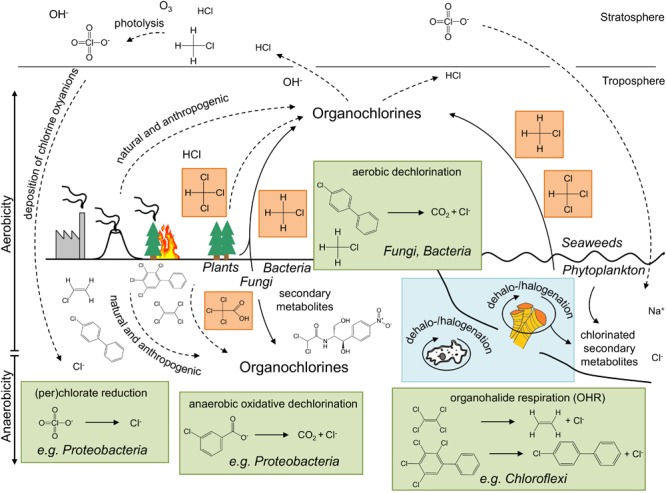
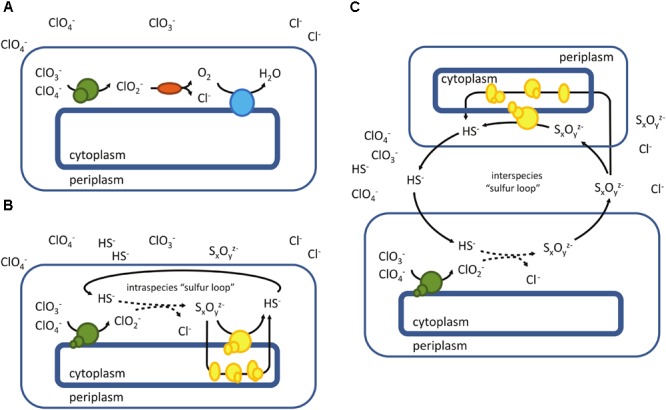
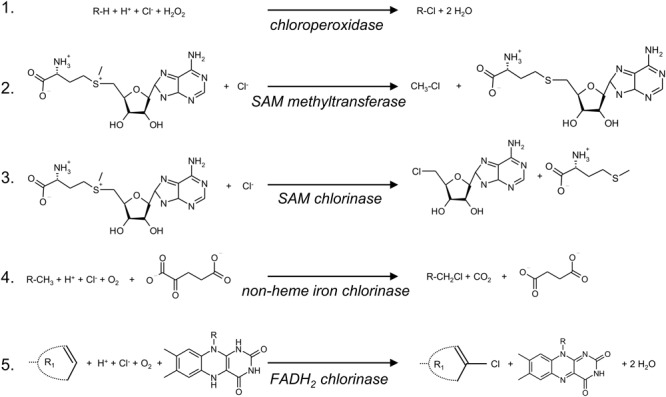
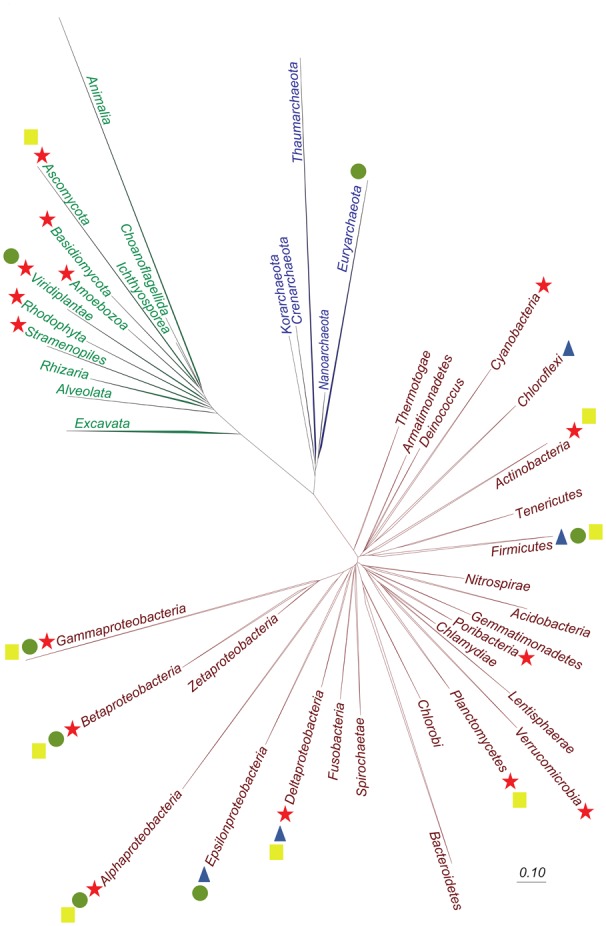
Organic and inorganic chlorine compounds are formed by a broad range of natural geochemical, photochemical and biological processes. In addition, chlorine compounds are produced in large quantities for industrial, agricultural and pharmaceutical purposes, which has led to widespread environmental pollution. Abiotic transformations and microbial metabolism of inorganic and organic chlorine compounds combined with human activities constitute the chlorine cycle on Earth. Naturally occurring organochlorines compounds are synthesized and transformed by diverse groups of (micro)organisms in the presence or absence of oxygen. In turn, anthropogenic chlorine contaminants may be degraded under natural or stimulated conditions. Here, we review phylogeny, biochemistry and ecology of microorganisms mediating chlorination and dechlorination processes. In addition, the co-occurrence and potential interdependency of catabolic and anabolic transformations of natural and synthetic chlorine compounds are discussed for selected microorganisms and particular ecosystems.
有机和无机氯化合物是由广泛的自然地球化学、光化学和生物过程形成的。此外,出于工业、农业和制药目的大量生产氯化合物,这导致了广泛的环境污染。无机和有机氯化合物的非生物转化和微生物代谢与人类活动相结合,构成了地球上的氯循环。天然存在的有机氯化合物在有氧或无氧的情况下由不同种类的(微)生物合成和转化。反过来,人为的氯污染物可能在自然或受刺激的条件下降解。在这里,我们综述了介导氯化和脱氯过程的微生物的系统发育、生物化学和生态学。此外,还讨论了选定微生物和特定生态系统中天然和合成氯化合物分解代谢和合成代谢转化的共存和潜在相互依赖性。