Faculty of Sciences, Department of Chemistry and Biochemistry, and The Laboratory of Experimental and Clinical Pharmacology, Lebanese University, Beirut, Lebanon.
Laboratory for Fetal and Regenerative Biology, Department of Surgery, School of Medicine, University of Colorado Denver, Anschutz Medical Campus and Colorado Children's Hospital, Aurora, CO, United States.
Front Immunol. 2018 Dec 19;9:3029. doi: 10.3389/fimmu.2018.03029. eCollection 2018.
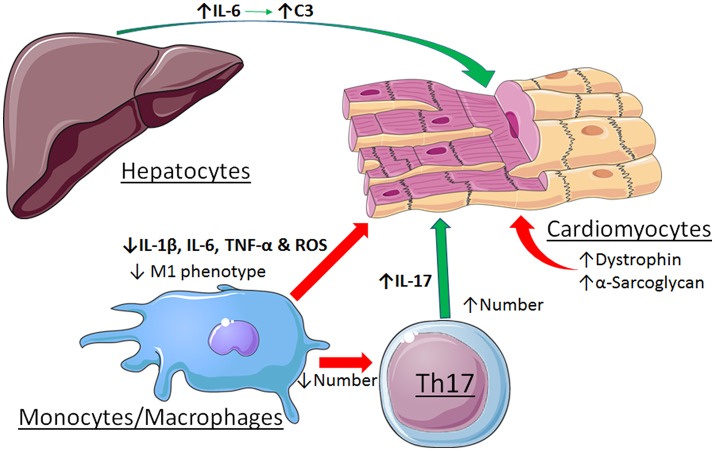
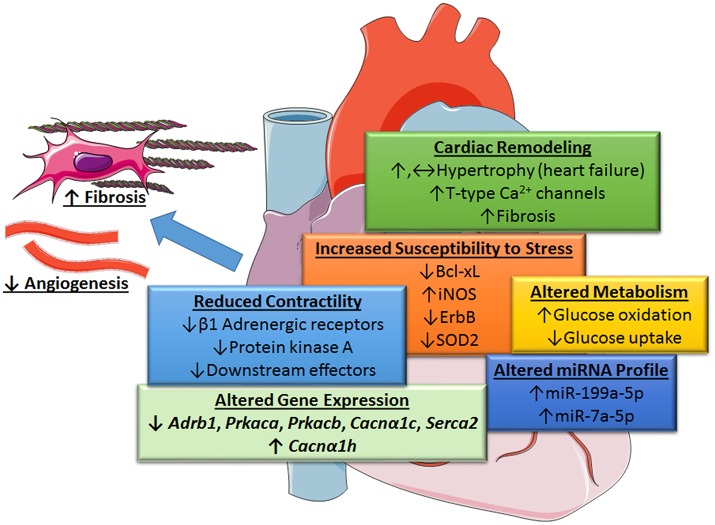
The transcription factor STAT3 has a protective function in the heart. Until recently, the role of STAT3 in hypertension-induced cardiac hypertrophy was unsettled. Earlier studies revealed that global reduction of STAT3 activity reduced cardiac hypertrophy with hypertension, but caused a disruption of myofilaments and increased contractile dysfunction. However, newer studies with cardiomyocyte-specific deletion of STAT3 indicate that STAT3 does not cause cardiac hypertrophy with increased blood pressure. Rather, cardiac STAT3 is important for maintaining metabolic homeostasis, and loss of STAT3 in cardiomyocytes makes the heart more susceptible to chronic pathological insult, for example by disrupting glucose metabolism and protective signaling networks via the upregulation of certain microRNAs. This scenario has implications for understanding peripartum cardiomyopathy as well. In viral myocarditis, STAT3 opposes the initiation of the dilated phenotype by maintaining membrane integrity via the expression of dystrophin. STAT3 signaling was also found to attenuate myocarditis by polarizing macrophages to a less inflammatory phenotype. On the other hand, STAT3 contributes to immune-mediated myocarditis due to IL-6-induced complement component C3 production in the liver, as well as the differentiation of Th17 cells, which play a role in initiation and development of myocarditis. Besides canonical signaling pathways, unphosphorylated STAT3 (U-STAT3) and redox-activated STAT3 have been shown to couple to transcription in the heart. In addition, tissue signaling cytokines such as IL-22 and IL-17 have been proposed to have actions on the heart that involve STAT3, but are not fully defined. Understanding the novel and often protective aspects of STAT3 in the myocardium could lead to new therapeutic approaches to treat heart disease.
转录因子 STAT3 在心脏中具有保护功能。直到最近,STAT3 在高血压引起的心肌肥厚中的作用仍不确定。早期的研究表明,STAT3 活性的全局降低减少了高血压引起的心肌肥厚,但导致了肌原纤维的破坏和收缩功能障碍的增加。然而,具有心肌细胞特异性 STAT3 缺失的最新研究表明,STAT3 不会引起血压升高的心肌肥厚。相反,心肌细胞中的 STAT3 对于维持代谢稳态很重要,而心肌细胞中 STAT3 的缺失会使心脏更容易受到慢性病理损伤的影响,例如通过上调某些 microRNAs 破坏葡萄糖代谢和保护信号网络。这种情况对理解围产期心肌病也有影响。在病毒性心肌炎中,STAT3 通过表达 dystrophin 来维持膜完整性,从而阻止扩张表型的启动。STAT3 信号还通过将巨噬细胞极化到炎症表型较少的状态来减轻心肌炎。另一方面,由于肝脏中 IL-6 诱导的补体成分 C3 产生以及 Th17 细胞的分化,STAT3 导致免疫介导的心肌炎,Th17 细胞在心肌炎的起始和发展中起作用。除了经典信号通路外,未磷酸化的 STAT3 (U-STAT3) 和氧化还原激活的 STAT3 已被证明在心脏中与转录偶联。此外,已经提出组织信号细胞因子,如 IL-22 和 IL-17,对心脏具有涉及 STAT3 的作用,但尚未完全定义。了解 STAT3 在心肌中的新的、通常是保护性方面可能会导致治疗心脏病的新治疗方法。