Sharpton Suzanne R, Yong Germaine J M, Terrault Norah A, Lynch Susan V
Department of Medicine, Division of Gastroenterology University of California San Francisco San Francisco CA.
Hepatol Commun. 2018 Dec 3;3(1):29-43. doi: 10.1002/hep4.1284. eCollection 2019 Jan.
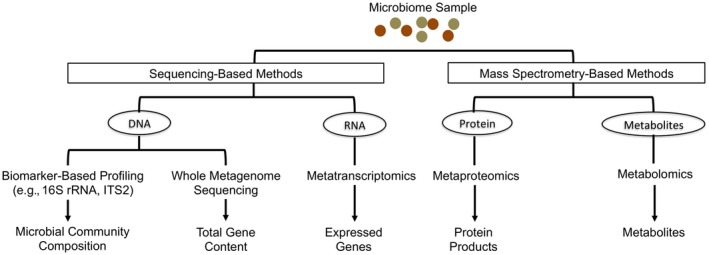
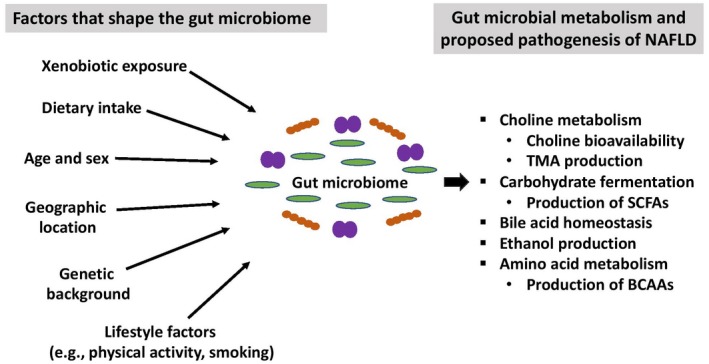
The gut microbiome, the multispecies community of microbes that exists in the gastrointestinal tract, encodes several orders of magnitude more functional genes than the human genome. It also plays a pivotal role in human health, in part due to metabolism of environmental, dietary, and host-derived substrates, which produce bioactive metabolites. Perturbations to the composition and associated metabolic output of the gut microbiome have been associated with a number of chronic liver diseases, including nonalcoholic fatty liver disease (NAFLD). Here, we review the rapidly evolving suite of next-generation techniques used for studying gut microbiome composition, functional gene content, and bioactive products and discuss relationships with the pathogenesis of NAFLD.
肠道微生物群是存在于胃肠道中的多种微生物群落,其编码的功能基因比人类基因组多几个数量级。它在人类健康中也起着关键作用,部分原因是环境、饮食和宿主来源的底物代谢产生生物活性代谢物。肠道微生物群的组成和相关代谢产物的扰动与多种慢性肝病有关,包括非酒精性脂肪性肝病(NAFLD)。在这里,我们综述了用于研究肠道微生物群组成、功能基因含量和生物活性产物的快速发展的新一代技术,并讨论了它们与NAFLD发病机制的关系。