Zhang Gaoyang, Bahn Sung-Chul, Wang Geliang, Zhang Yanrui, Chen Beibei, Zhang Yuliang, Wang Xuemin, Zhao Jian
1State Key Laboratory of Tea Plant Biology and Utilization, College of Tea and Food Science and Technology, Anhui Agricultural University, Hefei, 230036 China.
2University of Missouri at St Louis, Donald Danforth Plant Science Center, St. Louis, MO 63132 USA.
Biotechnol Biofuels. 2019 Jan 4;12:9. doi: 10.1186/s13068-018-1340-4. eCollection 2019.
Soybean oil constitutes an important source of vegetable oil and biofuel. However, high temperature and humidity adversely impacts soybean seed development, yield, and quality during plant development and after harvest. Genetic improvement of soybean tolerance to stress environments is highly desirable.
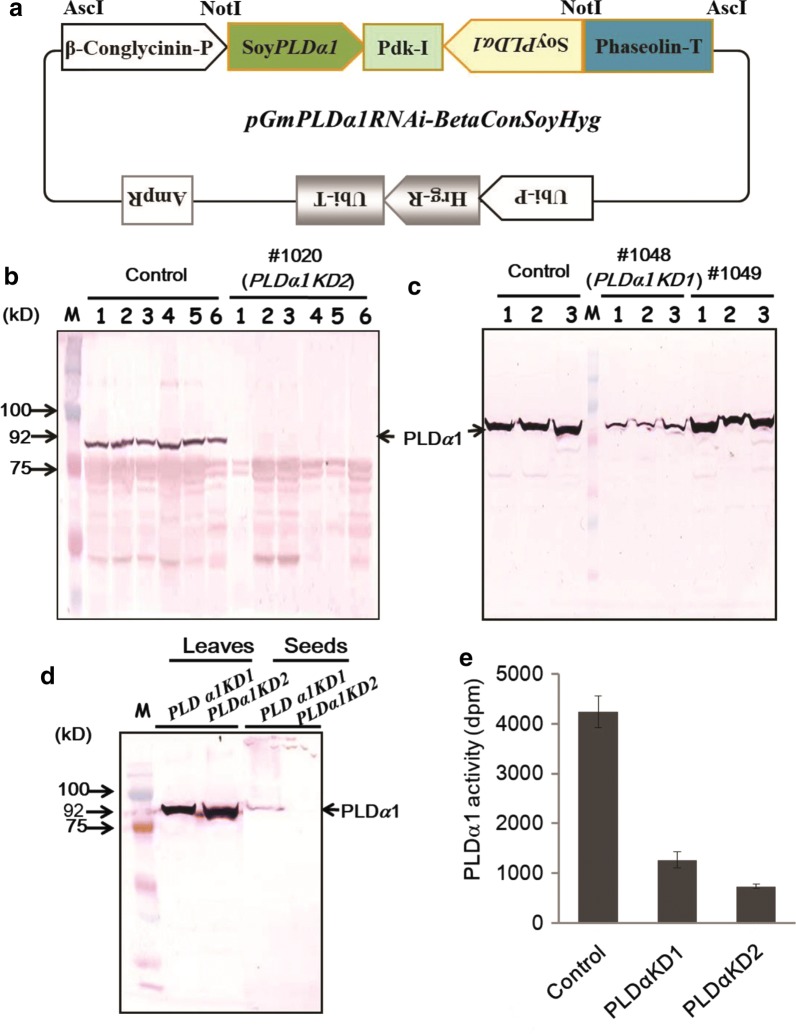
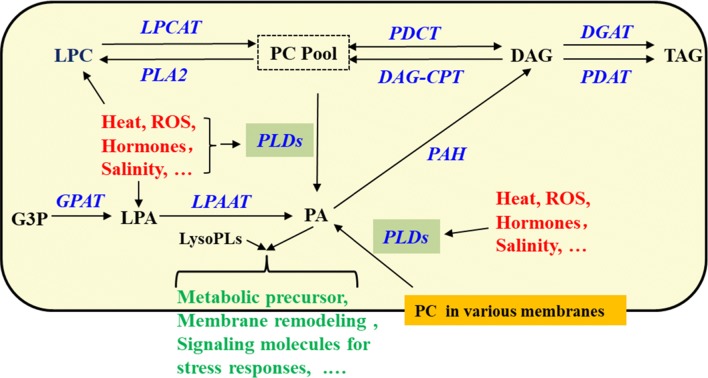
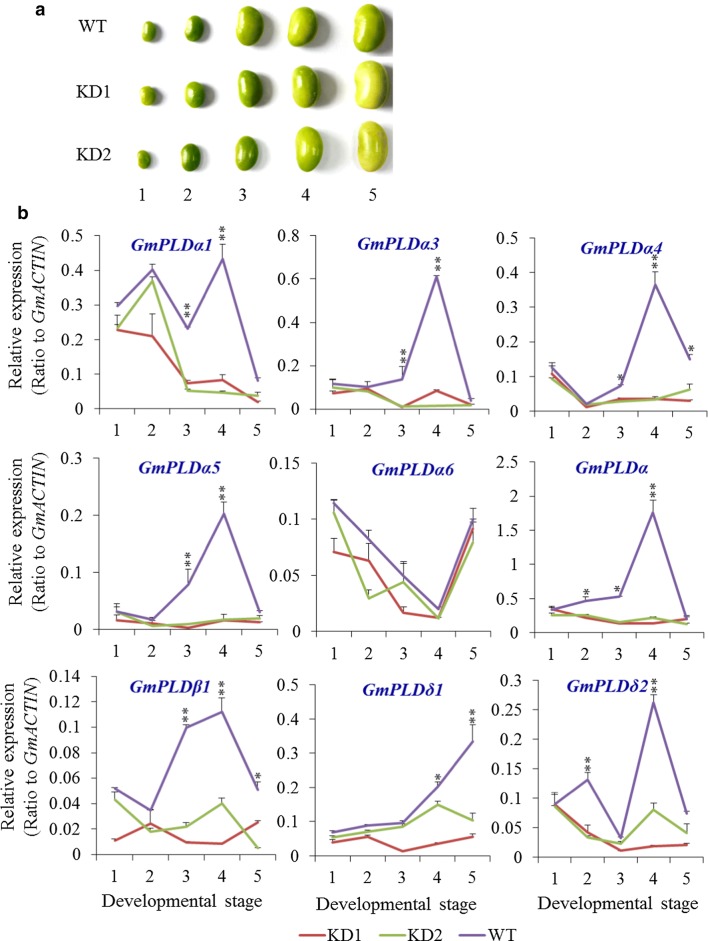
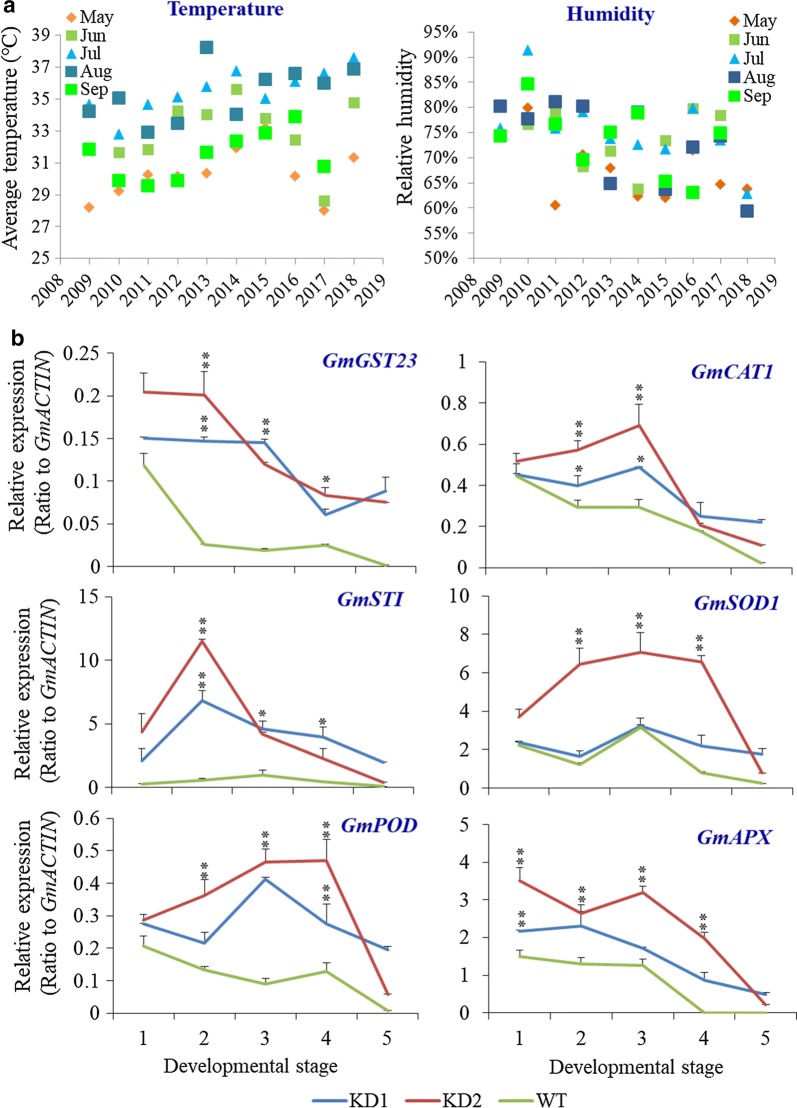
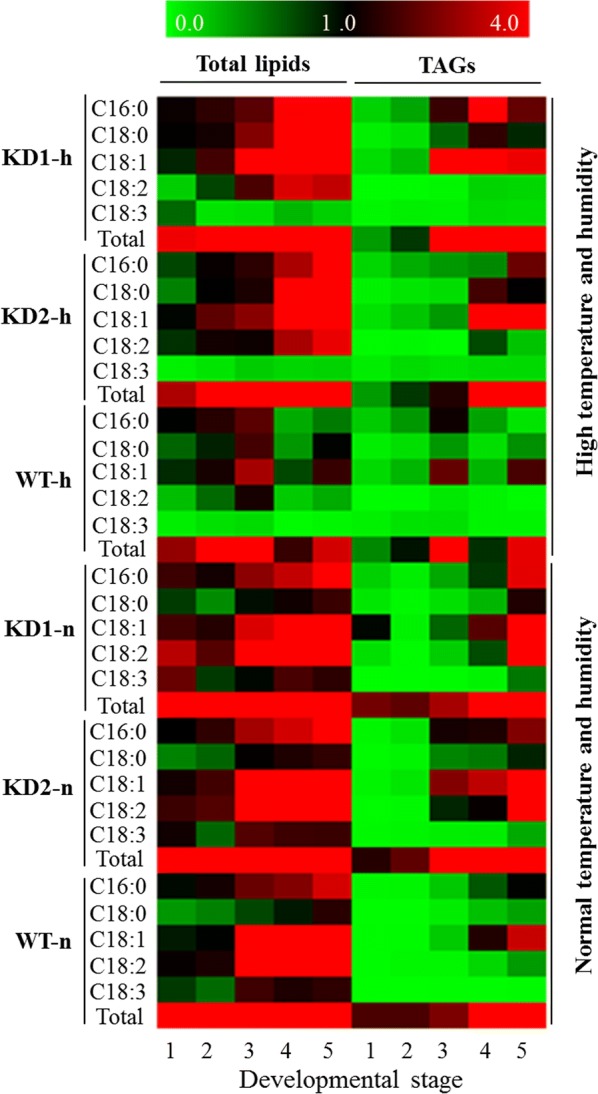
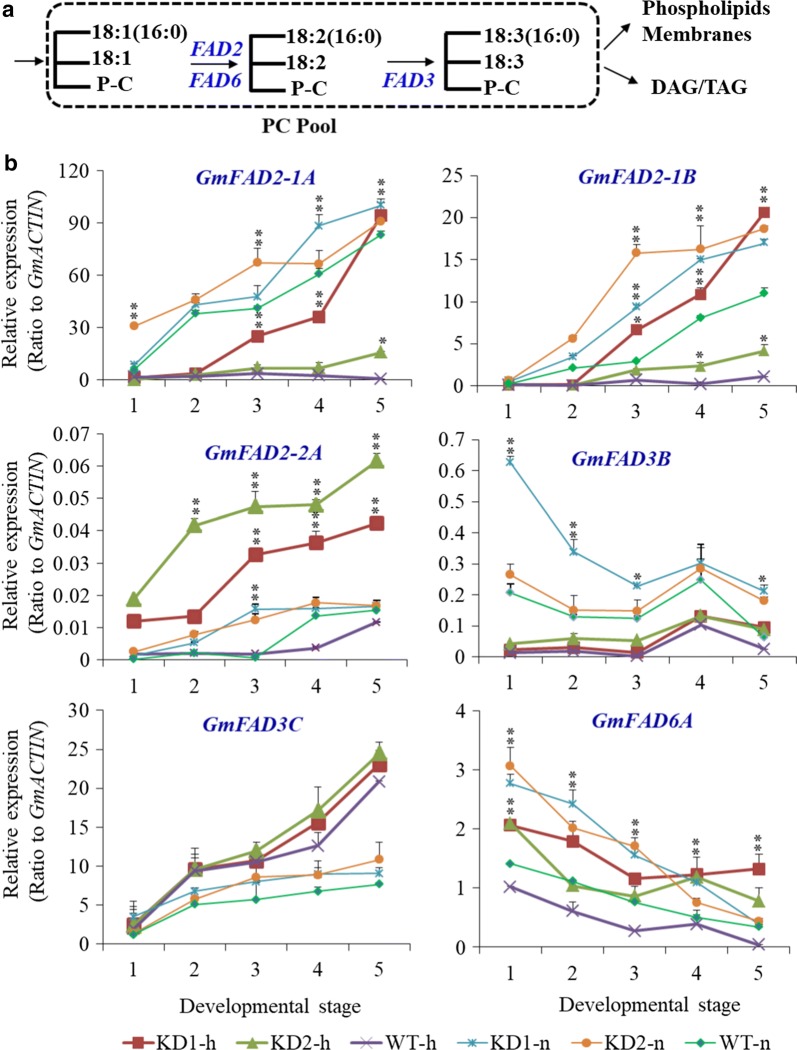
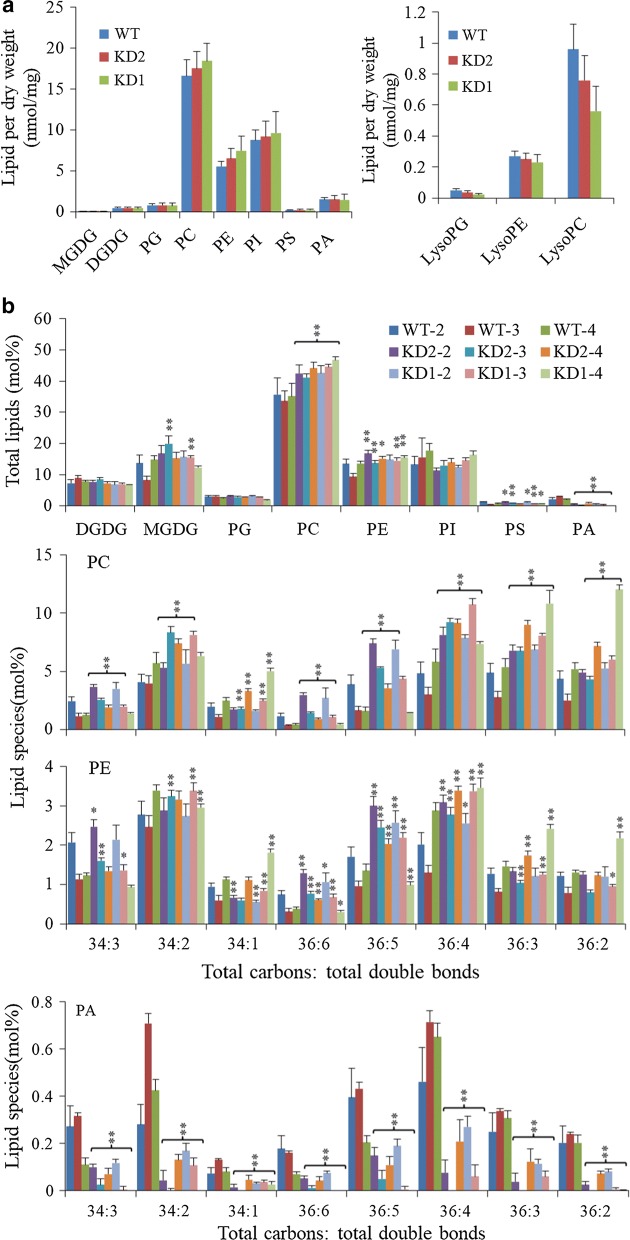
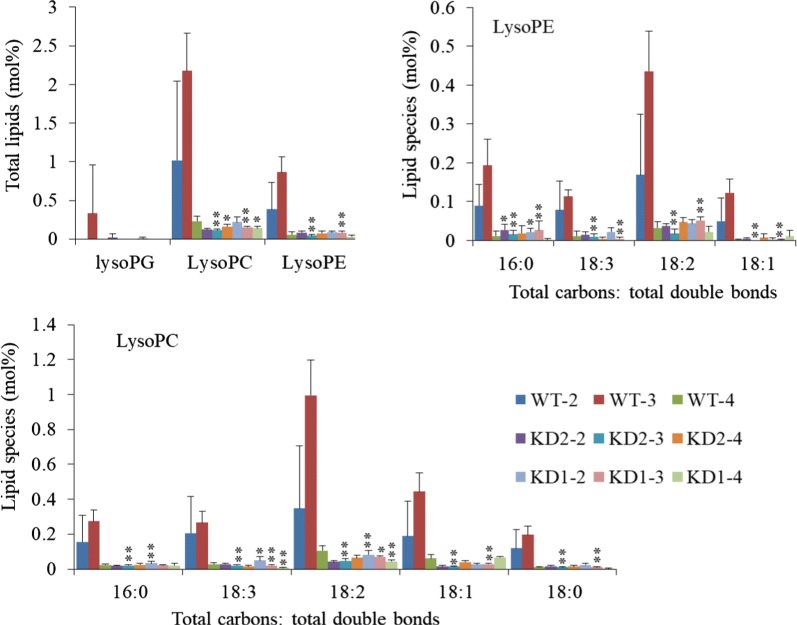
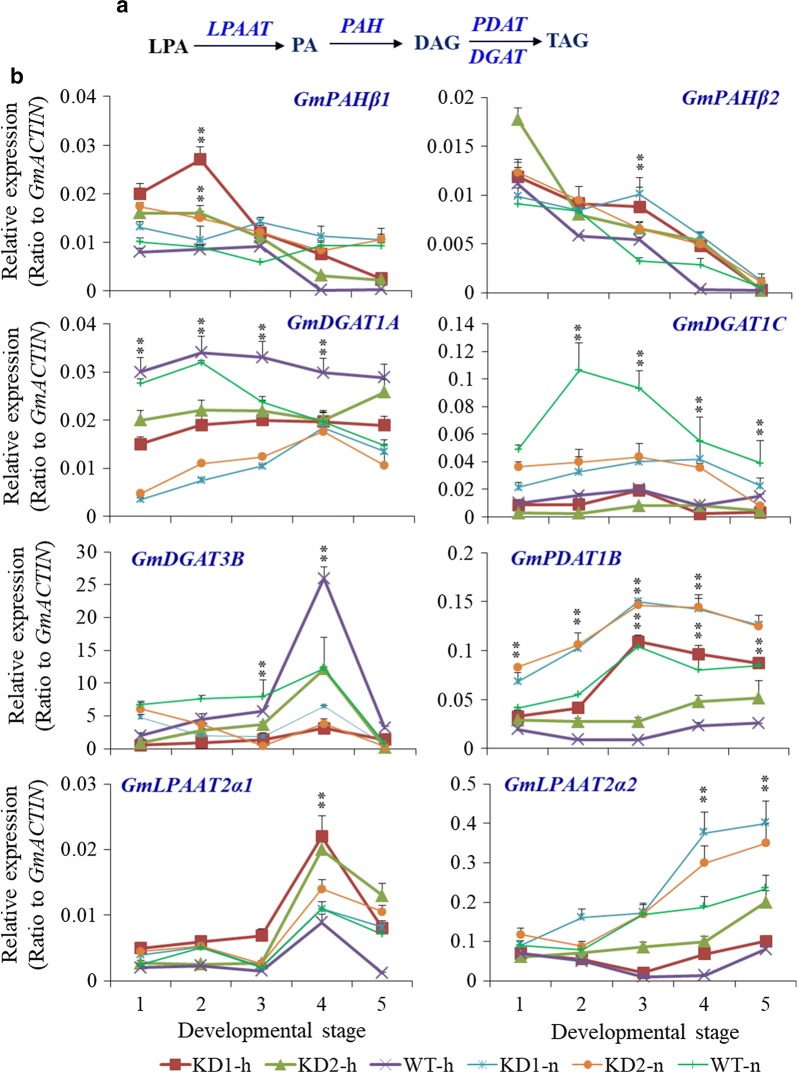
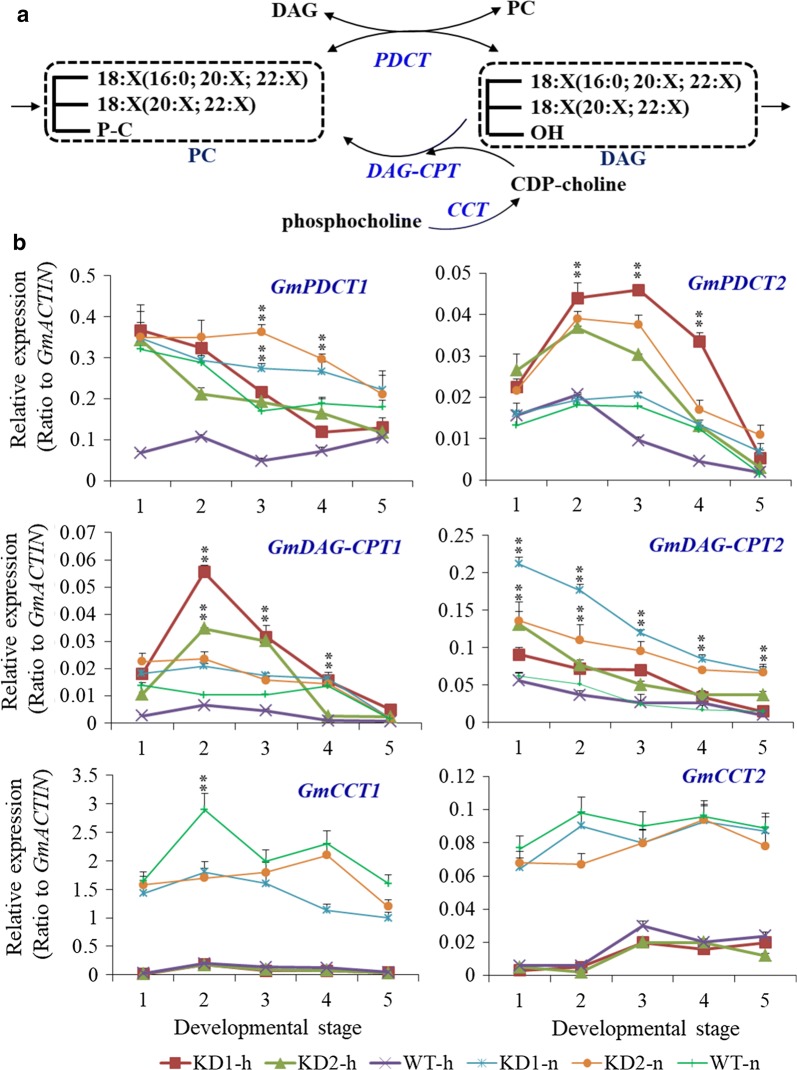
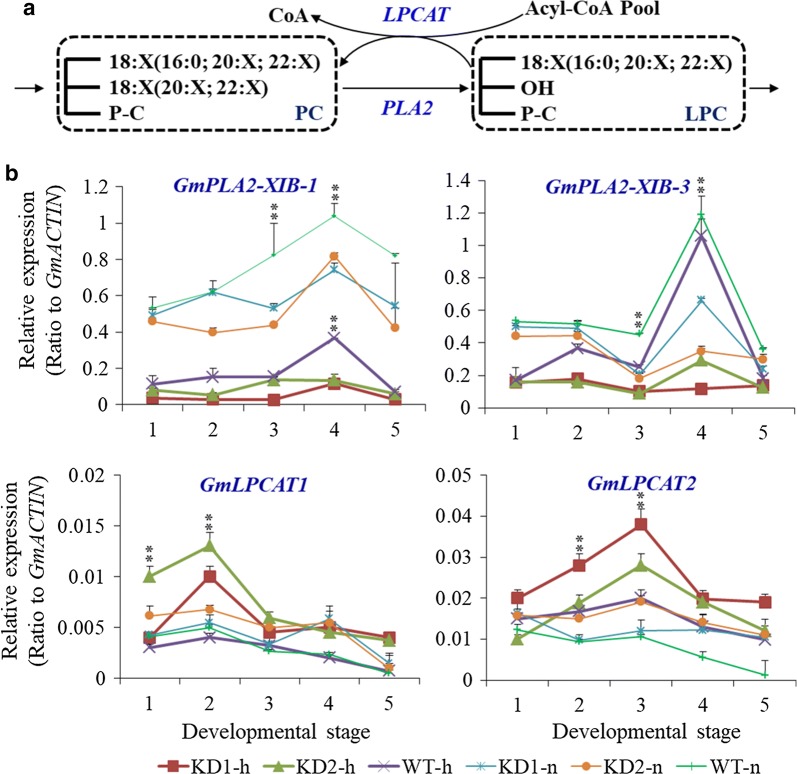
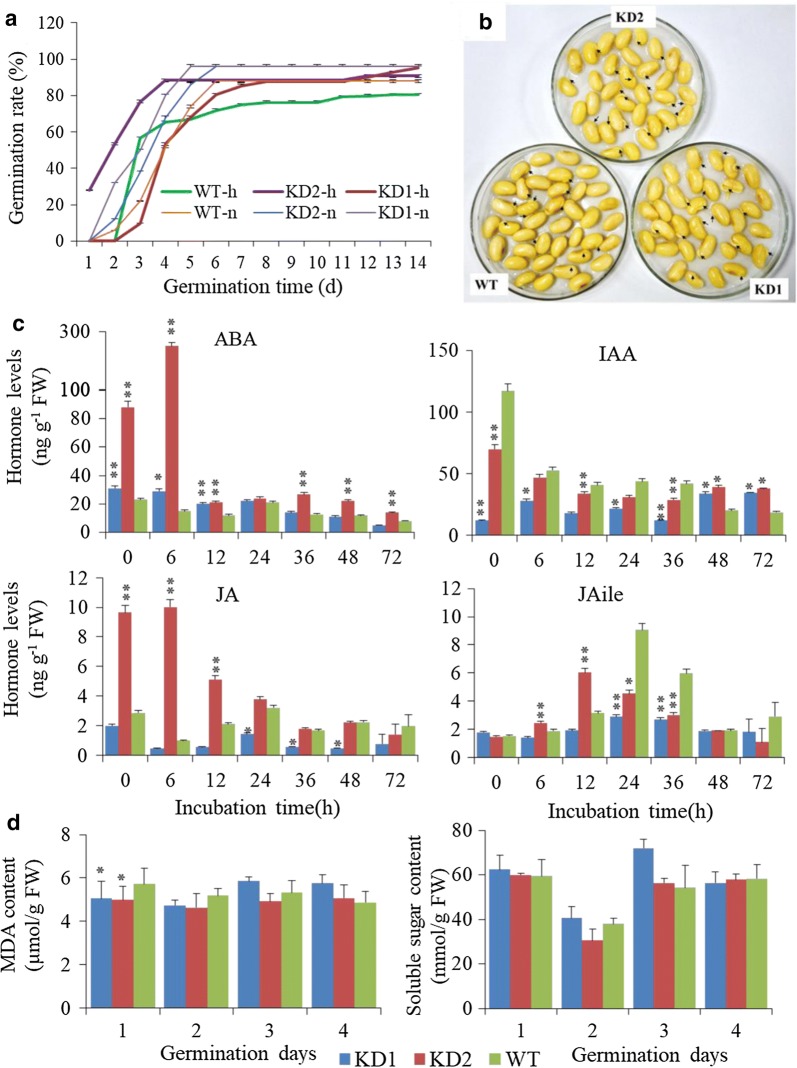
Transgenic soybean lines with knockdown of phospholipase Dα1 () were generated to study s effects on lipid metabolism and seed vigor under high temperature and humidity conditions. Under such stress, as compared with normal growth conditions, lines showed an attenuated stress-induced deterioration during soybean seed development, which was associated with elevated expression of reactive oxygen species-scavenging genes when compared with wild-type control. The developing seeds of had higher levels of unsaturation in triacylglycerol (TAG) and major membrane phospholipids, but lower levels of phosphatidic acid and lysophospholipids compared with control cultivar. Lipid metabolite and gene expression profiling indicates that the increased unsaturation on phosphatidylcholine (PC) and enhanced conversion between PC and diacylglycerol (DAG) by PC:DAG acyltransferase underlie a basis for increased TAG unsaturation in seeds. Meanwhile, the turnover of PC and phosphatidylethanolamine (PE) into lysoPC and lysoPE was suppressed in seeds under high temperature and humidity conditions. developing seeds suffered lighter oxidative stresses than did wild-type developing seeds in the stressful environments. seeds contain higher oil contents and maintained higher germination rates than the wild-type seeds.
The study provides insights into the roles of PLDα1 in developing soybean seeds under high temperature and humidity stress. decreases pre-harvest deterioration and enhances acyl editing in phospholipids and TAGs. The results indicate a way towards improving production of quality soybean seeds as foods and biofuels under increasing environmental stress.
大豆油是植物油和生物燃料的重要来源。然而,高温和高湿会对大豆种子在发育过程及收获后的发育、产量和品质产生不利影响。因此,非常需要对大豆的胁迫耐受性进行遗传改良。
通过构建磷脂酶Dα1(PLDα1)基因沉默的转基因大豆株系,研究其在高温高湿条件下对脂质代谢和种子活力的影响。在这种胁迫条件下,与正常生长条件相比,PLDα1基因沉默株系在大豆种子发育过程中胁迫诱导的劣变减轻,与野生型对照相比,活性氧清除基因的表达升高。与对照品种相比,PLDα1基因沉默株系发育中的种子三酰甘油(TAG)和主要膜磷脂的不饱和度更高,但磷脂酸和溶血磷脂的水平更低。脂质代谢物和基因表达谱分析表明,磷脂酰胆碱(PC)不饱和度的增加以及PC:二酰甘油(DAG)酰基转移酶介导的PC与DAG之间转化的增强是PLDα1基因沉默株系种子中TAG不饱和度增加的基础。同时,在高温高湿条件下,PLDα1基因沉默株系种子中PC和磷脂酰乙醇胺(PE)向溶血PC和溶血PE的转化受到抑制。在胁迫环境中,PLDα1基因沉默株系发育中的种子比野生型发育中的种子遭受的氧化胁迫更轻。PLDα1基因沉默株系种子的含油量更高,发芽率也比野生型种子更高。
本研究深入了解了PLDα1在高温高湿胁迫下大豆种子发育中的作用。PLDα1基因沉默减少了收获前的劣变,增强了磷脂和TAG中的酰基编辑。这些结果为在日益增加的环境胁迫下提高优质大豆种子作为食品和生物燃料的产量指明了一条途径。