Blaser Mark C, Aikawa Elena
Division of Cardiovascular Medicine, Department of Medicine, Center for Interdisciplinary Cardiovascular Sciences, Brigham and Women's Hospital, Harvard Medical School, Boston, MA, United States.
Division of Cardiovascular Medicine, Department of Medicine, Brigham and Women's Hospital, Center of Excellence in Cardiovascular Biology, Harvard Medical School, Boston, MA, United States.
Front Cardiovasc Med. 2018 Dec 21;5:187. doi: 10.3389/fcvm.2018.00187. eCollection 2018.
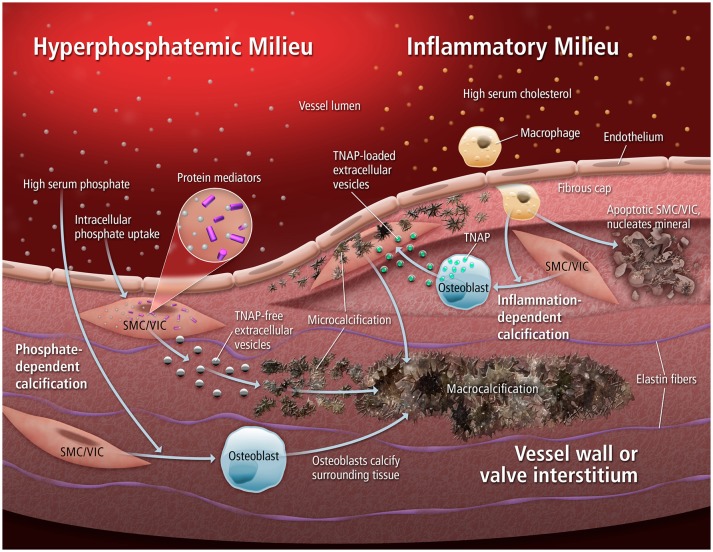
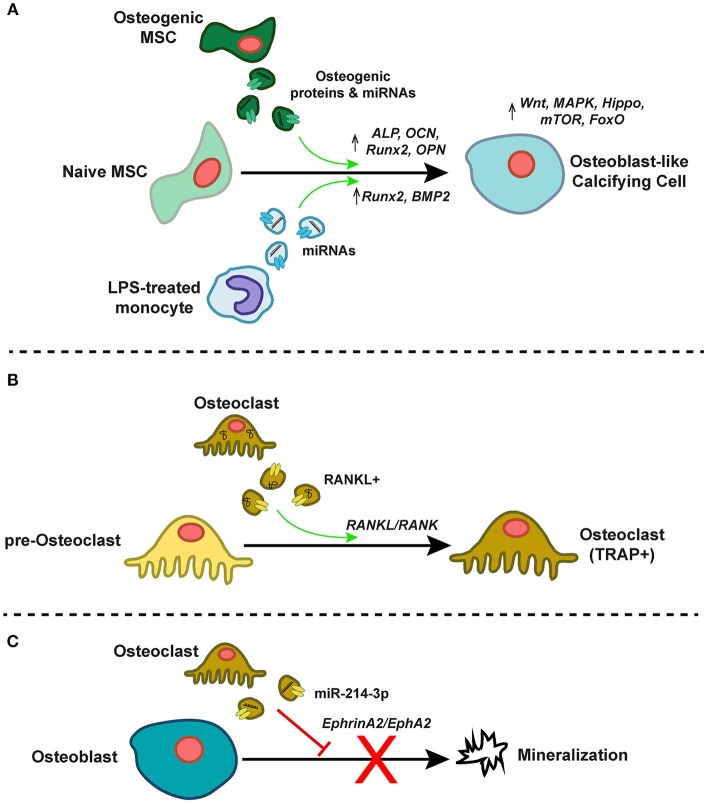
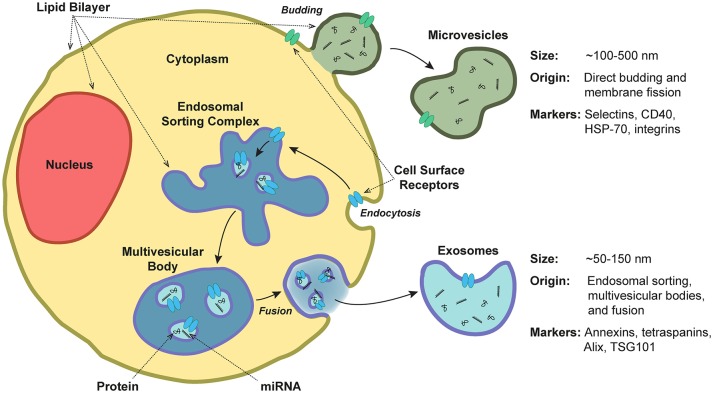
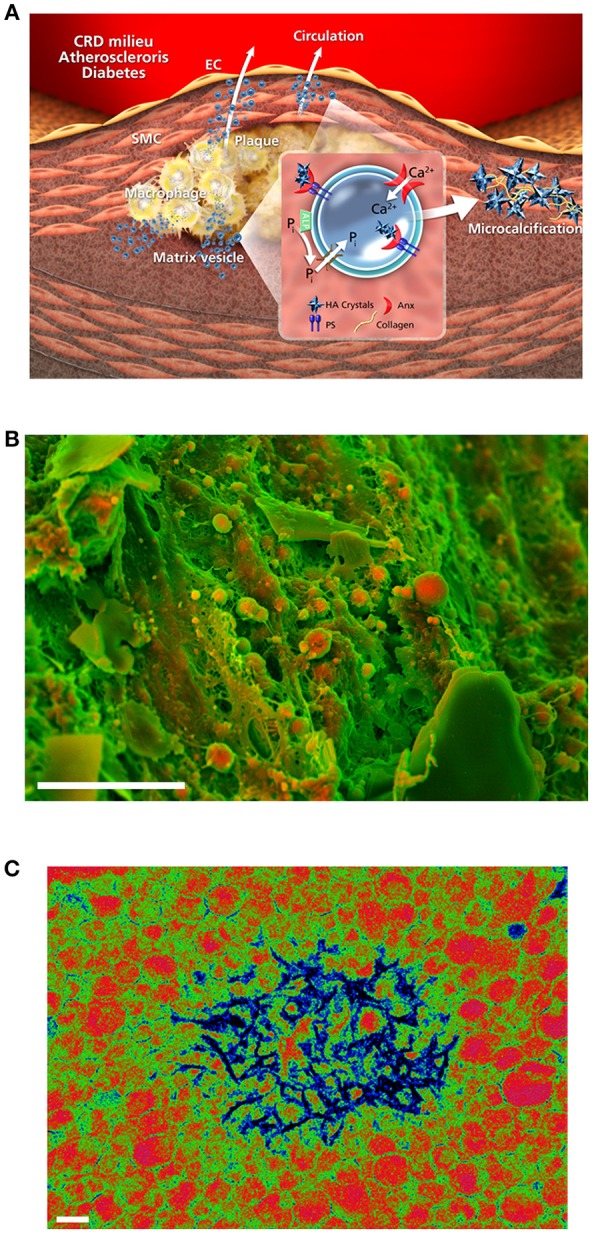
Cardiovascular calcification is a multifaceted disease that is a leading independent predictor of cardiovascular morbidity and mortality. Recent studies have identified a calcification-prone population of extracellular vesicles as the putative elementary units of vascular microcalcification in diseased heart valves and vessels. Their action is highly context-dependent; extracellular vesicles released by smooth muscle cells, valvular interstitial cells, endothelial cells, and macrophages may promote or inhibit mineralization, depending on the phenotype of their originating cells and/or the extracellular environment to which they are released. In particular, emerging roles for vesicular microRNAs, bioactive lipids, metabolites, and protein cargoes in driving this pro-calcific switch underpin the necessity of innovative strategies to employ next-generation sequencing and omics technologies in order to better understand the pathobiology of these nano-sized entities. Furthermore, a recent body of work has emerged that centers on the novel re-purposing of extracellular vesicles and exosomes as potential therapeutic avenues for cardiovascular calcification. This review aims to highlight the role of extracellular vesicles as constituents of cardiovascular calcification and summarizes recent advances in our understanding of the biophysical nature of vesicle accumulation, aggregation, and mineralization. We also comprehensively discuss the latest evidence that extracellular vesicles act as key mediators and regulators of cell/cell communication, osteoblastic/osteoclastic differentiation, and cell/matrix interactions in cardiovascular tissues. Lastly, we highlight the importance of robust vesicle isolation and characterization when studying these phenomena, and offer a brief primer on working with cardiovascular applications of extracellular vesicles.
心血管钙化是一种多方面的疾病,是心血管发病和死亡的主要独立预测因素。最近的研究已经确定了一群易于钙化的细胞外囊泡,它们被认为是患病心脏瓣膜和血管中血管微钙化的基本单位。它们的作用高度依赖于环境;平滑肌细胞、瓣膜间质细胞、内皮细胞和巨噬细胞释放的细胞外囊泡可能促进或抑制矿化,这取决于其起源细胞的表型和/或它们所释放到的细胞外环境。特别是,囊泡微小RNA、生物活性脂质、代谢物和蛋白质货物在驱动这种促钙化转变中发挥的新作用,突出了采用下一代测序和组学技术的创新策略的必要性,以便更好地理解这些纳米级实体的病理生物学。此外,最近出现了一批以将细胞外囊泡和外泌体重新用作心血管钙化潜在治疗途径为中心的工作。本综述旨在强调细胞外囊泡作为心血管钙化组成部分的作用,并总结我们对囊泡积累、聚集和矿化的生物物理性质理解的最新进展。我们还全面讨论了最新证据,即细胞外囊泡在心血管组织中作为细胞/细胞通讯、成骨细胞/破骨细胞分化和细胞/基质相互作用的关键介质和调节剂。最后,我们强调在研究这些现象时进行可靠的囊泡分离和表征的重要性,并提供一份关于细胞外囊泡心血管应用的简要入门指南。