Asan Medical Center, University of Ulsan, Department of Conservative Dentistry, Seoul, Korea.
Dankook University, College of Dentistry, Department of Conservative Dentistry, Cheonan, Korea.
J Appl Oral Sci. 2019 Jan 7;27:e20180150. doi: 10.1590/1678-7757-2018-0150.
This investigation aimed to assess the differentiation inhibitory effects of ProRoot MTA® (PMTA) and Biodentine® (BIOD) on osteoclasts originated from murine bone marrow macrophages (BMMs) and compare these effects with those of alendronate (ALD).
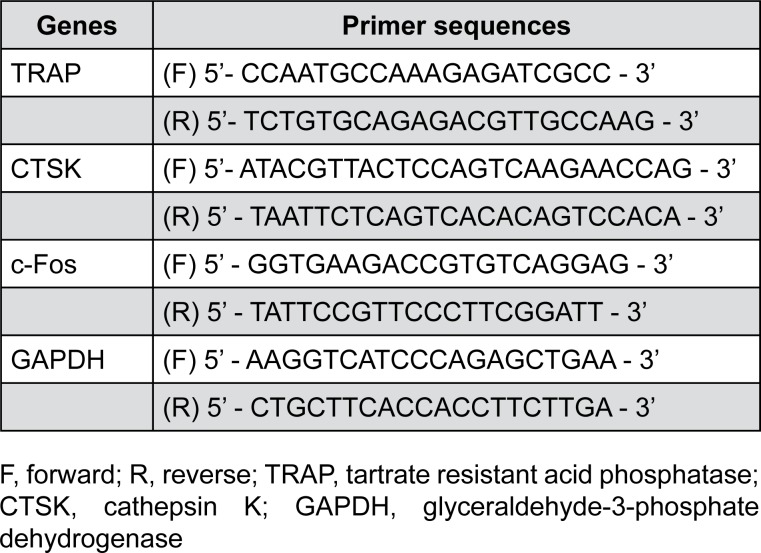
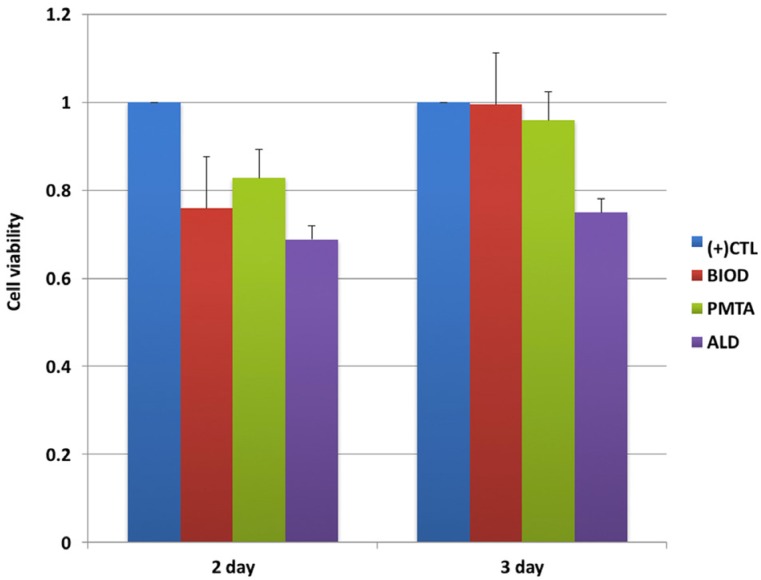
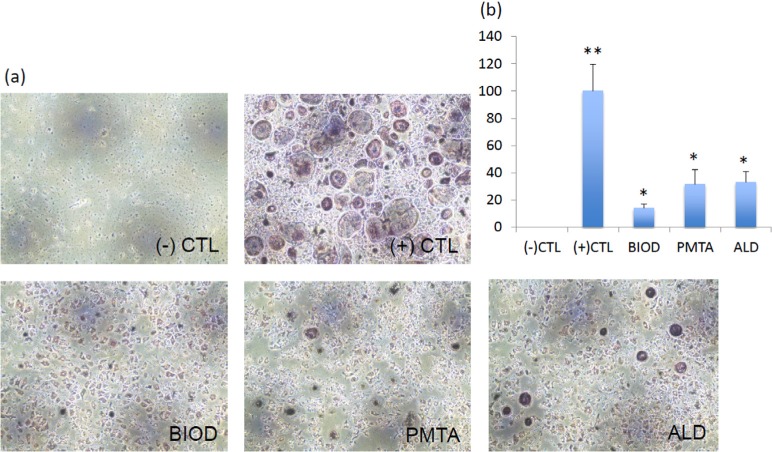
Mouse BMMs were cultured to differentiate into osteoclasts with macrophage colony-stimulating factor and receptor activator of NF-κB (RANKL), treated with lipopolysaccharide. After application with PMTA, BIOD, or ALD, cell toxicities were examined using WST-1 assay kit, and RANKL-induced osteoclast differentiation and activities were determined by resorption pit formation assay and tartrate-resistant acid phosphate (TRAP) staining. The mRNA levels of osteoclast activity-related genes were detected with quantitative real time polymerase chain reaction. Expressions of molecular signaling pathways were assessed by western blot. All data were statistically analyzed with one-way ANOVA and Tukey's post-hoc test (p<0.05).
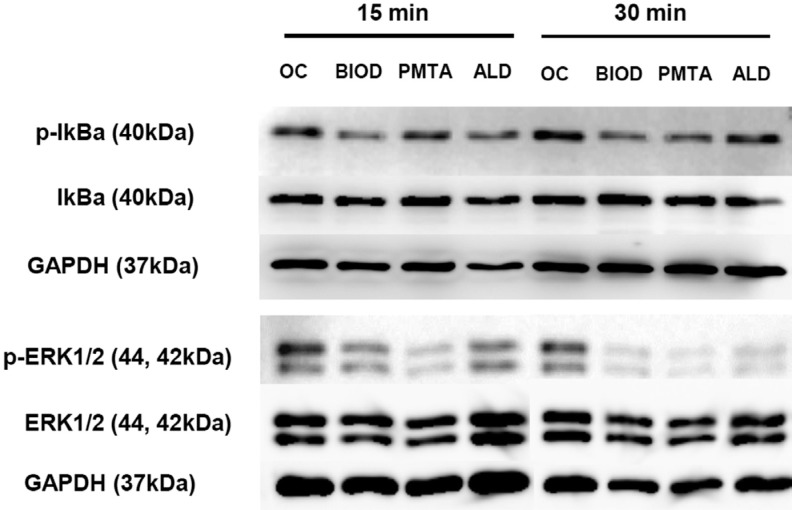
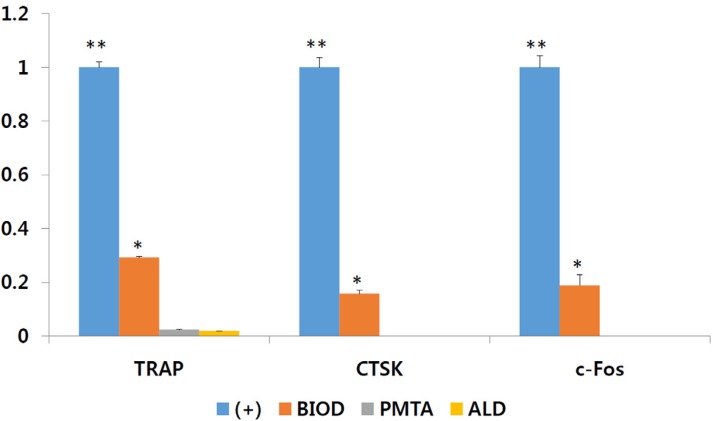
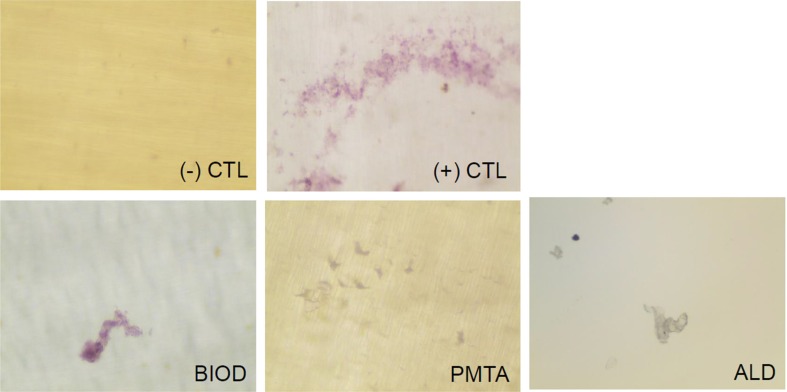
Mouse BMMs applied with PMTA, BIOD, or ALD showed highly reduced levels of TRAP-positive osteoclasts. The BIOD treated specimens suppressed mRNA expressions of cathepsin K, TRAP, and c-Fos. Nonetheless, it showed a lower effect than PMTA or ALD applications. Compared with ALD, PMTA and BIOD decreased RANKL-mediated phosphorylation of ERK1/2 and IκBα.
PMTA and BIOD showed the inhibitory effect on osteoclast differentiation and activities similar to that of ALD through IκB phosphorylation and suppression of ERK signaling pathways.
本研究旨在评估 ProRoot MTA®(PMTA)和 Biodentine®(BIOD)对来源于鼠骨髓巨噬细胞(BMMs)的破骨细胞的分化抑制作用,并将其与阿仑膦酸钠(ALD)的作用进行比较。
用巨噬细胞集落刺激因子和核因子-κB 受体激活剂(RANKL)培养鼠 BMMs 以分化为破骨细胞,并用脂多糖处理。用 PMTA、BIOD 或 ALD 处理后,通过 WST-1 试剂盒检测细胞毒性,通过蚀斑形成试验和抗酒石酸酸性磷酸酶(TRAP)染色检测 RANKL 诱导的破骨细胞分化和活性。通过定量实时聚合酶链反应检测破骨细胞活性相关基因的 mRNA 水平。通过 Western blot 评估分子信号通路的表达。使用单因素方差分析和 Tukey 事后检验(p<0.05)对所有数据进行统计学分析。
用 PMTA、BIOD 或 ALD 处理的鼠 BMMs 中 TRAP 阳性破骨细胞的数量明显减少。BIOD 处理的标本抑制了组织蛋白酶 K、TRAP 和 c-Fos 的 mRNA 表达。然而,其效果低于 PMTA 或 ALD 的应用。与 ALD 相比,PMTA 和 BIOD 降低了 RANKL 介导的 ERK1/2 和 IκBα磷酸化。
PMTA 和 BIOD 通过 IκB 磷酸化和抑制 ERK 信号通路,显示出与 ALD 相似的抑制破骨细胞分化和活性的作用。