Yu Kwan Ngok
Department of Physics, City University of Hong Kong, Tat Chee Avenue, Kowloon Tong, Hong Kong.
State Key Laboratory in Marine Pollution, City University of Hong Kong, Tat Chee Avenue, Kowloon Tong, Kowloon, Hong Kong.
J Radiat Res. 2019 Mar 1;60(2):163-170. doi: 10.1093/jrr/rry109.
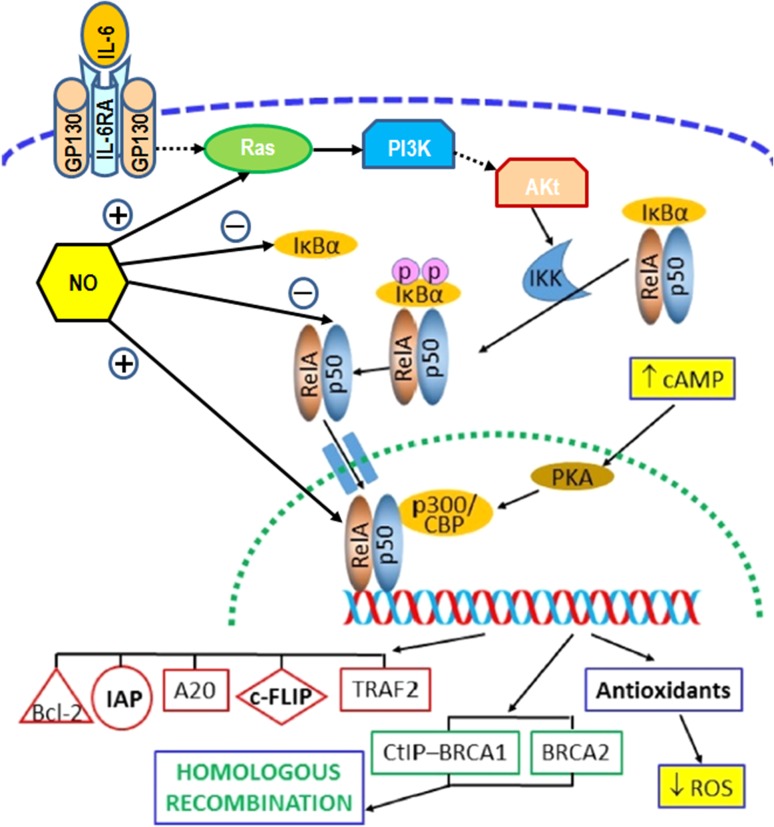
Radiation-induced rescue effect (RIRE) refers to the phenomenon in which detrimental effects in targeted irradiated cells are reduced upon receiving feedback signals from partnered non-irradiated bystander cells, or from the medium previously conditioning these partnered non-irradiated bystander cells. For convenience, in the current review we define two types of RIRE: (i) Type 1 RIRE (reduced detrimental effects in targeted cells upon receiving feedback signals from bystander cells) and (ii) Type 2 RIRE (exacerbated detrimental effects in targeted cells upon receiving feedback signals from bystander cells). The two types of RIRE, as well as the associated mechanisms and chemical messengers, have been separately reviewed. The recent report on the potential effects of RIRE on the traditional colony-formation assays has also been reviewed. Finally, future priorities and directions for research into RIRE are discussed.
辐射诱导救援效应(RIRE)是指在受到来自配对的未受辐射旁观者细胞的反馈信号,或来自先前处理过这些配对的未受辐射旁观者细胞的培养基的反馈信号后,靶向照射细胞中的有害效应得以减轻的现象。为方便起见,在本综述中,我们定义了两种类型的RIRE:(i)1型RIRE(在受到旁观者细胞的反馈信号后,靶向细胞中的有害效应减轻)和(ii)2型RIRE(在受到旁观者细胞的反馈信号后,靶向细胞中的有害效应加剧)。这两种类型的RIRE以及相关机制和化学信使已分别进行了综述。关于RIRE对传统集落形成试验潜在影响的最新报告也已进行了综述。最后,讨论了RIRE未来的研究重点和方向。