Institute of Neuropathology, University Medical Center, 37099 Göttingen, Germany.
Department of Neurology, University Medical Center, 37099 Göttingen, Germany.
Int J Mol Sci. 2019 Jan 8;20(1):218. doi: 10.3390/ijms20010218.
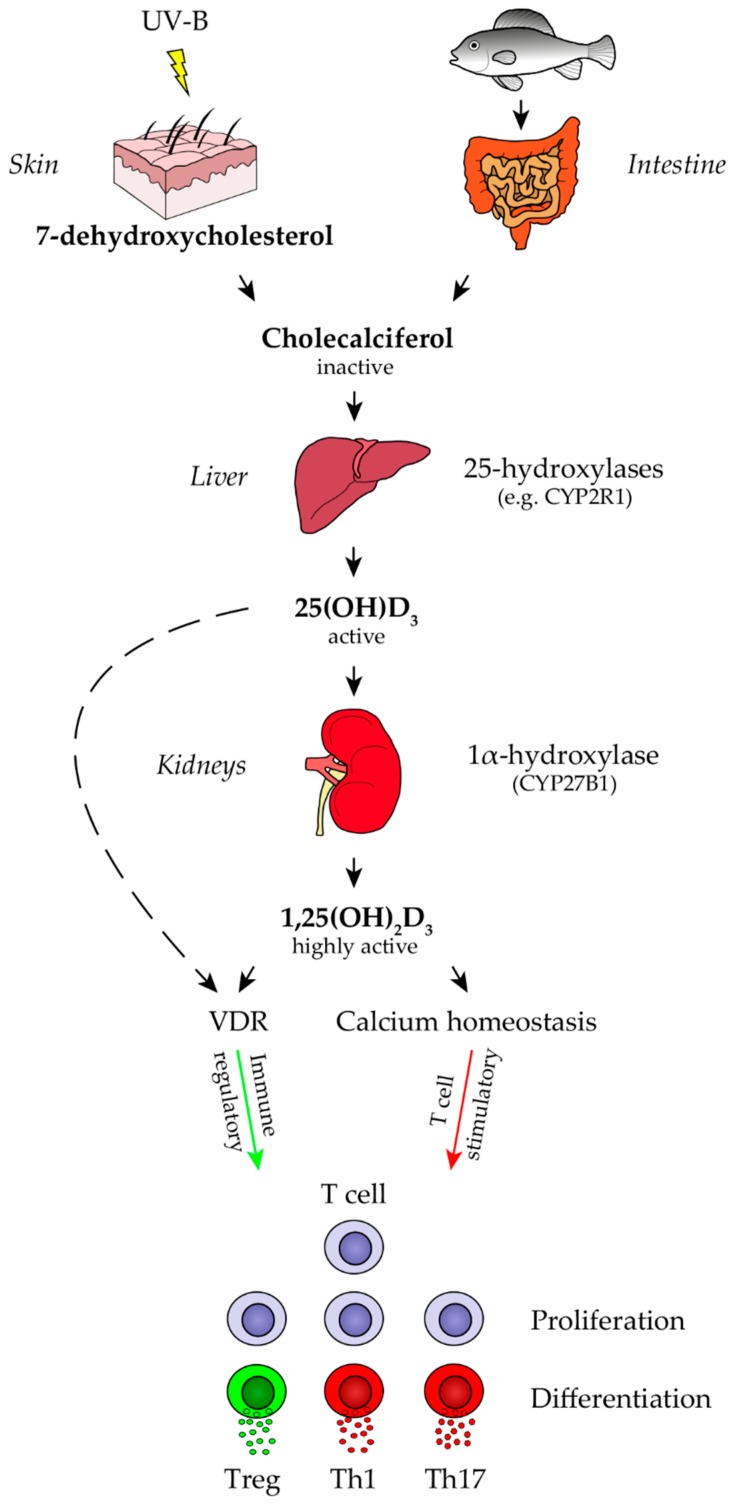
The exact cause of multiple sclerosis (MS) remains elusive. Various factors, however, have been identified that increase an individual's risk of developing this central nervous system (CNS) demyelinating disease and are associated with an acceleration in disease severity. Besides genetic determinants, environmental factors are now established that influence MS, which is of enormous interest, as some of these contributing factors are relatively easy to change. In this regard, a low vitamin D status is associated with an elevated relapse frequency and worsened disease course in patients with MS. The most important question, however, is whether this association is causal or related. That supplementing vitamin D in MS is of direct therapeutic benefit, is still a matter of debate. In this manuscript, we first review the potentially immune modulating mechanisms of vitamin D, followed by a summary of current and ongoing clinical trials intended to assess whether vitamin D supplementation positively influences the outcome of MS. Furthermore, we provide emerging evidence that excessive vitamin D treatment via the T cell-stimulating effect of secondary hypercalcemia, could have negative effects in CNS demyelinating disease. This jointly merges into the balancing concept of a therapeutic window of vitamin D in MS.
多发性硬化症(MS)的确切病因仍不清楚。然而,已经确定了各种增加个体患这种中枢神经系统(CNS)脱髓鞘疾病风险的因素,并与疾病严重程度的加速有关。除了遗传决定因素外,环境因素也被确定会影响 MS,这非常令人感兴趣,因为其中一些致病因素相对容易改变。在这方面,维生素 D 状态低下与 MS 患者的复发频率增加和疾病恶化有关。然而,最重要的问题是这种关联是因果关系还是相关关系。补充维生素 D 是否对 MS 有直接的治疗益处,仍然存在争议。在本文中,我们首先回顾了维生素 D 潜在的免疫调节机制,然后总结了目前正在进行的临床试验,旨在评估维生素 D 补充是否会对 MS 的结果产生积极影响。此外,我们提供了新的证据表明,通过继发性高钙血症的 T 细胞刺激作用过度治疗维生素 D,可能对 CNS 脱髓鞘疾病产生负面影响。这共同融合成 MS 中维生素 D 治疗的治疗窗平衡概念。