Neurochemistry Laboratory, Faculty of Medicine, Universidad Autonoma del Estado de Mexico, 50000 Toluca de Lerdo, Mex., Mexico.
Nutrients. 2019 May 15;11(5):1076. doi: 10.3390/nu11051076.
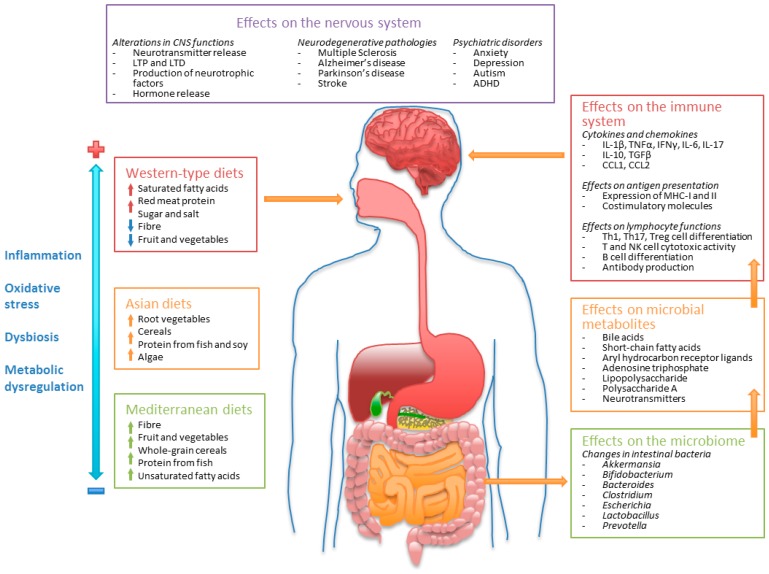
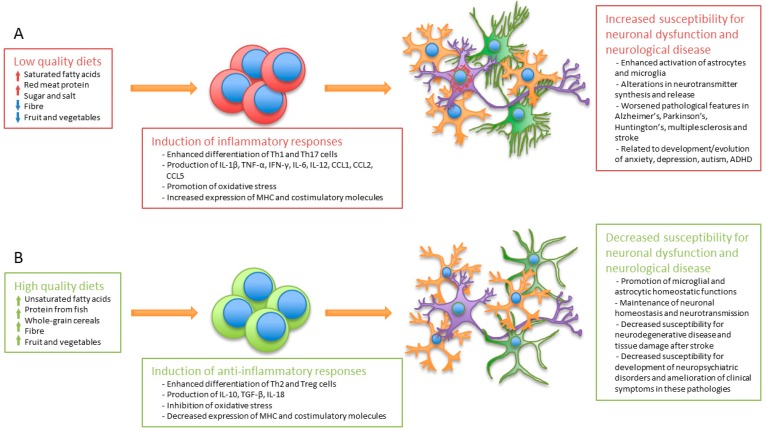
The gut-microbiome-brain axis is now recognized as an essential part in the regulation of systemic metabolism and homeostasis. Accumulating evidence has demonstrated that dietary patterns can influence the development of metabolic alterations and inflammation through the effects of nutrients on a multitude of variables, including microbiome composition, release of microbial products, gastrointestinal signaling molecules, and neurotransmitters. These signaling molecules are, in turn, implicated in the regulation of the immune system, either promoting or inhibiting the production of pro-inflammatory cytokines and the expansion of specific leukocyte subpopulations, such as Th17 and Treg cells, which are relevant in the development of neuroinflammatory and neurodegenerative conditions. Metabolic diseases, like obesity and type 2 diabetes mellitus, are related to inadequate dietary patterns and promote variations in the aforementioned signaling pathways in patients with these conditions, which have been linked to alterations in neurological functions and mental health. Thus, maintenance of adequate dietary patterns should be an essential component of any strategy aiming to prevent neurological pathologies derived from systemic metabolic alterations. The present review summarizes current knowledge on the role of nutrition in the modulation of the immune system and its impact in the development of neuroinflammation and neurological disease.
肠道微生物群-脑轴现在被认为是调节全身代谢和内稳态的重要组成部分。越来越多的证据表明,饮食模式可以通过营养物质对多种变量的影响,包括微生物群落组成、微生物产物的释放、胃肠道信号分子和神经递质,来影响代谢改变和炎症的发展。这些信号分子反过来又参与免疫系统的调节,促进或抑制促炎细胞因子的产生和特定白细胞亚群(如 Th17 和 Treg 细胞)的扩增,这些细胞因子与神经炎症和神经退行性疾病的发展有关。代谢疾病,如肥胖症和 2 型糖尿病,与饮食模式不当有关,并促进这些疾病患者上述信号通路的变化,这些变化与神经功能和心理健康的改变有关。因此,维持适当的饮食模式应该是预防源自全身代谢改变的神经病理学的任何策略的重要组成部分。本综述总结了营养在免疫系统调节中的作用及其对神经炎症和神经疾病发展的影响的最新知识。