Department of General Surgery, The First Affiliated Hospital of Nanjing Medical University, Nanjing, China.
Department of Liver Surgery/Liver Transplantation Center, The First Affiliated Hospital of Nanjing Medical University, Nanjing, China.
Cell Death Dis. 2019 Jan 10;10(1):32. doi: 10.1038/s41419-018-1262-x.
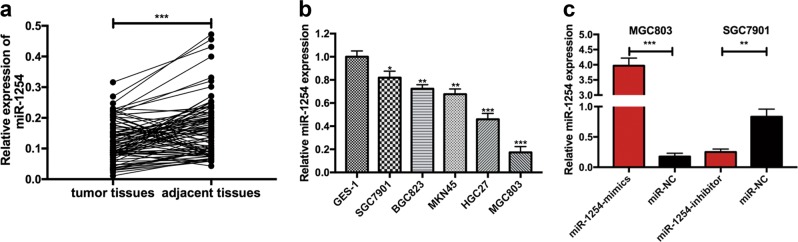
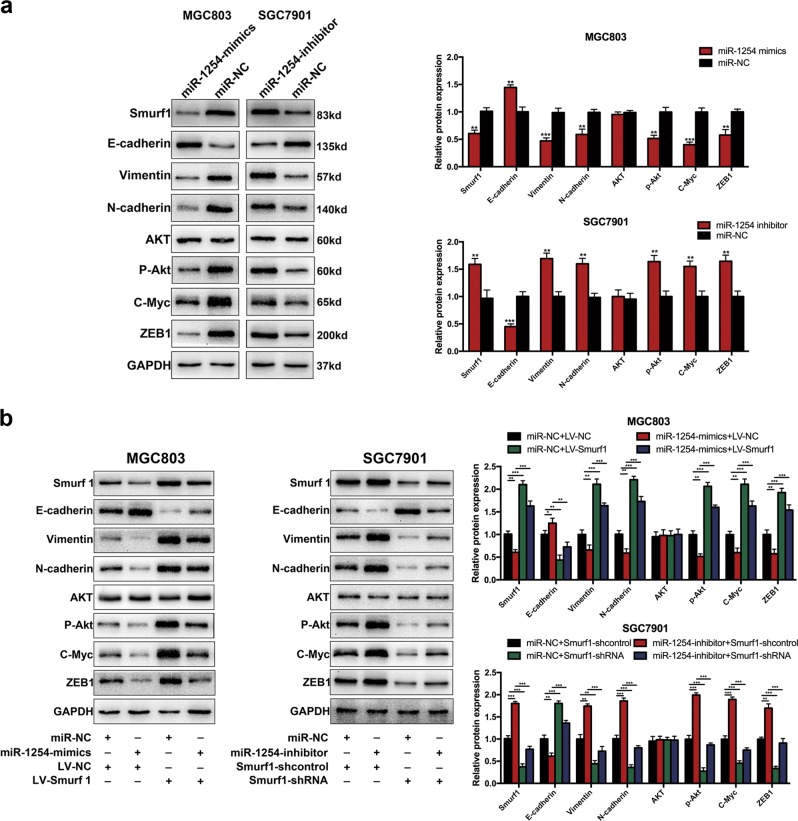
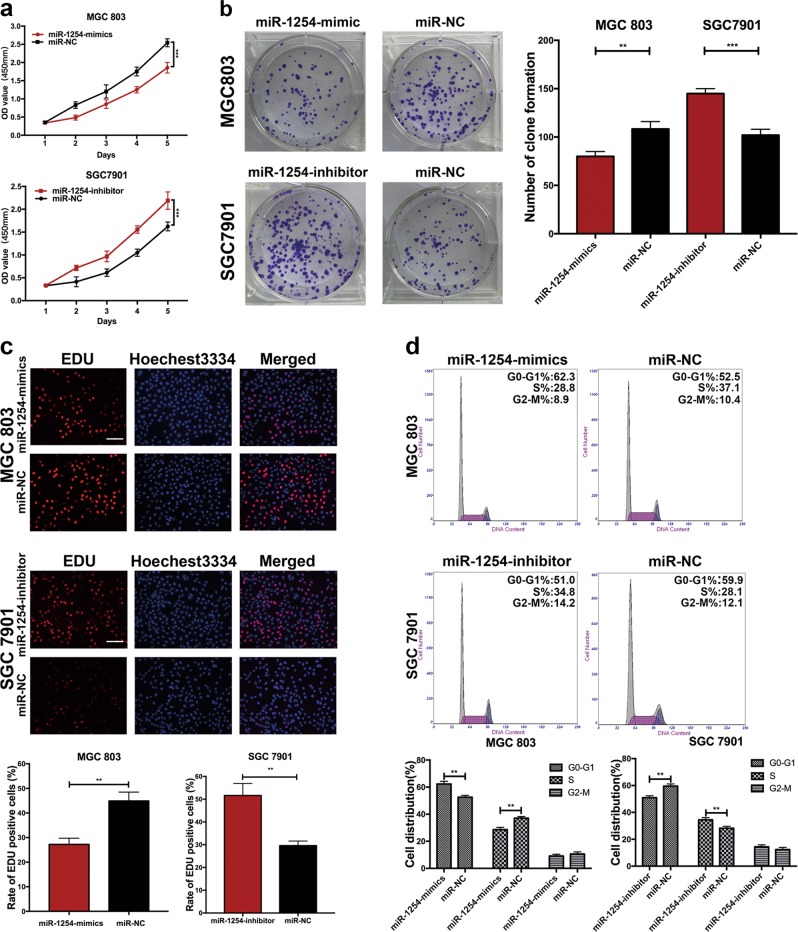
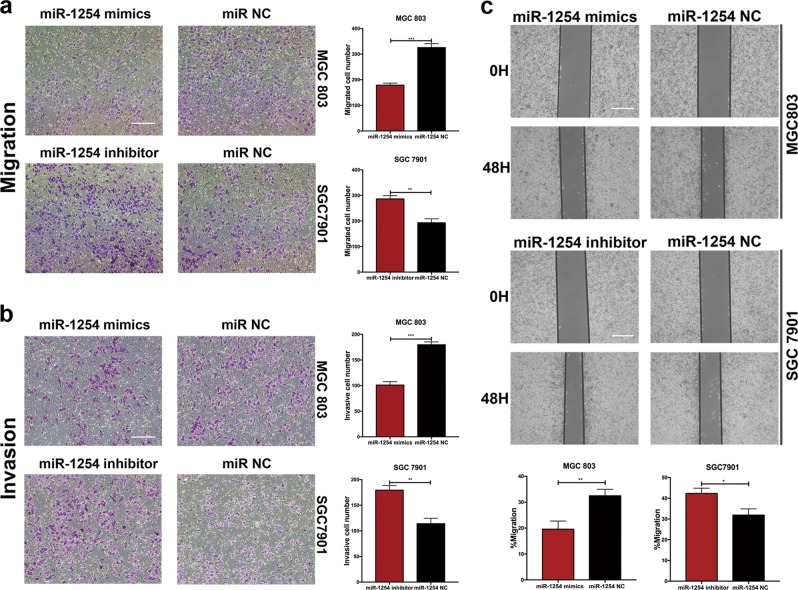
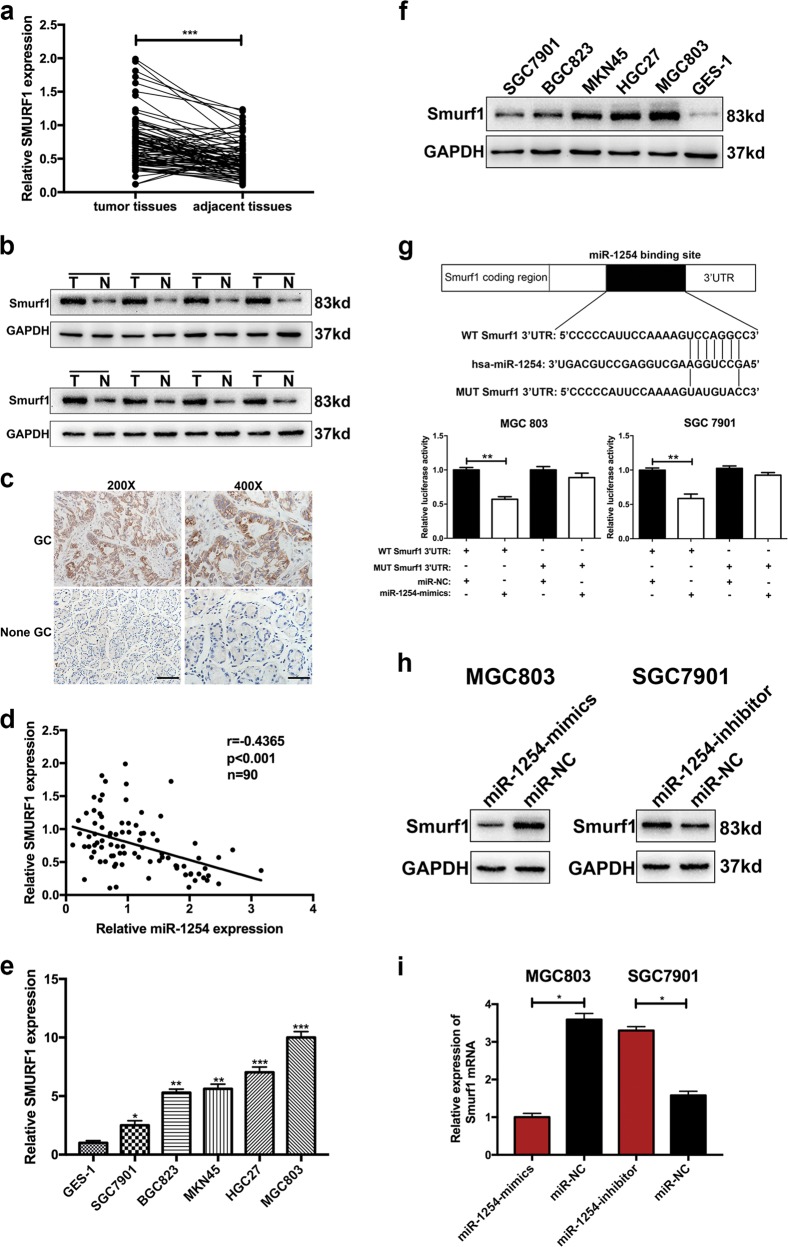
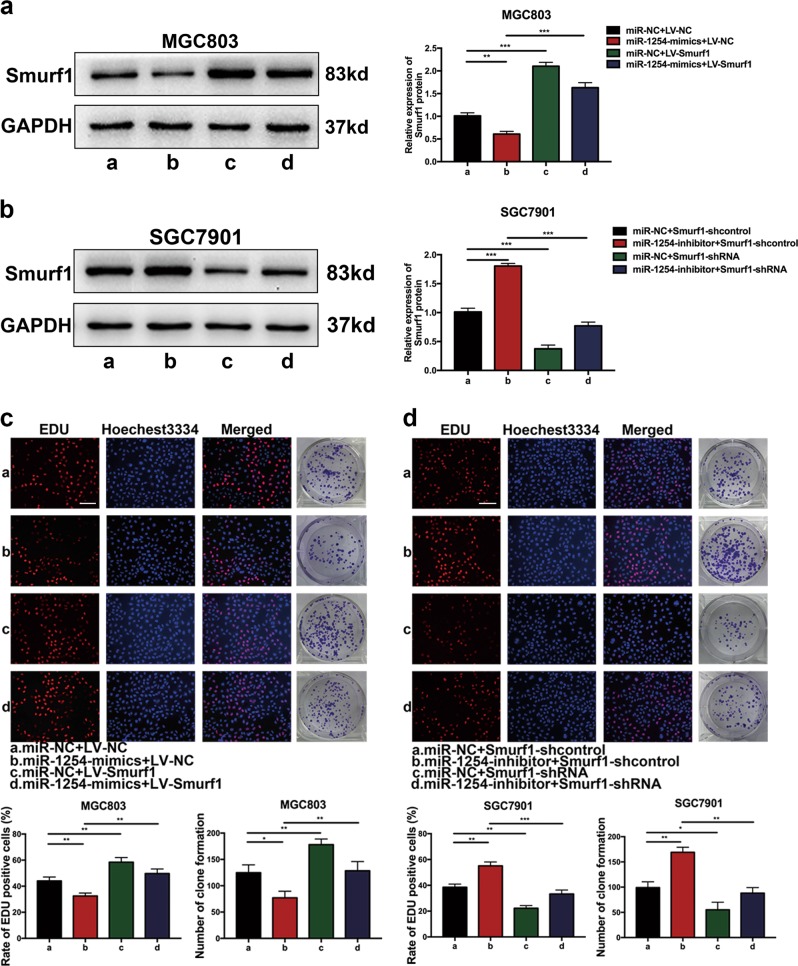
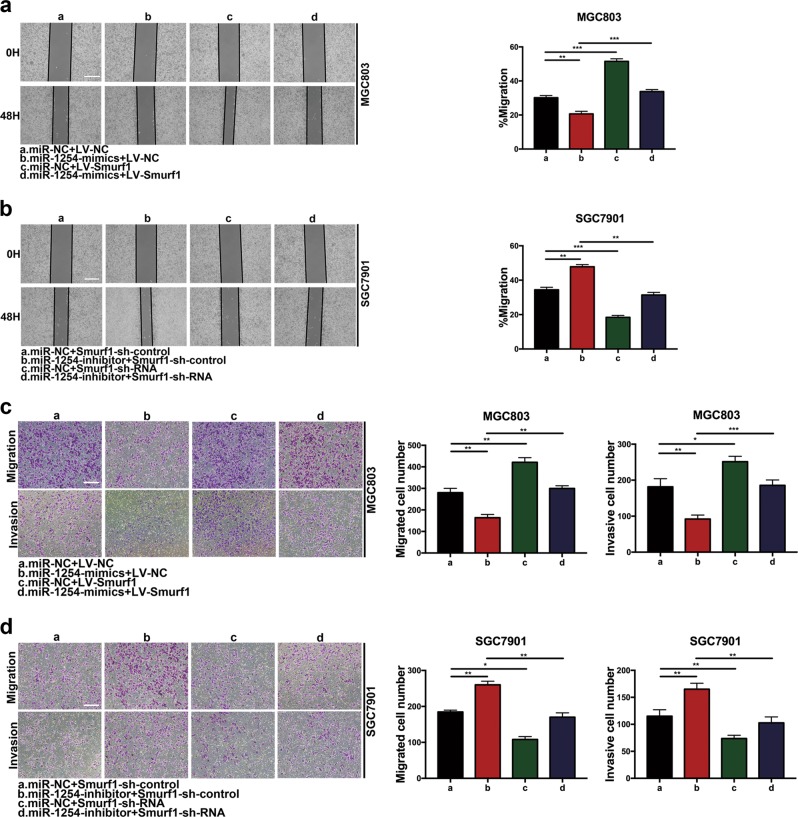
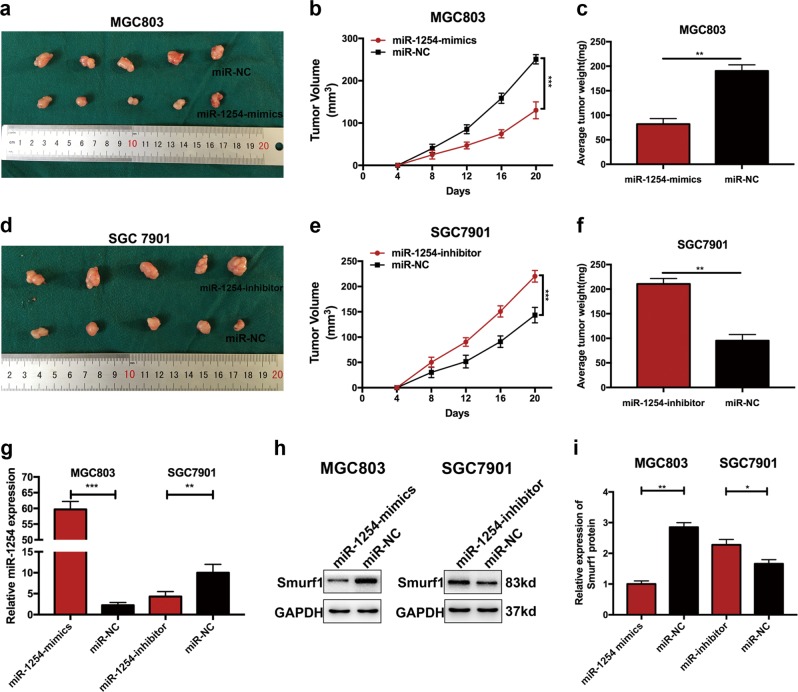
Gastric cancer (GC) is one of the most frequent malignancies, and increasing evidence supports the contribution of microRNA (miRNAs) to cancer progression. miR-1254 has been confirmed to participate in the regulation of various cancers, while the function of miR-1254 in GC remains unknown. In this study, we investigated the role of miR-1254 in GC. The expression of miR-1254 was detected in human GC specimens and cell lines by miRNA RT-PCR. The effects of miR-1254 on GC proliferation were determined by CCK-8 proliferation assays, colony formation assays, 5-ethynyl-2'-deoxyuridine (EdU) incorporation, and cell-cycle assays. The ability of migration and invasion was examined by transwell and wound-healing assay. Dual Luciferase reporter assay was used to validate the interaction of miR-1254 with its target gene. The xenograft mouse models were conducted to investigate the effects of miR-1254 in vivo. The signaling pathways and epithelial-mesenchymal transition (EMT)-related proteins were detected with western blot. The results showed that miR-1254 inhibited the proliferation, migration and invasion in vitro and suppressed tumorigenesis in vivo. Smurf1 was shown to be the direct target of miR-1254. Overexpressing Smurf1 could partially counteract the effects caused by miR-1254. Similarly, the effects of the miR-1254-inhibitor were also rescued by Smurf1-shRNA. Furthermore, we found that miR-1254 inhibited EMT and decreased the PI3K/AKT signaling pathway through downregulating Smurf1. In summary, overexpression of miR-1254 could suppress proliferation, migration, invasion, and EMT via PI3K/AKT signaling pathways by downregulation of Smurf1 in GC, which suggests a potential therapeutic target for GC.
胃癌(GC)是最常见的恶性肿瘤之一,越来越多的证据支持 microRNA(miRNAs)在癌症进展中的作用。miR-1254 已被证实参与多种癌症的调控,而 miR-1254 在 GC 中的功能尚不清楚。在本研究中,我们研究了 miR-1254 在 GC 中的作用。通过 miRNA RT-PCR 检测人 GC 标本和细胞系中 miR-1254 的表达。通过 CCK-8 增殖实验、集落形成实验、5-乙炔基-2'-脱氧尿苷(EdU)掺入和细胞周期实验测定 miR-1254 对 GC 增殖的影响。通过 Transwell 和划痕愈合实验检测迁移和侵袭能力。双荧光素酶报告实验用于验证 miR-1254 与其靶基因的相互作用。通过异种移植小鼠模型研究 miR-1254 在体内的作用。Western blot 检测信号通路和上皮间质转化(EMT)相关蛋白。结果表明,miR-1254 抑制体外增殖、迁移和侵袭,并抑制体内肿瘤发生。Smurf1 被证明是 miR-1254 的直接靶基因。过表达 Smurf1 可部分抵消 miR-1254 引起的作用。同样,miR-1254 抑制剂的作用也被 Smurf1-shRNA 挽救。此外,我们发现 miR-1254 通过下调 Smurf1 抑制 EMT 并降低 PI3K/AKT 信号通路。总之,miR-1254 的过表达可通过下调 Smurf1 抑制 PI3K/AKT 信号通路抑制 GC 中的增殖、迁移、侵袭和 EMT,提示 GC 潜在的治疗靶点。