Pu Mengfan, Li Chenggang, Qi Xinming, Chen Jing, Wang Yizheng, Gao Lulu, Miao Lingling, Ren Jin
Center for Drug Safety Evaluation and Research, State Key Laboratory of Drug Research, Shanghai Institute of Materia Medica, Chinese Academy of Sciences, Shanghai, China.
School of Life Science and Technology, ShanghaiTech University, Shanghai, China.
PLoS Genet. 2017 Jul 27;13(7):e1006896. doi: 10.1371/journal.pgen.1006896. eCollection 2017 Jul.
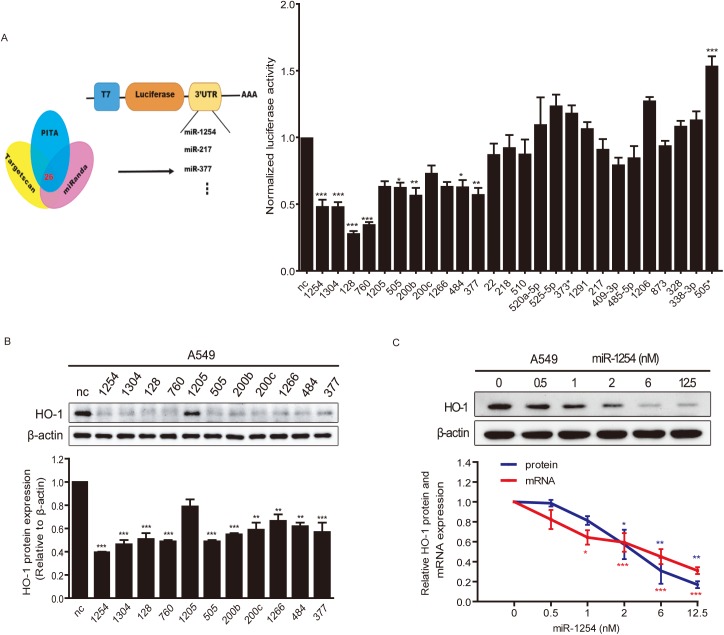
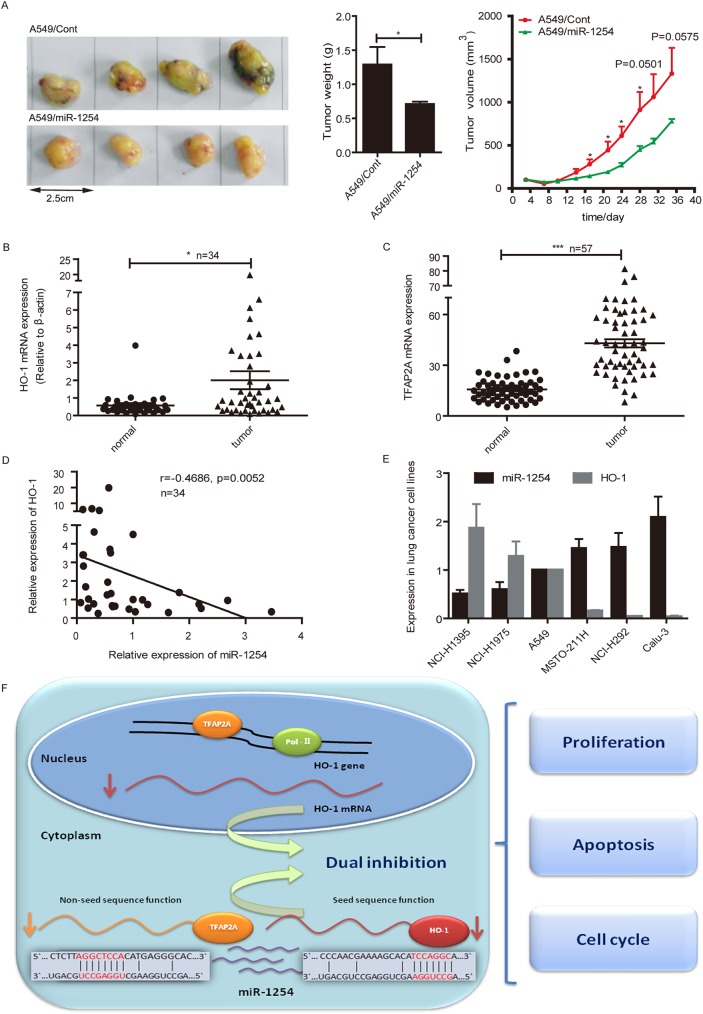
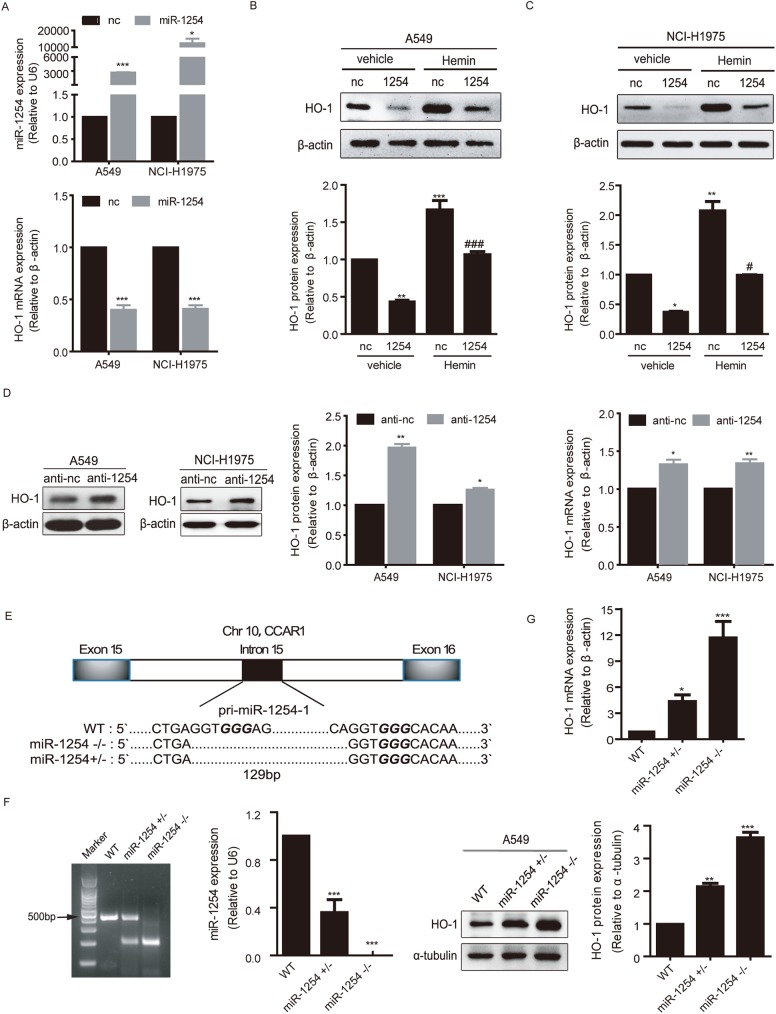
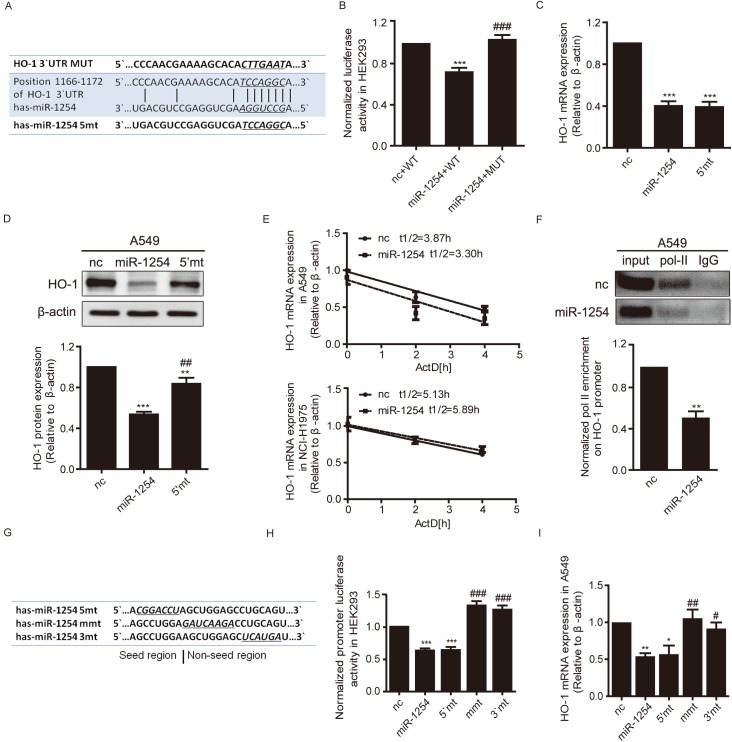
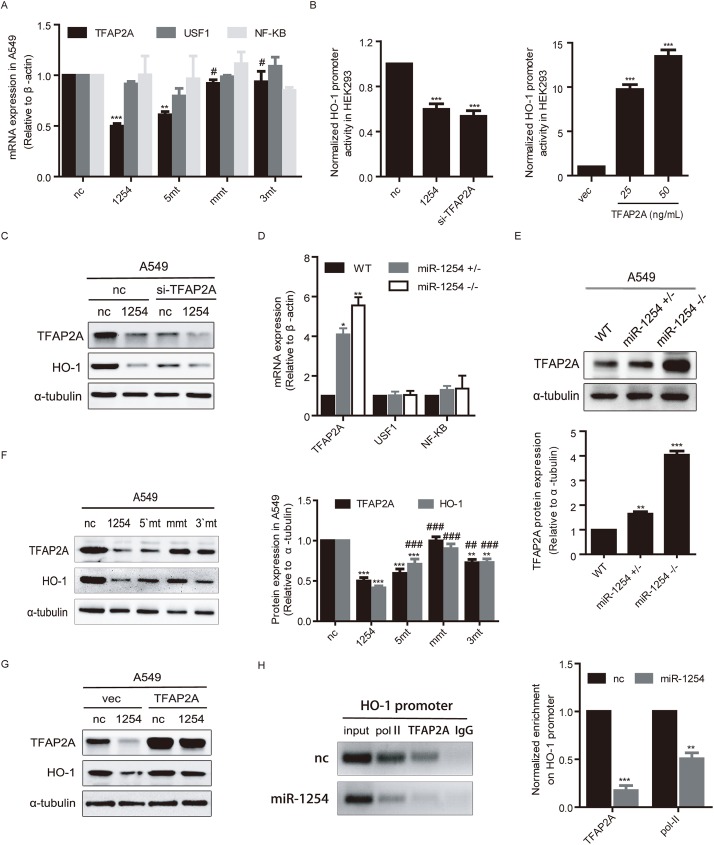
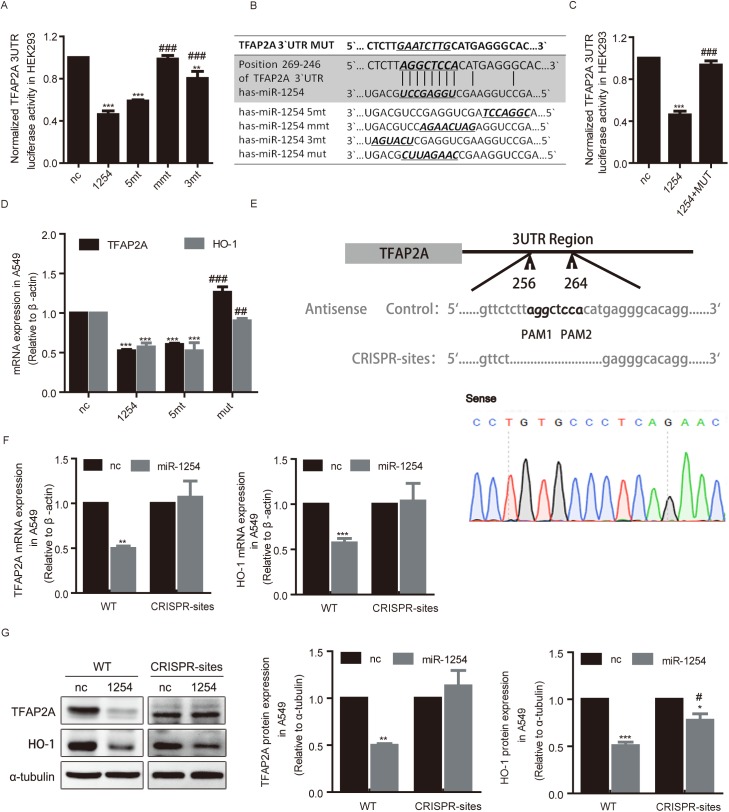
MicroRNAs (miRNAs) are a class of small non-coding RNAs, which direct post-transcriptional gene silencing (PTGS) and function in a vast range of biological events including cancer development. Most miRNAs pair to the target sites through seed region near the 5' end, leading to mRNA cleavage and/or translation repression. Here, we demonstrated a miRNA-induced dual regulation of heme oxygenase-1 (HO-1) via seed region and non-seed region, consequently inhibited tumor growth of NSCLC. We identified miR-1254 as a negative regulator inhibiting HO-1 translation by directly targeting HO-1 3'UTR via its seed region, and suppressing HO-1 transcription via non-seed region-dependent inhibition of transcriptional factor AP-2 alpha (TFAP2A), a transcriptional activator of HO-1. MiR-1254 induced cell apoptosis and cell cycle arrest in human non-small cell lung carcinoma (NSCLC) cells by inhibiting the expression of HO-1, consequently suppressed NSCLC cell growth. Consistently with the in vitro studies, mouse xenograft studies validated that miR-1254 suppressed NSCLC tumor growth in vivo. Moreover, we found that HO-1 expression was inversely correlated with miR-1254 level in human NSCLC tumor samples and cell lines. Overall, these findings identify the dual inhibition of HO-1 by miR-1254 as a novel functional mechanism of miRNA, which results in a more effective inhibition of oncogenic mRNA, and leads to a tumor suppressive effect.
微小RNA(miRNA)是一类小的非编码RNA,其指导转录后基因沉默(PTGS)并在包括癌症发展在内的广泛生物学事件中发挥作用。大多数miRNA通过5'端附近的种子区域与靶位点配对,导致mRNA切割和/或翻译抑制。在此,我们证明了一种miRNA通过种子区域和非种子区域对血红素加氧酶-1(HO-1)进行双重调控,从而抑制非小细胞肺癌(NSCLC)的肿瘤生长。我们鉴定出miR-1254是一种负调节因子,它通过其种子区域直接靶向HO-1的3'UTR来抑制HO-1的翻译,并通过对HO-1的转录激活因子转录因子AP-2α(TFAP2A)的非种子区域依赖性抑制来抑制HO-1的转录。miR-1254通过抑制HO-1的表达诱导人非小细胞肺癌(NSCLC)细胞凋亡和细胞周期停滞,从而抑制NSCLC细胞生长。与体外研究一致,小鼠异种移植研究证实miR-1254在体内抑制NSCLC肿瘤生长。此外,我们发现HO-1的表达与人类NSCLC肿瘤样本和细胞系中miR-1254的水平呈负相关。总体而言,这些发现确定了miR-1254对HO-1的双重抑制是miRNA的一种新功能机制,其导致对致癌mRNA的更有效抑制,并产生肿瘤抑制作用。