Akhmetzyanova Elvira R, Mukhamedshina Yana O, Zhuravleva Margarita N, Galieva Luisa R, Kostennikov Alexander A, Garanina Ekaterina E, Rizvanov Albert A
OpenLab Gene and Cell Technologies, Kazan Federal University, Kazan, Russia.
Department of Histology, Cytology and Embryology, Kazan State Medical University, Kazan, Russia.
Front Cell Neurosci. 2018 Dec 21;12:507. doi: 10.3389/fncel.2018.00507. eCollection 2018.
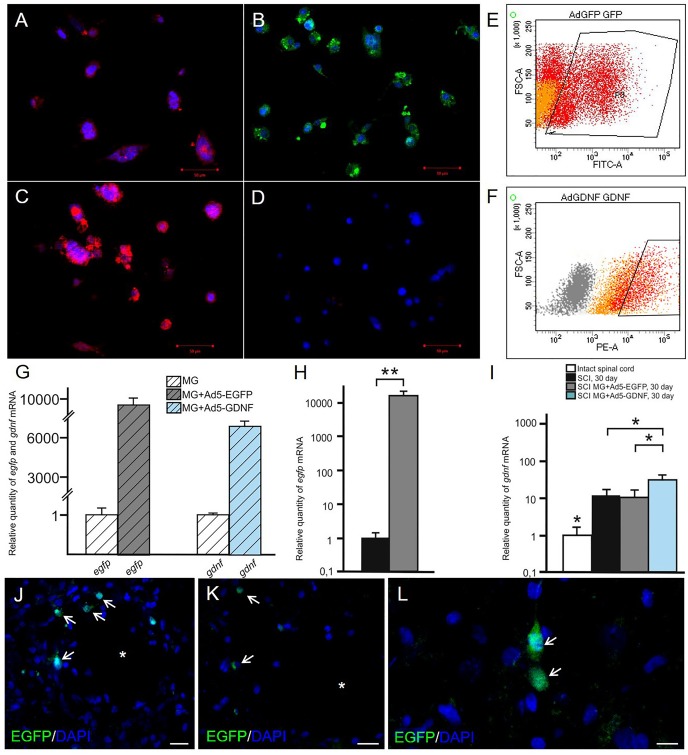
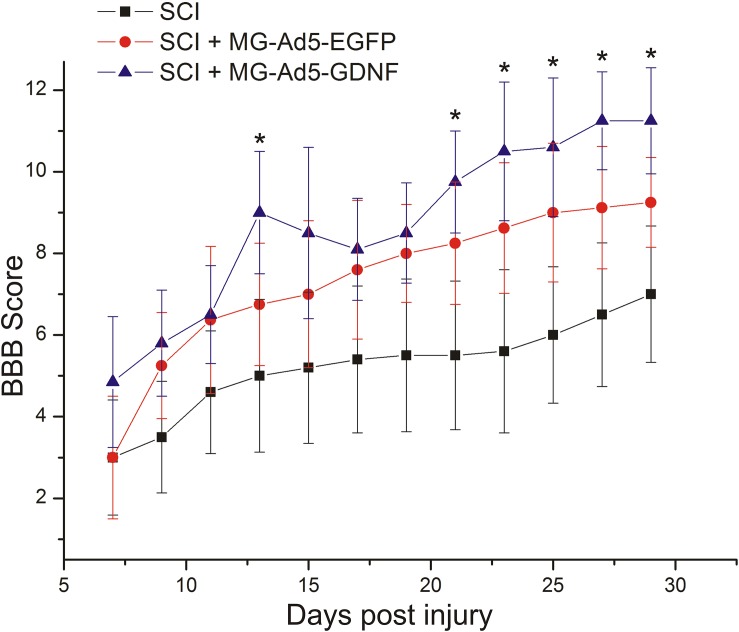
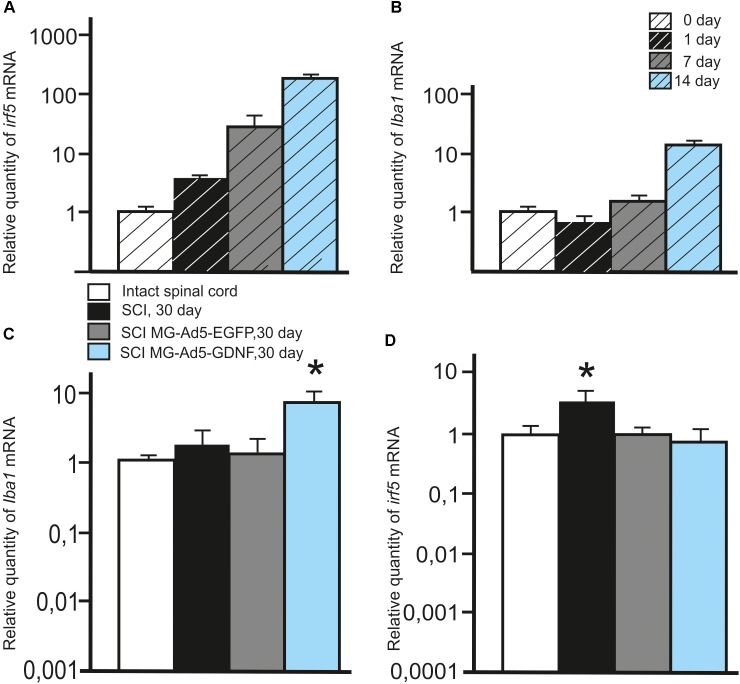
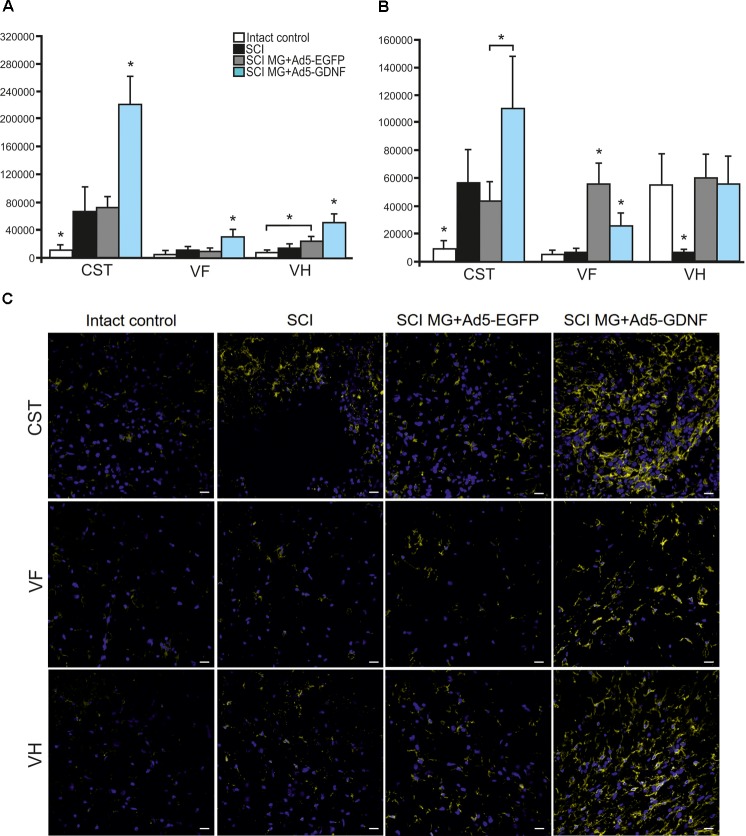
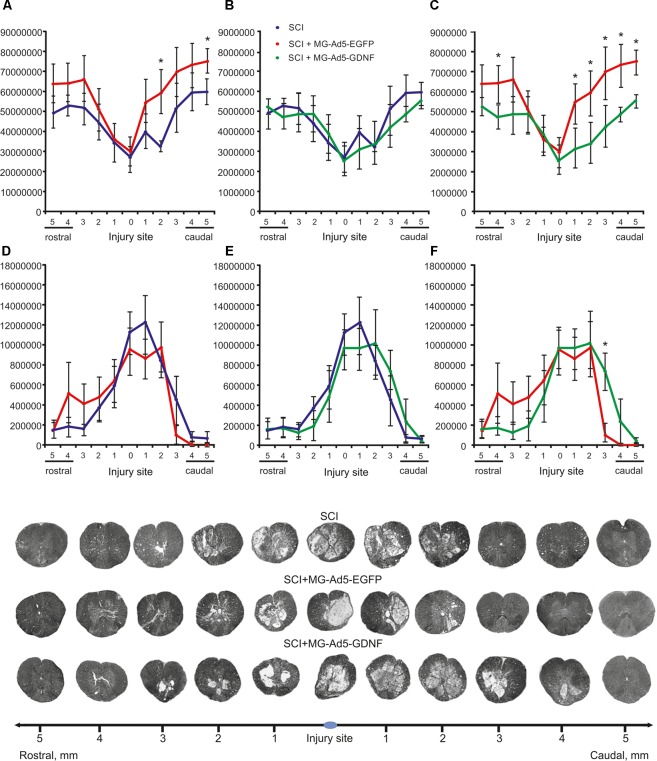
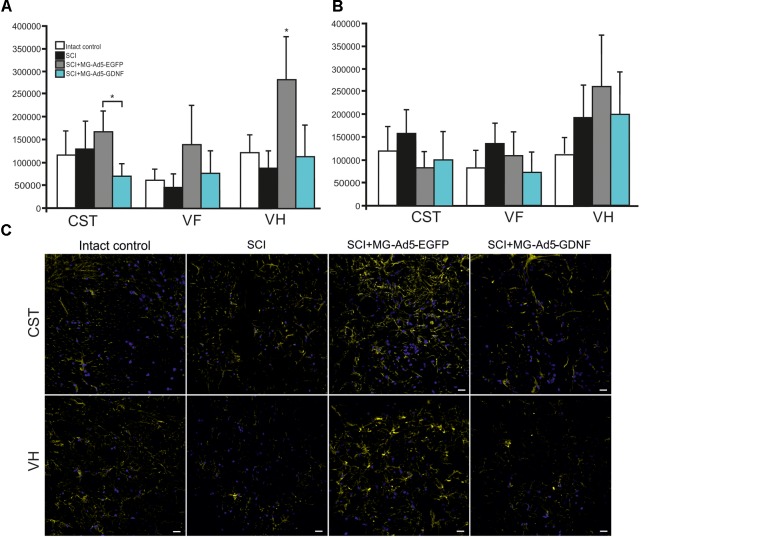
Microglial cells are known as important mediators of inflammation and immune response in the central nervous system (CNS). However, a neuroprotective role of these cells in post-traumatic processes should not be overlooked. Microglial cells are the first to respond to CNS injury and are further involved in all critical events of pathogenesis. When activated microglia clear the cellular debris and release anti- and proinflammatory cytokines and chemokines, nitric oxide, neurotrophins, and antioxidants capable of producing both neurotoxic and neuroprotective effects. The aim of this study was to determine to what extent the phagocytic activity of microglia in an acute period of spinal cord injury (SCI) in rats can effect the post-traumatic processes. For this purpose we implanted genetically modified Ad5-EGFP or Ad5-GDNF microglial cells into the area of acute SCI. Our experiments demonstrate that the area of intact tissue was lower in the group transplanted with Ad5-GDNF-transduced microglial cells with reduced phagocytic activity than that in the group of animals transplanted with Ad5-EGFP-transduced microglia cells which did not affect the cell activity. At the same time, there was no significant difference in the functional recovery index between these groups. Thus, the increased number of microglia cells with good phagocytic activity in the area of acute SCI may contribute to the improved nervous tissue integrity without a significant effect on the functional recovery within 30 days after injury.
小胶质细胞是中枢神经系统(CNS)中炎症和免疫反应的重要介质。然而,这些细胞在创伤后过程中的神经保护作用不应被忽视。小胶质细胞是最早对中枢神经系统损伤做出反应的细胞,并进一步参与发病机制的所有关键事件。激活的小胶质细胞清除细胞碎片,并释放具有神经毒性和神经保护作用的抗炎和促炎细胞因子、趋化因子、一氧化氮、神经营养因子和抗氧化剂。本研究的目的是确定大鼠脊髓损伤(SCI)急性期小胶质细胞的吞噬活性在多大程度上会影响创伤后过程。为此,我们将基因改造的Ad5-EGFP或Ad5-GDNF小胶质细胞植入急性脊髓损伤区域。我们的实验表明,与未影响细胞活性的Ad5-EGFP转导小胶质细胞移植组相比,Ad5-GDNF转导小胶质细胞移植组的吞噬活性降低,完整组织面积更小。同时,这些组之间的功能恢复指数没有显著差异。因此,急性脊髓损伤区域具有良好吞噬活性的小胶质细胞数量增加可能有助于改善神经组织完整性,而对损伤后30天内的功能恢复没有显著影响。