Kheradvar Arash, Zareian Ramin, Kawauchi Shimako, Goodwin Richard L, Rugonyi Sandra
University of California, Irvine.
University of South Carolina School of Medicine - Greenville.
Drug Discov Today Dis Models. 2017 Summer;24:55-62. doi: 10.1016/j.ddmod.2018.04.001. Epub 2018 May 28.
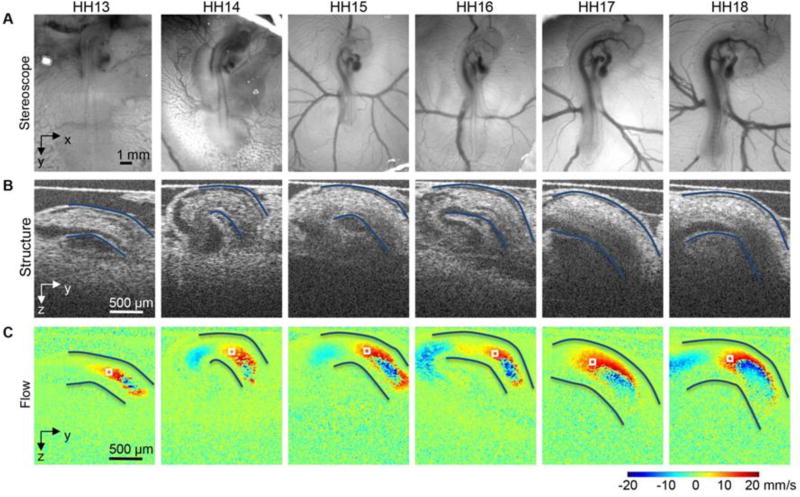
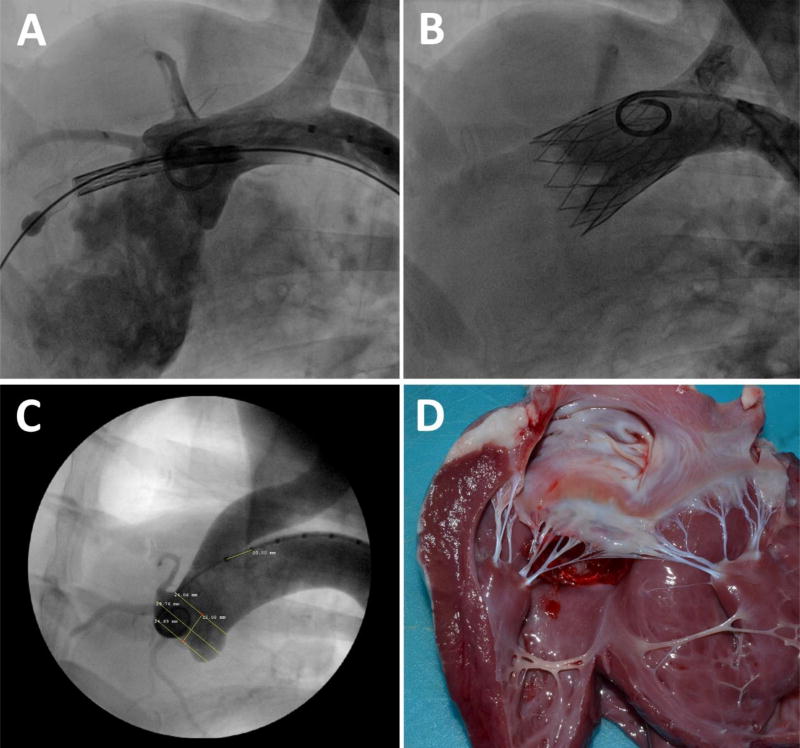
Valvular heart disease is the third-most common cause of heart problems in the United States. Malfunction of the valves can be acquired or congenital and each may lead either to stenosis or regurgitation, or even both in some cases. Heart valve disease is a progressive disease, which is irreversible and may be fatal if left untreated. Pharmacological agents cannot currently prevent valvular calcification or help repair damaged valves, as valve tissue is unable to regenerate spontaneously. Thus, heart valve replacement/repair is the only current available treatment. Heart valve research and development is currently focused on two parallel paths; first, research that aims to understand the underlying mechanisms for heart valve disease to emerge with an ultimate goal to devise medical treatment; and second, efforts to develop repair and replacement options for a diseased valve. Studies that focus on developmental malformation, genetic and disease epigenetics usually employ small animal models that are easy to access for imaging that minimally disturbs their environment during early stages of development. Alternatively, studies that aim to develop novel device for replacement and repair of diseased valves often employ large animals whose heart size and anatomy closely replicate human's. This paper aims to briefly review the current state-of-the-art animal models, and justification to use an animal model for a particular heart valve related project.
在美国,心脏瓣膜病是心脏问题的第三大常见病因。瓣膜功能障碍可能是后天获得性的,也可能是先天性的,每种情况都可能导致狭窄或反流,在某些情况下甚至两者兼而有之。心脏瓣膜病是一种进行性疾病,不可逆,如果不治疗可能会致命。目前,药物无法预防瓣膜钙化或帮助修复受损瓣膜,因为瓣膜组织无法自发再生。因此,心脏瓣膜置换/修复是目前唯一可用的治疗方法。心脏瓣膜的研发目前集中在两条并行的道路上:第一,旨在了解心脏瓣膜病发病潜在机制的研究,最终目标是设计出医学治疗方法;第二,努力开发针对病变瓣膜的修复和置换方案。专注于发育畸形、遗传和疾病表观遗传学的研究通常采用小型动物模型,这些模型在发育早期易于获取,成像时对其环境的干扰最小。或者,旨在开发用于置换和修复病变瓣膜的新型装置的研究通常采用大型动物,其心脏大小和解剖结构与人类非常相似。本文旨在简要回顾当前最先进的动物模型,以及在特定心脏瓣膜相关项目中使用动物模型的理由。