Graduate Institute of Natural Products, Kaohsiung Medical University, Kaohsiung 80708, Taiwan.
Research Center for Natural Product and Drug Development, Kaohsiung Medical University, Kaohsiung 80708, Taiwan.
Int J Mol Sci. 2019 Jan 9;20(2):244. doi: 10.3390/ijms20020244.
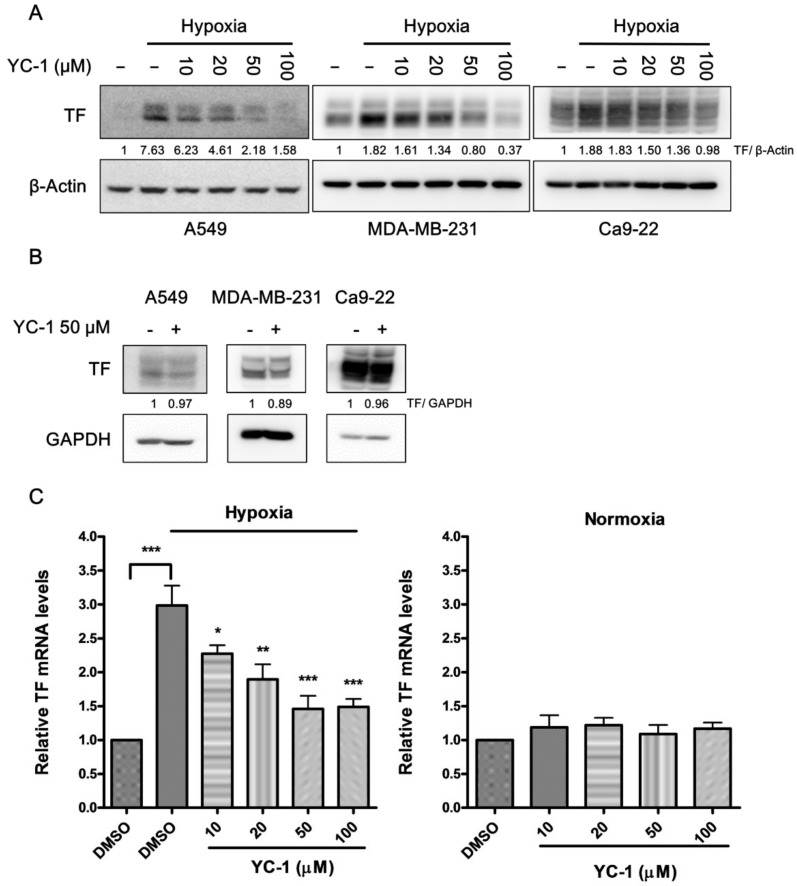
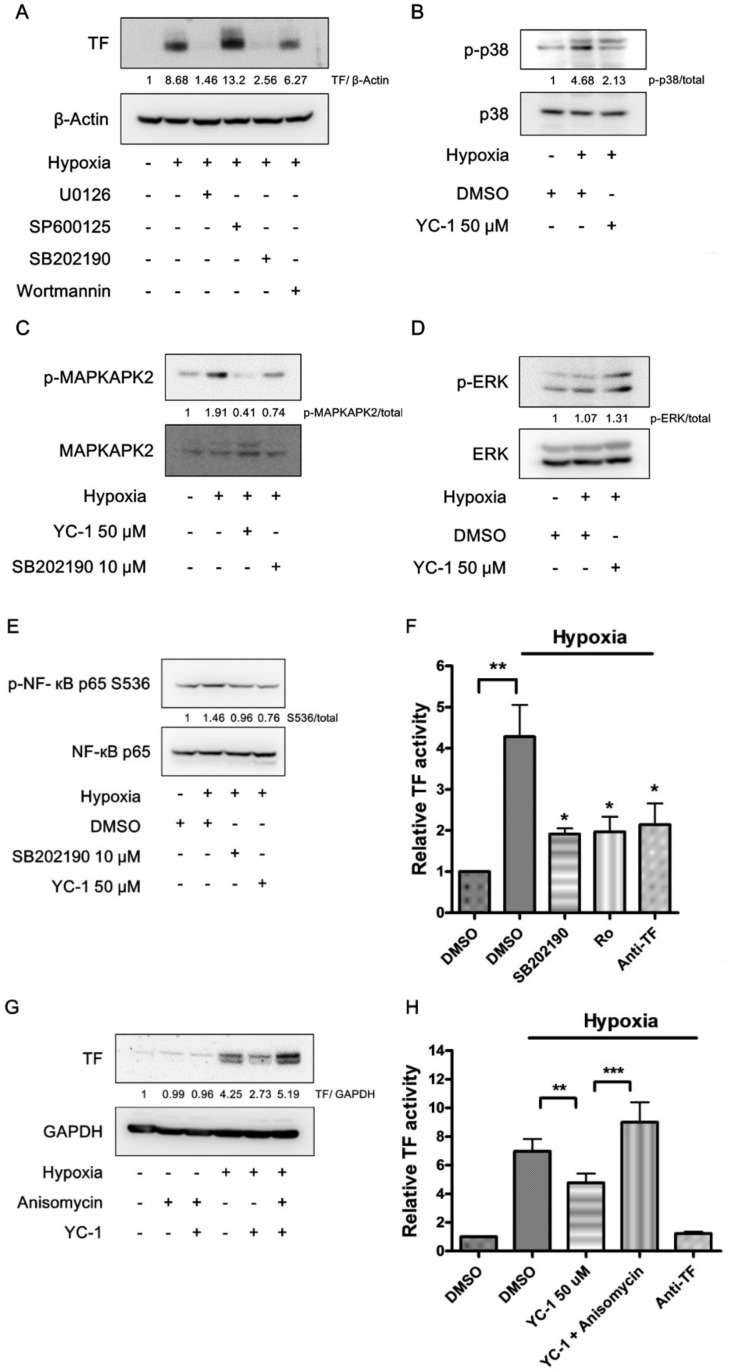
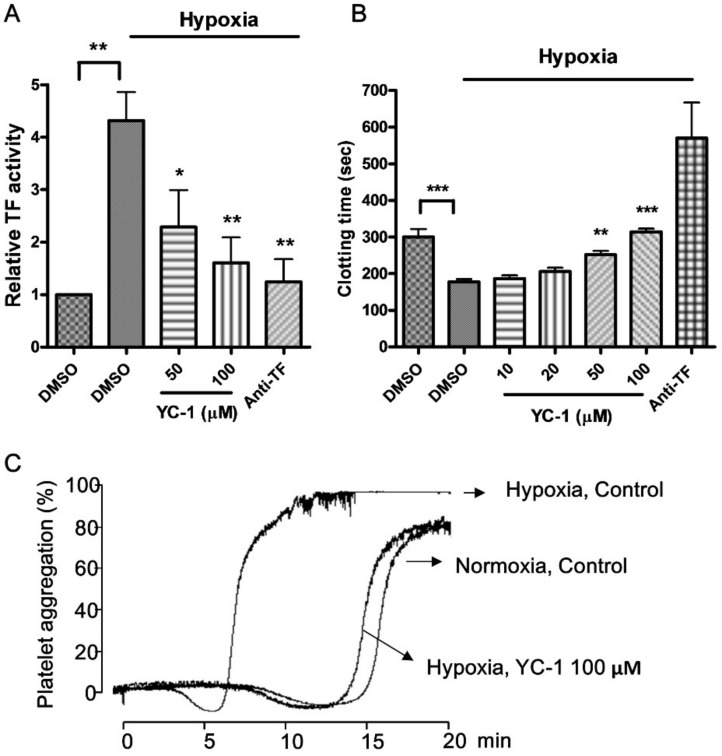
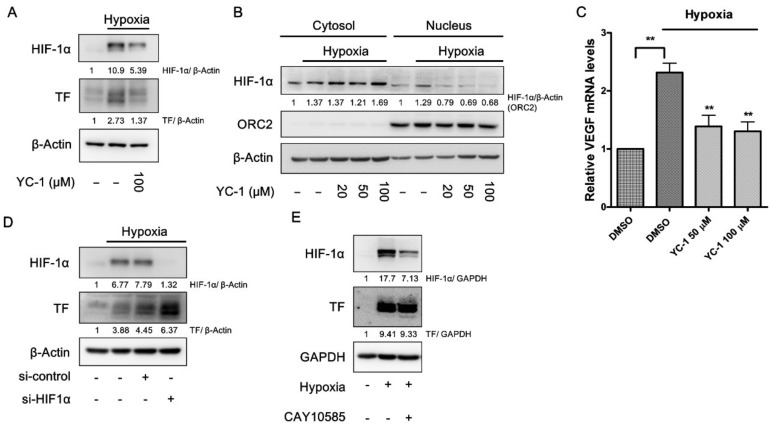
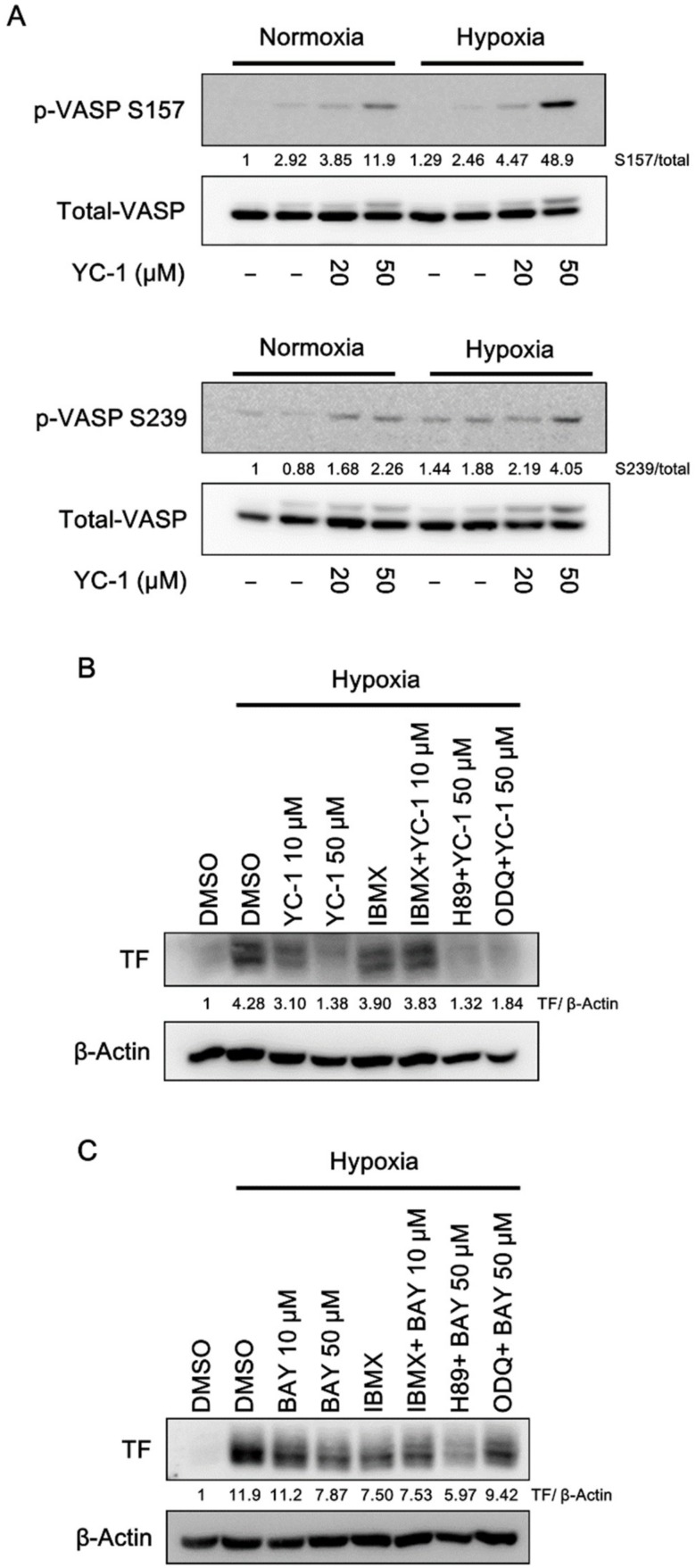
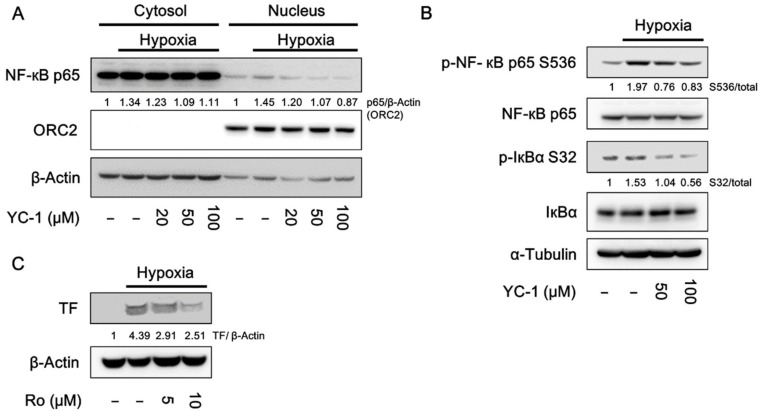
Tissue factor (TF) expressed in cancer cells has been linked to tumor-associated thrombosis, a major cause of mortality in malignancy. Hypoxia is a common feature of solid tumors and can upregulate TF. In this study, the effect of YC-1, a putative inhibitor of hypoxia-inducible factor-1α (HIF-1α), on hypoxia-induced TF expression was investigated in human lung cancer A549 cells. YC-1 selectively prevented hypoxia-induced TF expression and procoagulant activity without affecting the basal TF levels. Surprisingly, knockdown or pharmacological inhibition of HIF-1α failed to mimic YC-1's effect on TF expression, suggesting other mechanisms are involved. NF-κB, a transcription factor for TF, and its upstream regulator p38, were activated by hypoxia exposure. Treatment of hypoxic A549 cells with YC-1 prevented the activation of both NF-κB and p38. Inhibition of p38 suppressed hypoxia-activated NF-κB, and inhibited TF expression and activity to similar levels as treatment with an NF-κB inhibitor. Furthermore, stimulation of p38 by anisomycin reversed the effects of YC-1. Taken together, our results suggest that YC-1 prevents hypoxia-induced TF in cancer cells by inhibiting the p38/NF-κB pathway, this is distinct from the conventional anticoagulants that systemically inhibit blood coagulation and may shed new light on approaches to treat tumor-associated thrombosis.
组织因子(TF)在癌细胞中的表达与肿瘤相关的血栓形成有关,后者是恶性肿瘤死亡的主要原因。缺氧是实体瘤的常见特征,可上调 TF。在这项研究中,研究了一种潜在的缺氧诱导因子-1α(HIF-1α)抑制剂 YC-1 对人肺癌 A549 细胞中缺氧诱导的 TF 表达的影响。YC-1 选择性地阻止了缺氧诱导的 TF 表达和促凝血活性,而不影响基础 TF 水平。令人惊讶的是,敲低或药理学抑制 HIF-1α 未能模拟 YC-1 对 TF 表达的作用,这表明涉及其他机制。TF 的转录因子 NF-κB 及其上游调节因子 p38 在缺氧暴露下被激活。用 YC-1 处理缺氧的 A549 细胞可阻止 NF-κB 和 p38 的激活。抑制 p38 抑制了缺氧激活的 NF-κB,并将 TF 表达和活性抑制到与 NF-κB 抑制剂相同的水平。此外,anisomycin 刺激 p38 逆转了 YC-1 的作用。总之,我们的研究结果表明,YC-1 通过抑制 p38/NF-κB 通路来防止癌细胞中缺氧诱导的 TF,这与全身性抑制血液凝固的常规抗凝剂不同,可能为治疗肿瘤相关的血栓形成提供新的思路。