Faculty of Medicine and Life Sciences, Hasselt University, Martelarenlaan 42, B-3500 Hasselt, Belgium.
Department of Respiratory Medicine, Algemeen Ziekenhuis Vesalius, Hazelereik 51, B-3700 Tongeren, Belgium.
Int J Mol Sci. 2019 Jan 10;20(2):252. doi: 10.3390/ijms20020252.
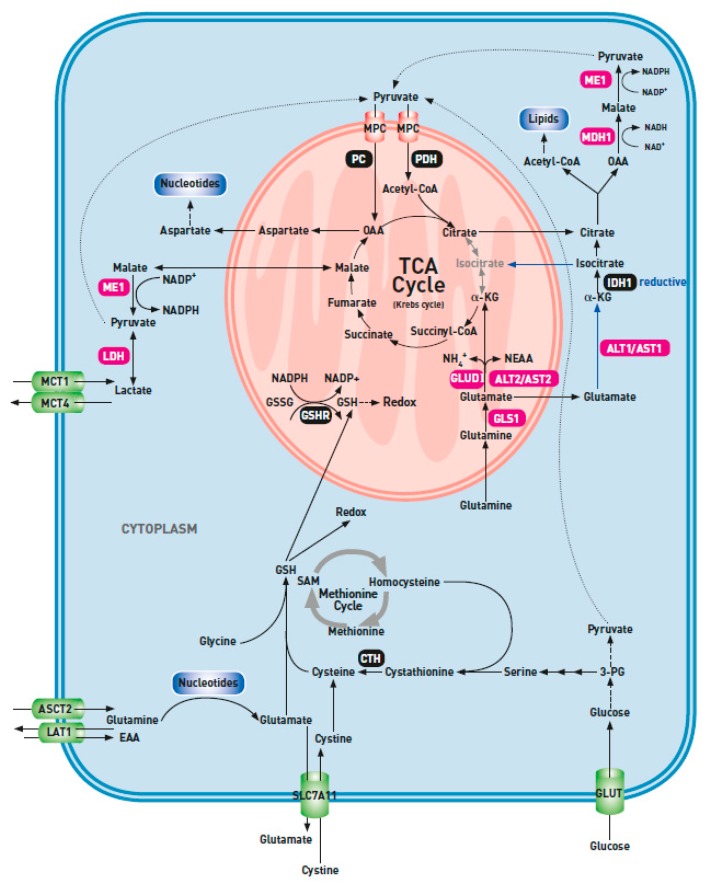
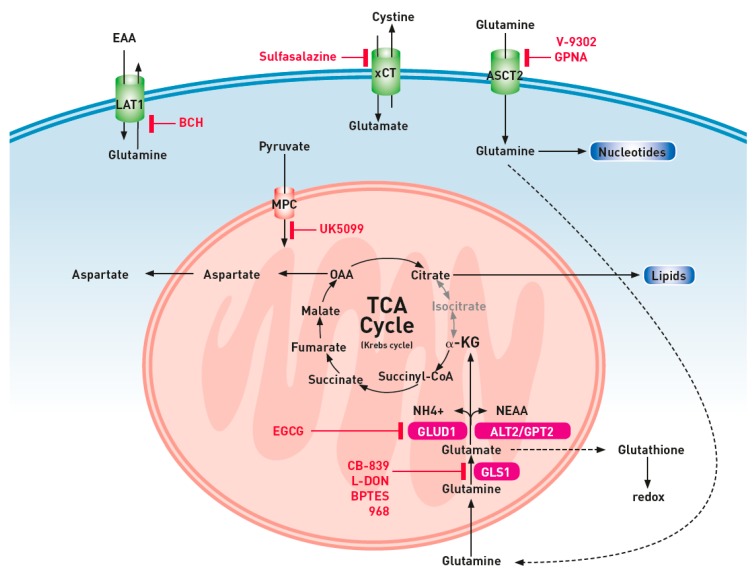
Lung cancer cells are well-documented to rewire their metabolism and energy production networks to support rapid survival and proliferation. This metabolic reorganization has been recognized as a hallmark of cancer. The increased uptake of glucose and the increased activity of the glycolytic pathway have been extensively described. However, over the past years, increasing evidence has shown that lung cancer cells also require glutamine to fulfill their metabolic needs. As a nitrogen source, glutamine contributes directly (or indirectly upon conversion to glutamate) to many anabolic processes in cancer, such as the biosynthesis of amino acids, nucleobases, and hexosamines. It plays also an important role in the redox homeostasis, and last but not least, upon conversion to α-ketoglutarate, glutamine is an energy and anaplerotic carbon source that replenishes tricarboxylic acid cycle intermediates. The latter is generally indicated as glutaminolysis. In this review, we explore the role of glutamine metabolism in lung cancer. Because lung cancer is the leading cause of cancer death with limited curative treatment options, we focus on the potential therapeutic approaches targeting the glutamine metabolism in cancer.
肺癌细胞会重新布线它们的代谢和能量产生网络,以支持快速的生存和增殖。这种代谢重排已被认为是癌症的一个标志。葡萄糖的摄取增加和糖酵解途径的活性增加已经被广泛描述。然而,近年来越来越多的证据表明,肺癌细胞也需要谷氨酰胺来满足其代谢需求。作为氮源,谷氨酰胺直接(或间接转化为谷氨酸后)为癌症中的许多合成代谢过程做出贡献,如氨基酸、核苷酸和己糖胺的生物合成。它在氧化还原平衡中也起着重要作用,最后但并非最不重要的是,谷氨酰胺转化为α-酮戊二酸后,是一种能量和补充三羧酸循环中间产物的碳源。后者通常被称为谷氨酰胺分解。在这篇综述中,我们探讨了谷氨酰胺代谢在肺癌中的作用。由于肺癌是癌症死亡的主要原因,且治疗选择有限,因此我们专注于针对癌症中谷氨酰胺代谢的潜在治疗方法。