Bele Sumedh, Cassidy Christine, Curran Janet, Johnson David W, Saunders Chad, Bailey J A Michelle
Department of Community Health Sciences, University of Calgary, Calgary, AB, Canada.
School of Nursing, Dalhousie University, Halifax, NS, Canada.
BMC Health Serv Res. 2019 Jan 11;19(1):29. doi: 10.1186/s12913-018-3859-2.
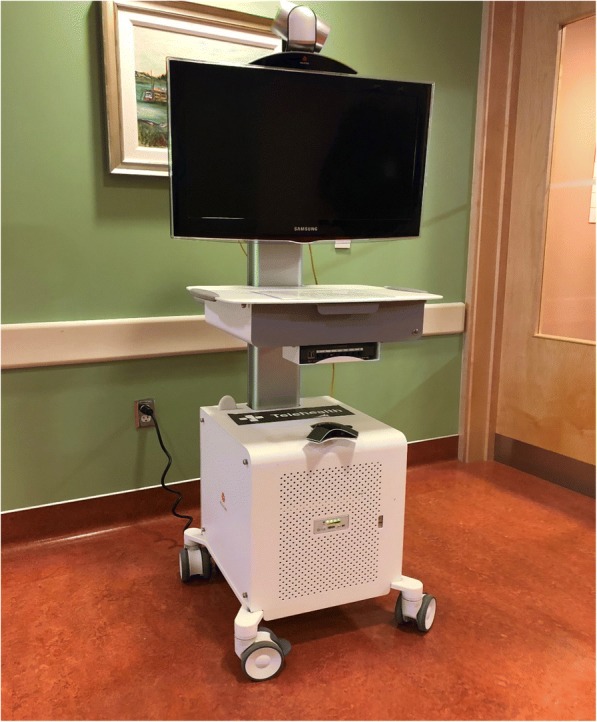
Over-occupancy at the two tertiary pediatric care hospitals in Alberta, Canada is steadily increasing with simultaneous decline in occupancy of pediatric beds at regional hospitals. Over-occupancy negatively impacts timeliness and potentially, the safety of patient care provided at these two tertiary hospitals. In contrast, underutilization of pediatric beds at regional hospitals poses the risk of losing beds provincially, dilution of regional pediatric expertise and potential erosion of confidence by regional providers. One approach to the current situation in provincial pediatric care capacity is development of telemedicine based innovative models of care that increase the population of patients cared for in regional pediatric beds. A Telemedicine Rounding and Consultation (TRAC) model involves discussing patient care or aspects of their care using telemedicine by employing visual displays, audio and information sharing between tertiary and regional hospitals. To facilitate implementation of a TRAC model, it is essential to understand the perceived barriers among its potential users in local context. The current study utilizes qualitative methodologies to assess these perceived clinician barriers to inform a future pilot and evaluation of this innovative virtual pediatric tertiary-regional collaborative care model in Alberta.
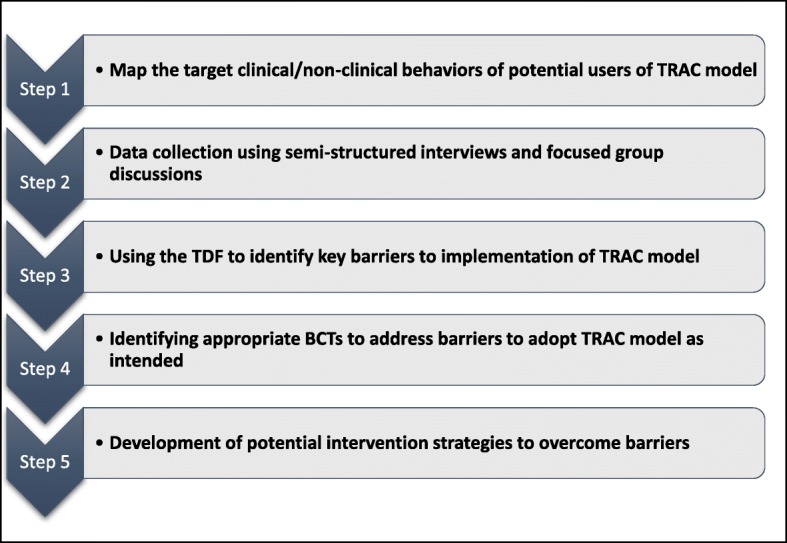
We will use a qualitative descriptive design guided by the Theoretical Domain Framework (TDF) to systematically identify the tertiary and regional clinical stakeholder's perceived barriers and enablers to the implementation of proposed TRAC model of inpatient pediatric care. Semi-structured interviews and focus groups with pediatricians, nurses and allied health professionals, administrators, and family members will be conducted to identify key barriers and enablers to implementation of the TRAC model using TDF. Appropriate behaviour change techniques will be identified to develop potential intervention strategies to overcome identified barriers. These intervention strategies will facilitate implementation of the TRAC model during the pilot phase.
The proposed TRAC model has the potential to address the imbalance between utilization of regional and tertiary inpatient pediatric facilities in Alberta. Knowledge generated regarding barriers and enablers to the TRAC model and the process outlined in this study could be used by health services researchers to develop similar telemedicine-based interventions in Canada and other parts of the world.
加拿大艾伯塔省的两家三级儿科护理医院床位过度占用情况持续增加,与此同时,地区医院的儿科床位占用率却在下降。床位过度占用对这两家三级医院提供患者护理的及时性产生负面影响,并可能影响护理安全。相比之下,地区医院儿科床位利用不足则存在省级床位流失、地区儿科专业知识稀释以及地区医疗服务提供者信心可能受挫的风险。应对省级儿科护理能力当前状况的一种方法是开发基于远程医疗的创新护理模式,以增加在地区儿科床位接受护理的患者数量。远程医疗查房与会诊(TRAC)模式涉及通过视觉展示、音频以及三级医院和地区医院之间的信息共享,利用远程医疗讨论患者护理或其护理的各个方面。为便于TRAC模式的实施,了解其在当地背景下潜在用户所感知到的障碍至关重要。本研究采用定性方法来评估这些临床医生所感知到的障碍,为未来在艾伯塔省对这种创新的虚拟儿科三级 - 地区协作护理模式进行试点和评估提供参考。
我们将采用由理论领域框架(TDF)指导的定性描述性设计,系统地确定三级和地区临床利益相关者对拟议的儿科住院护理TRAC模式实施所感知到的障碍和促进因素。将与儿科医生、护士、专职医疗专业人员、管理人员和家庭成员进行半结构化访谈和焦点小组讨论,以使用TDF确定TRAC模式实施的关键障碍和促进因素。将确定适当的行为改变技术,以制定潜在的干预策略来克服已确定的障碍。这些干预策略将有助于在试点阶段实施TRAC模式。
拟议的TRAC模式有可能解决艾伯塔省地区和三级住院儿科设施利用之间的不平衡问题。关于TRAC模式的障碍和促进因素以及本研究中概述的过程所产生的知识,可供卫生服务研究人员在加拿大和世界其他地区开发类似的基于远程医疗的干预措施时使用。