Skibbe Lori E, Montroy Janelle J, Bowles Ryan P, Morrison Frederick J
Michigan State University.
University of Texas Health Science Center at Houston.
Early Child Res Q. 2019;46:240-251. doi: 10.1016/j.ecresq.2018.02.005. Epub 2018 Apr 4.
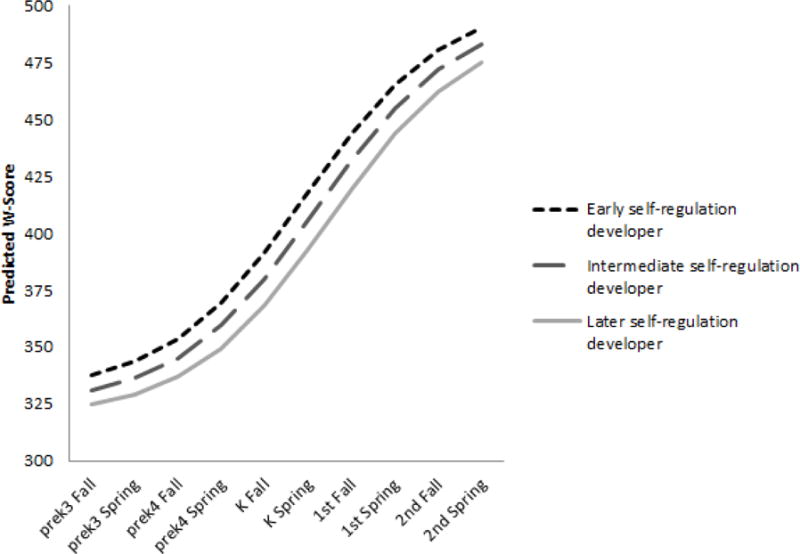
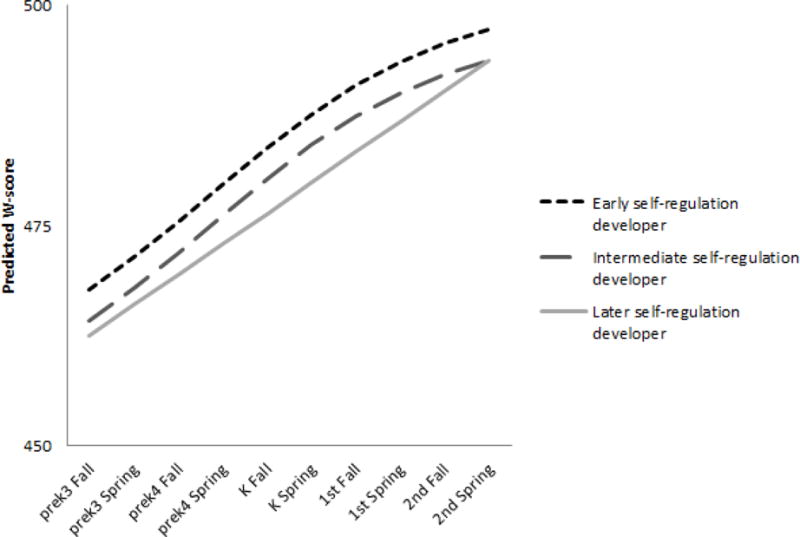
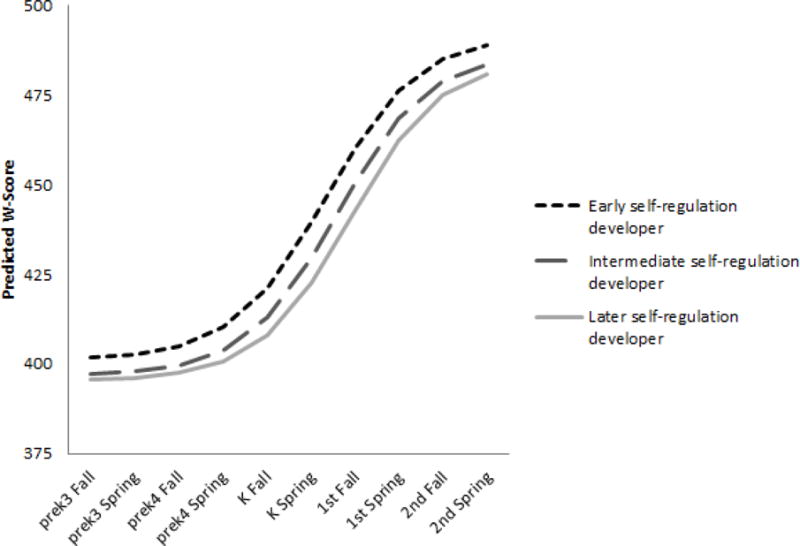
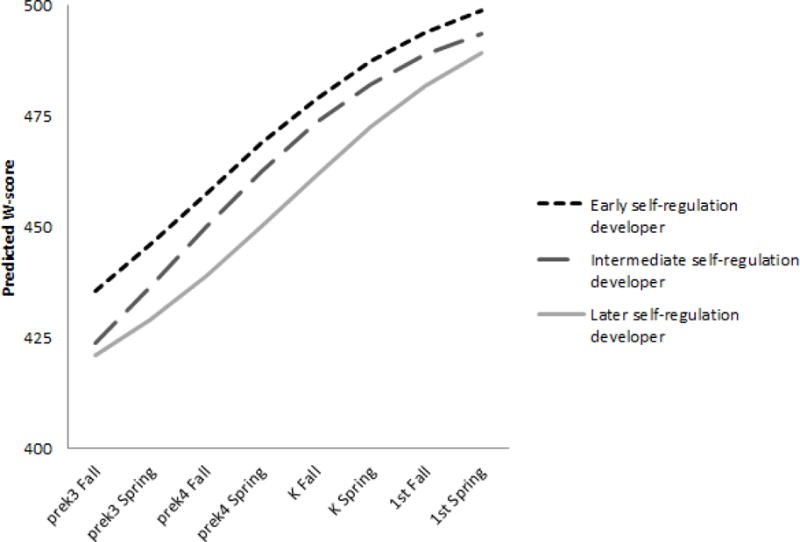
Previous research has established that higher levels of behavioral self-regulation are associated with higher levels of language and literacy. In this study, we take a more developmental perspective by considering how trajectories of self-regulation development (early, intermediate, late) predict the way literacy and language skills develop from preschool through second grade. Children (n = 351) were assessed twice per year for up to four years on indicators of decoding, reading comprehension, phonological awareness, and vocabulary. Using non-linear growth curve models, we found that children who demonstrated self-regulation earlier had higher language and literacy skills throughout preschool to second grade. More specifically, earlier self-regulation trajectories were associated with both higher levels and earlier development of both decoding and reading comprehension, but not faster development. Children with early self-regulation trajectories developed phonological awareness earlier than those with late self-regulation trajectories. Finally, children with early self-regulation trajectories had higher levels of vocabulary than children with intermediate trajectories, but did not differ on the rate or timing of vocabulary development. Findings point to the enduring and interconnected nature of self-regulation and children's language and literacy development.
先前的研究已经证实,更高水平的行为自我调节与更高水平的语言和读写能力相关。在本研究中,我们通过考虑自我调节发展的轨迹(早期、中期、晚期)如何预测从学前班到二年级的读写能力和语言技能发展方式,采用了更具发展性的视角。对儿童(n = 351)进行了长达四年的每年两次评估,评估指标包括解码、阅读理解、语音意识和词汇。使用非线性增长曲线模型,我们发现早期表现出自我调节能力的儿童在整个学前班到二年级期间具有更高的语言和读写能力。更具体地说,早期的自我调节轨迹与解码和阅读理解的更高水平以及更早发展相关,但与发展速度无关。具有早期自我调节轨迹的儿童比具有晚期自我调节轨迹的儿童更早发展出语音意识。最后,具有早期自我调节轨迹的儿童比具有中期轨迹的儿童拥有更高的词汇水平,但在词汇发展的速度或时间上没有差异。研究结果表明了自我调节与儿童语言和读写能力发展的持久且相互关联的性质。