Huang Jiangfeng, Xia Tao, Li Guanhua, Li Xianliang, Li Ying, Wang Yanting, Wang Youmei, Chen Yuanyuan, Xie Guosheng, Bai Feng-Wu, Peng Liangcai, Wang Lingqiang
1Biomass and Bioenergy Research Centre, College of Plant Science and Technology, College of Life Science and Technology, Huazhong Agricultural University, Wuhan, 430070 China.
2State Key Laboratory of Reproductive Regulation and Breeding of Grassland Livestock, School of Life Sciences, Inner Mongolia University, Hohhot, 010070 China.
Biotechnol Biofuels. 2019 Jan 9;12:11. doi: 10.1186/s13068-018-1351-1. eCollection 2019.
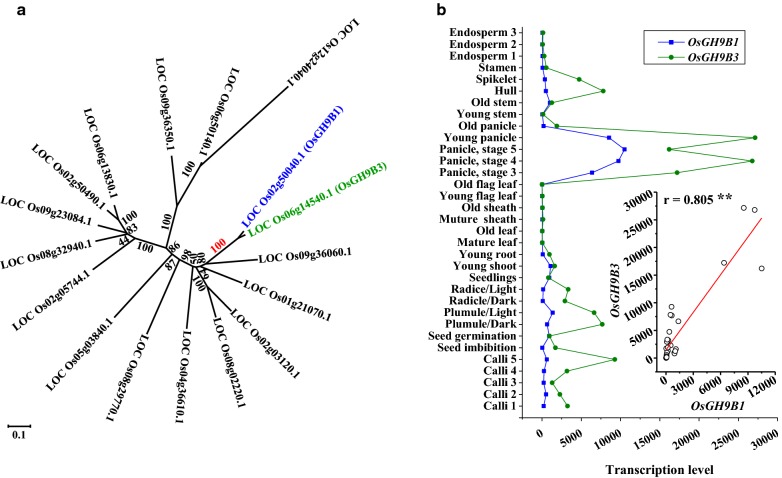
Genetic modification of plant cell walls has been implemented to reduce lignocellulosic recalcitrance for biofuel production. Plant glycoside hydrolase family 9 (GH9) comprises endo-β-1,4-glucanase in plants. Few studies have examined the roles of GH9 in cell wall modification. In this study, we independently overexpressed two genes from subclasses ( and ) and examined cell wall features and biomass saccharification in transgenic rice plants.
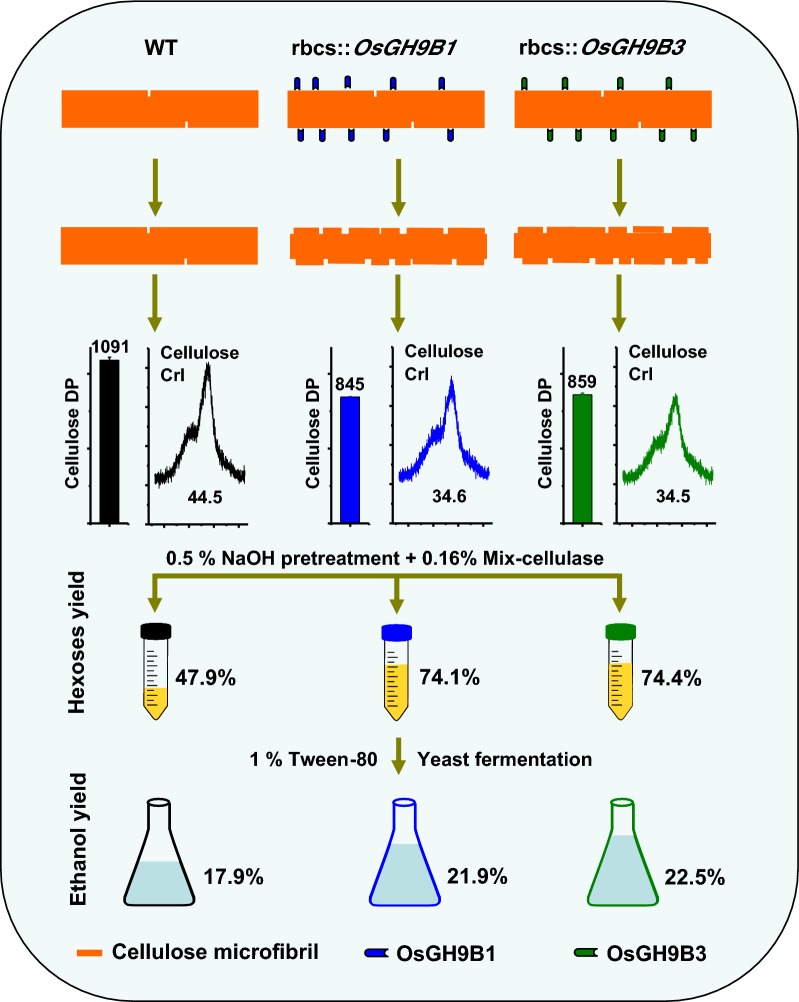
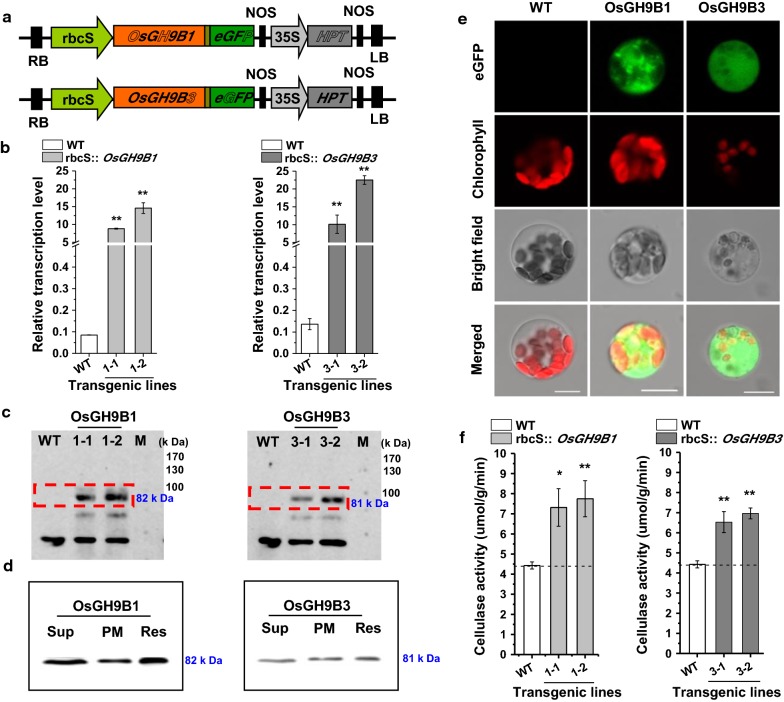
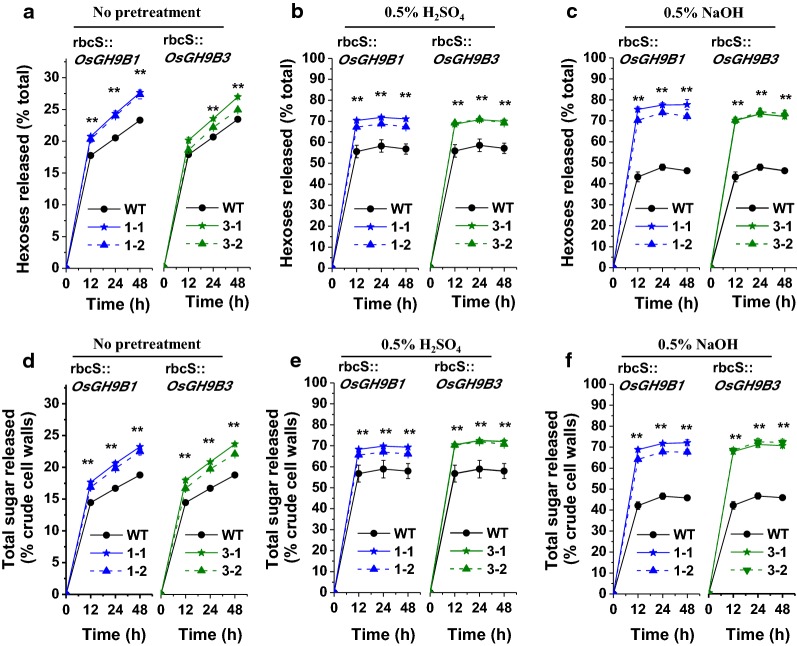
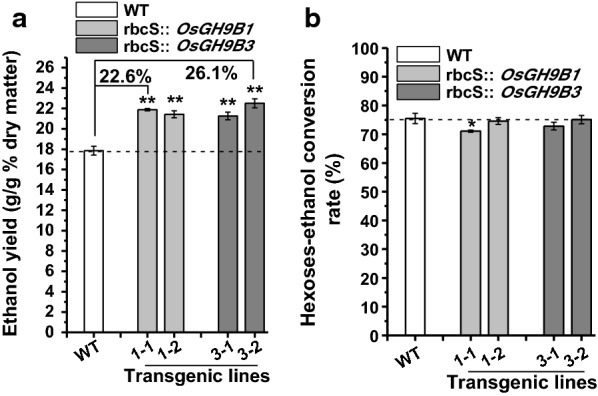
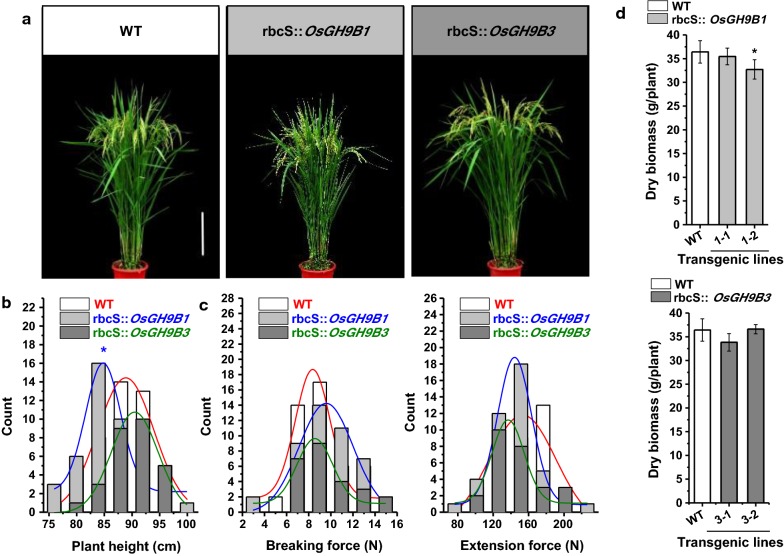
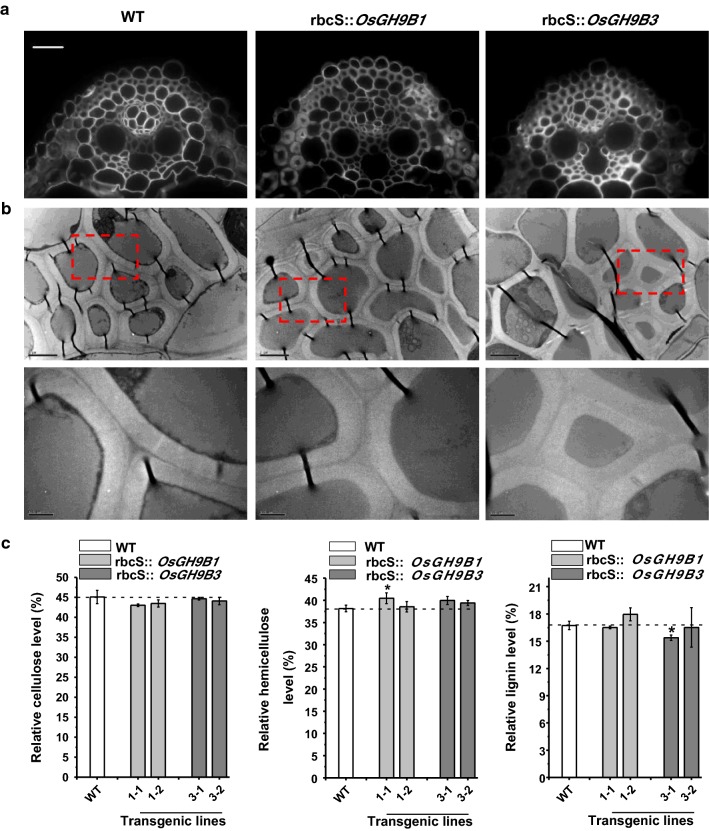
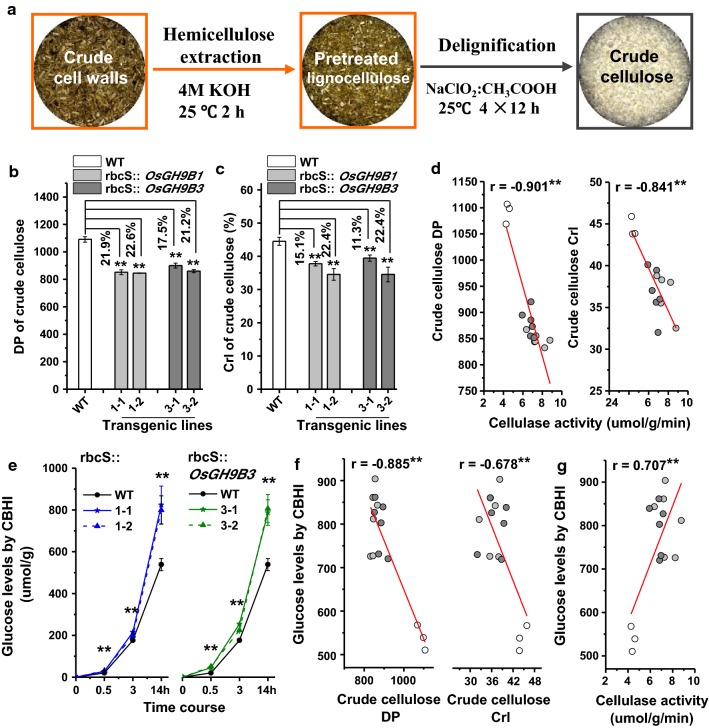
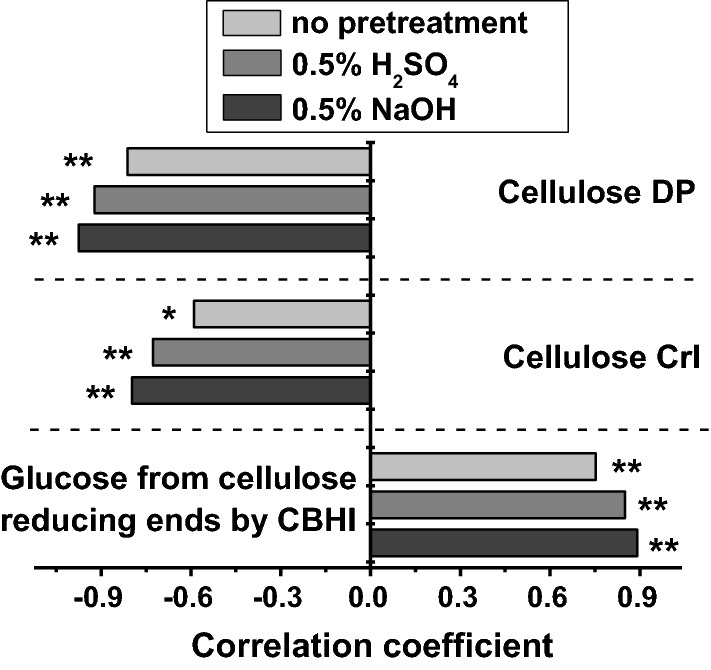
Compared with the wild type (WT, ), the and transgenic rice plants, respectively, contained much higher OsGH9B1 and OsGH9B3 protein levels and both proteins were observed in situ with nonspecific distribution in the plant cells. The transgenic lines exhibited significantly increased cellulase activity in vitro than the WT. The and transgenic plants showed a slight alteration in three wall polymer compositions (cellulose, hemicelluloses, and lignin), in their stem mechanical strength and biomass yield, but were significantly decreased in the cellulose degree of polymerization (DP) and lignocellulose crystalline index (CrI) by 21-22%. Notably, the crude cellulose substrates of the transgenic lines were more efficiently digested by cellobiohydrolase (CBHI) than those of the WT, indicating the significantly increased amounts of reducing ends of β-1,4-glucans in cellulose microfibrils. Finally, the engineered lines generated high sugar yields after mild alkali pretreatments and subsequent enzymatic hydrolysis, resulting in the high bioethanol yields obtained at 22.5% of dry matter.
Overproduction of OsGH9B1/B3 enzymes should have specific activity in the postmodification of cellulose microfibrils. The increased reducing ends of β-1,4-glucan chains for reduced cellulose DP and CrI positively affected biomass enzymatic saccharification. Our results demonstrate a potential strategy for genetic modification of cellulose microfibrils in bioenergy crops.
已对植物细胞壁进行基因改造,以降低木质纤维素的抗降解性,用于生物燃料生产。植物糖苷水解酶家族9(GH9)包含植物中的内切β-1,4-葡聚糖酶。很少有研究探讨GH9在细胞壁修饰中的作用。在本研究中,我们独立过表达了来自两个亚类(和)的两个基因,并检测了转基因水稻植株的细胞壁特征和生物质糖化情况。
与野生型(WT,)相比,和转基因水稻植株分别含有更高水平的OsGH9B1和OsGH9B3蛋白,并且在植物细胞中观察到这两种蛋白均呈非特异性分布。转基因株系在体外表现出比野生型显著更高的纤维素酶活性。和转基因植株在三种细胞壁聚合物组成(纤维素、半纤维素和木质素)、茎机械强度和生物量产量方面有轻微变化,但纤维素聚合度(DP)和木质纤维素结晶指数(CrI)显著降低了21-22%。值得注意的是,转基因株系的粗纤维素底物比野生型更能被纤维二糖水解酶(CBHI)有效消化,这表明纤维素微纤丝中β-1,4-葡聚糖的还原端数量显著增加。最后,经过温和碱预处理和随后的酶水解后,工程株系产生了高糖产量,从而在干物质的22.5%时获得了高生物乙醇产量。
过量生产OsGH9B1/B3酶在纤维素微纤丝的后修饰中应具有特定活性。β-1,4-葡聚糖链还原端增加导致纤维素DP和CrI降低,对生物质酶促糖化产生了积极影响。我们的结果证明了一种对生物能源作物中纤维素微纤丝进行基因改造的潜在策略。