Departments of Neurology and Neurotherapeutics, UT Southwestern Medical Center, Dallas, TX.
Department of Pediatrics, UT Southwestern Medical Center, Dallas, TX.
Crit Care Med. 2019 Mar;47(3):e206-e213. doi: 10.1097/CCM.0000000000003621.
Extracorporeal membrane oxygenation provides short-term cardiopulmonary life support, but is associated with peripheral innate inflammation, disruptions in cerebral autoregulation, and acquired brain injury. We tested the hypothesis that extracorporeal membrane oxygenation also induces CNS-directed adaptive immune responses which may exacerbate extracorporeal membrane oxygenation-associated brain injury.
A single center prospective observational study.
Pediatric and cardiac ICUs at a single tertiary care, academic center.
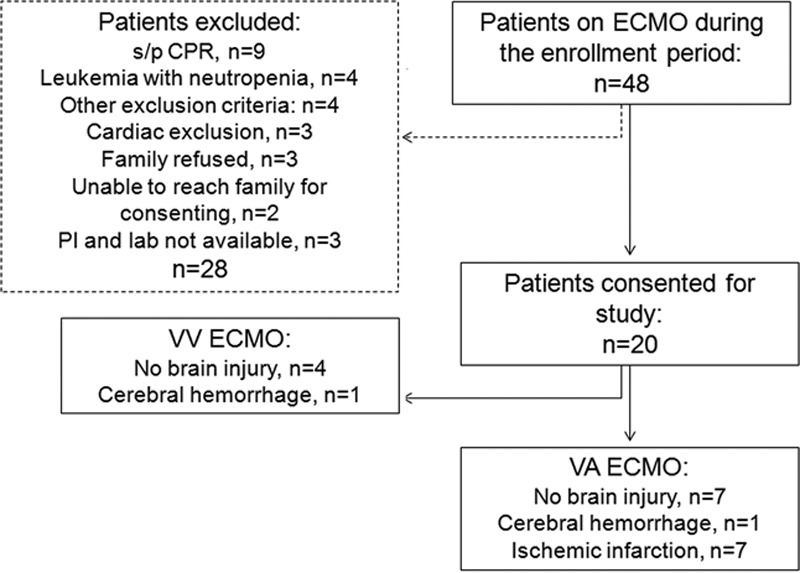
Twenty pediatric extracorporeal membrane oxygenation patients (0-14 yr; 13 females, 7 males) and five nonextracorporeal membrane oxygenation Pediatric Logistic Organ Dysfunction score matched patients INTERVENTIONS:: None.
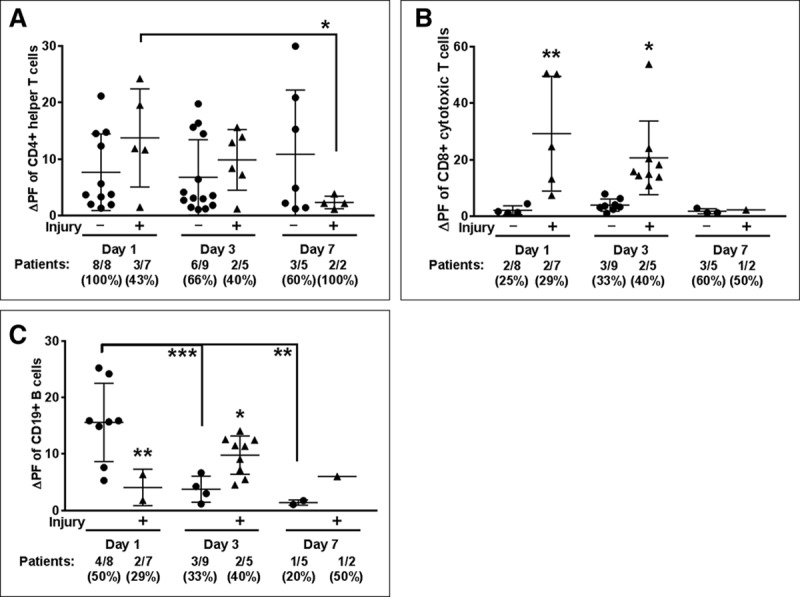
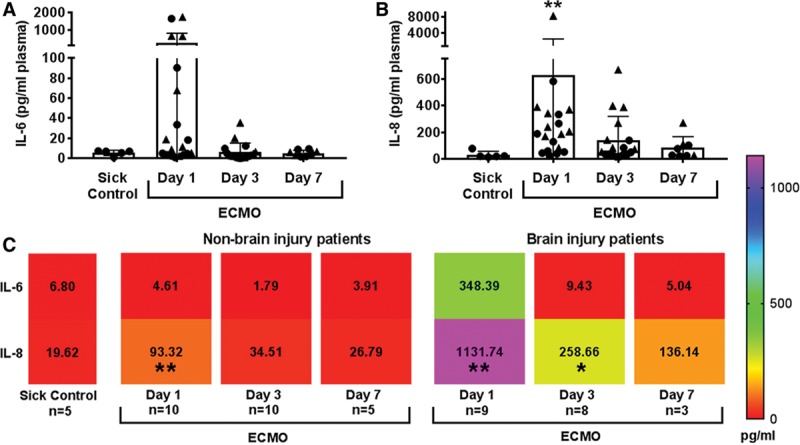
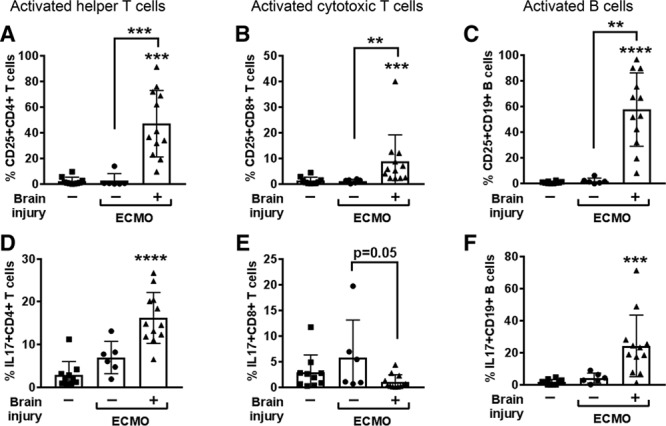
Venous blood samples were collected from the extracorporeal membrane oxygenation circuit at day 1 (10-23 hr), day 3, and day 7 of extracorporeal membrane oxygenation. Flow cytometry quantified circulating innate and adaptive immune cells, and CNS-directed autoreactivity was detected using an in vitro recall response assay. Disruption of cerebral autoregulation was determined using continuous bedside near-infrared spectroscopy and acquired brain injury confirmed by MRI. Extracorporeal membrane oxygenation patients with acquired brain injury (n = 9) presented with a 10-fold increase in interleukin-8 over extracorporeal membrane oxygenation patients without brain injury (p < 0.01). Furthermore, brain injury within extracorporeal membrane oxygenation patients potentiated an inflammatory phenotype in adaptive immune cells and selective autoreactivity to brain peptides in circulating B cell and cytotoxic T cell populations. Correlation analysis revealed a significant relationship between adaptive immune responses of extracorporeal membrane oxygenation patients with acquired brain injury and loss of cerebral autoregulation.
We show that pediatric extracorporeal membrane oxygenation patients with acquired brain injury exhibit an induction of pro-inflammatory cell signaling, a robust activation of adaptive immune cells, and CNS-targeting adaptive immune responses. As these patients experience developmental delays for years after extracorporeal membrane oxygenation, it is critical to identify and characterize adaptive immune cell mechanisms that target the developing CNS.
体外膜肺氧合提供短期心肺生命支持,但与外周固有炎症、脑自动调节紊乱和获得性脑损伤有关。我们检验了这样一个假设,即体外膜肺氧合还会引起中枢神经系统定向适应性免疫反应,从而可能加重体外膜肺氧合相关的脑损伤。
一项单中心前瞻性观察研究。
一家三级保健、学术中心的儿科和心脏重症监护病房。
20 名接受体外膜肺氧合的儿科患者(0-14 岁;13 名女性,7 名男性)和 5 名未接受体外膜肺氧合的儿科 LOGO 评分匹配患者。
无。
从体外膜肺氧合回路中采集静脉血样本,时间分别为体外膜肺氧合第 1 天(10-23 小时)、第 3 天和第 7 天。流式细胞术定量循环固有和适应性免疫细胞,并通过体外回忆反应测定检测中枢神经系统定向自身反应性。使用连续床边近红外光谱法测定脑自动调节障碍,并用 MRI 证实获得性脑损伤。发生获得性脑损伤的体外膜肺氧合患者(n=9)的白细胞介素-8 增加了 10 倍,明显高于无脑损伤的体外膜肺氧合患者(p<0.01)。此外,体外膜肺氧合患者的脑损伤使适应性免疫细胞产生炎症表型,并使循环 B 细胞和细胞毒性 T 细胞群中对脑肽产生选择性自身反应性。相关分析显示,发生获得性脑损伤的体外膜肺氧合患者的适应性免疫反应与脑自动调节丧失之间存在显著关系。
我们表明,患有获得性脑损伤的儿科体外膜肺氧合患者表现出促炎细胞信号的诱导、适应性免疫细胞的强烈激活和中枢神经系统靶向适应性免疫反应。由于这些患者在体外膜肺氧合后多年会出现发育迟缓,因此必须确定和描述针对发育中中枢神经系统的适应性免疫细胞机制。