Critical Care Research Group, The Prince Charles Hospital, Brisbane, QLD, Australia.
Faculty of Medicine, University of Queensland, Brisbane, QLD, Australia.
Front Immunol. 2021 Jan 8;11:600684. doi: 10.3389/fimmu.2020.600684. eCollection 2020.
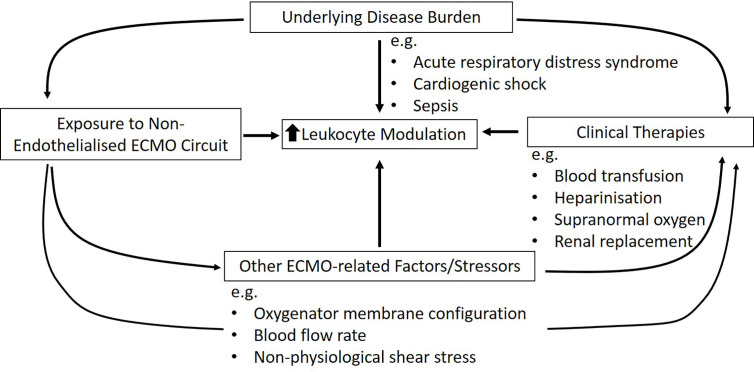
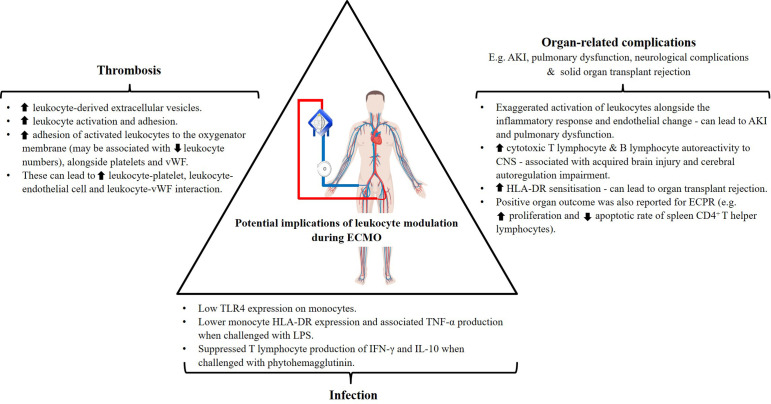
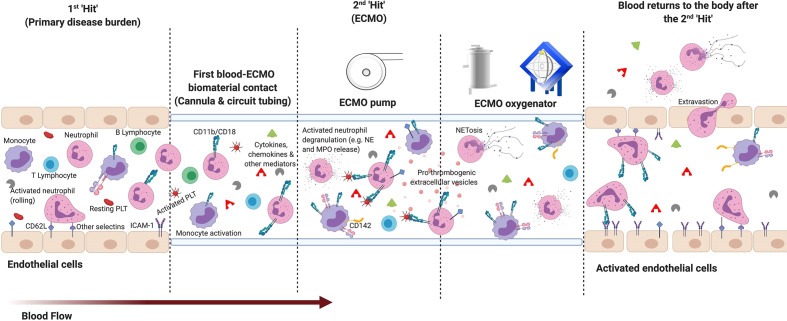
A plethora of leukocyte modulations have been reported in critically ill patients. Critical illnesses such as acute respiratory distress syndrome and cardiogenic shock, which potentially require extracorporeal membrane oxygenation (ECMO) support, are associated with changes in leukocyte numbers, phenotype, and functions. The changes observed in these illnesses could be compounded by exposure of blood to the non-endothelialized surfaces and non-physiological conditions of ECMO. This can result in further leukocyte activation, increased platelet-leukocyte interplay, pro-inflammatory and pro-coagulant state, alongside features of immunosuppression. However, the effects of ECMO on leukocytes, in particular their phenotypic and functional signatures, remain largely overlooked, including whether these changes have attributable mortality and morbidity. The aim of our narrative review is to highlight the importance of studying leukocyte signatures to better understand the development of complications associated with ECMO. Increased knowledge and appreciation of their probable role in ECMO-related adverse events may assist in guiding the design and establishment of targeted preventative actions.
大量研究报道了危重症患者的白细胞调节。急性呼吸窘迫综合征和心源性休克等潜在需要体外膜肺氧合(ECMO)支持的危重症与白细胞数量、表型和功能的变化有关。这些疾病中观察到的变化可能因血液暴露于非内皮化表面和 ECMO 的非生理条件而加剧。这可能导致白细胞进一步激活、血小板-白细胞相互作用增加、促炎和促凝状态以及免疫抑制特征。然而,ECMO 对白细胞的影响,特别是其表型和功能特征,在很大程度上仍被忽视,包括这些变化是否与可归因的死亡率和发病率有关。我们叙述性综述的目的是强调研究白细胞特征的重要性,以更好地了解与 ECMO 相关的并发症的发展。增加对它们在 ECMO 相关不良事件中可能作用的了解和认识,可能有助于指导设计和建立有针对性的预防措施。