Callegari Elisa, Domenicali Marco, Shankaraiah Ram Charan, D'Abundo Lucilla, Guerriero Paola, Giannone Ferdinando, Baldassarre Maurizio, Bassi Cristian, Elamin Bahaeldin K, Zagatti Barbara, Ferracin Manuela, Fornari Francesca, Altavilla Giuseppe, Blandamura Stella, Silini Enrico Maria, Gramantieri Laura, Sabbioni Silvia, Negrini Massimo
Department of Morphology, Surgery and Experimental Medicine, University of Ferrara, 44121 Ferrara, Italy.
Department of Medical and Surgical Sciences, Alma Mater Studiorum University of Bologna, 40138 Bologna, Italy; Center for Applied Biomedical Research, St. Orsola-Malpighi University Hospital, 40138 Bologna, Italy.
Mol Ther Nucleic Acids. 2019 Mar 1;14:239-250. doi: 10.1016/j.omtn.2018.11.018. Epub 2018 Dec 6.
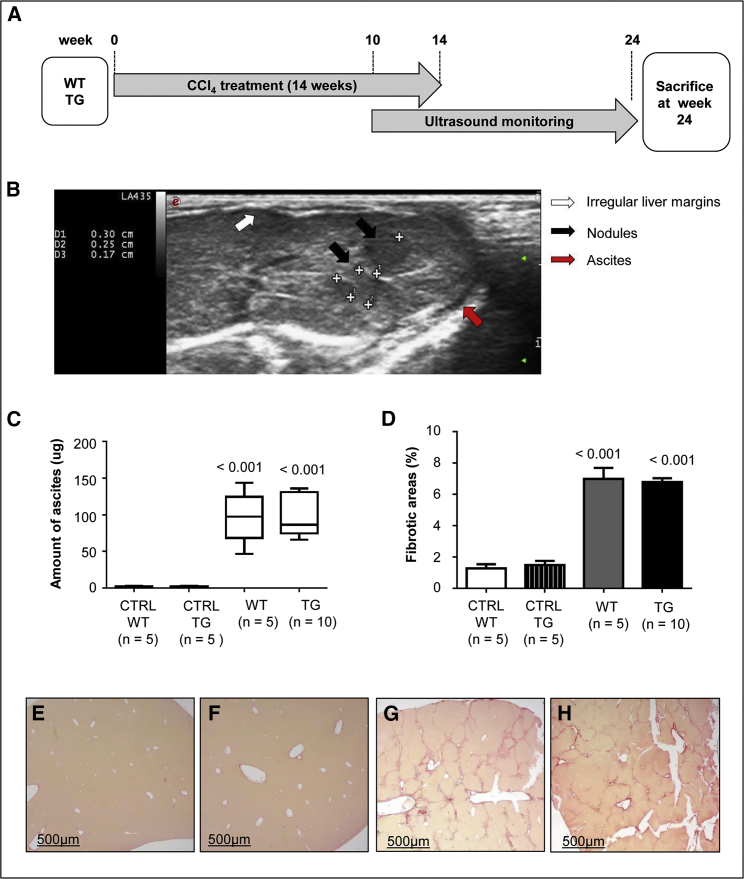
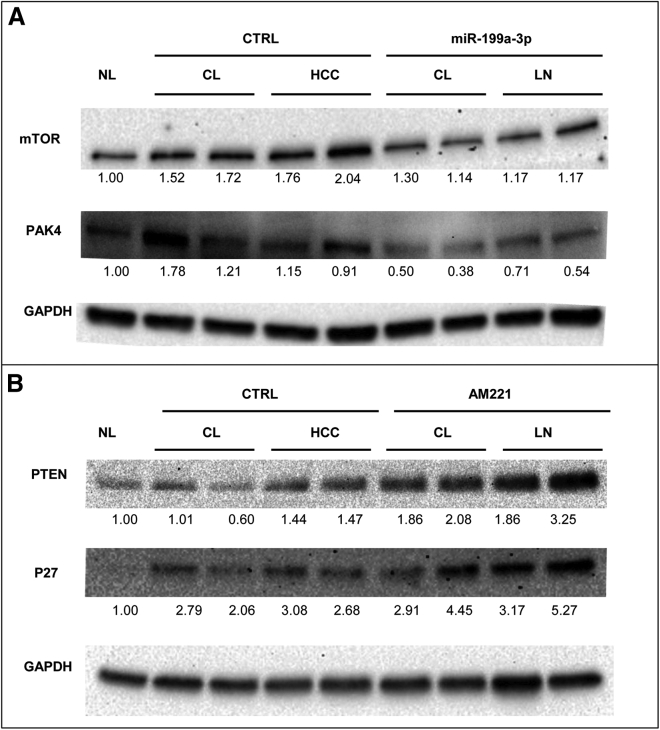
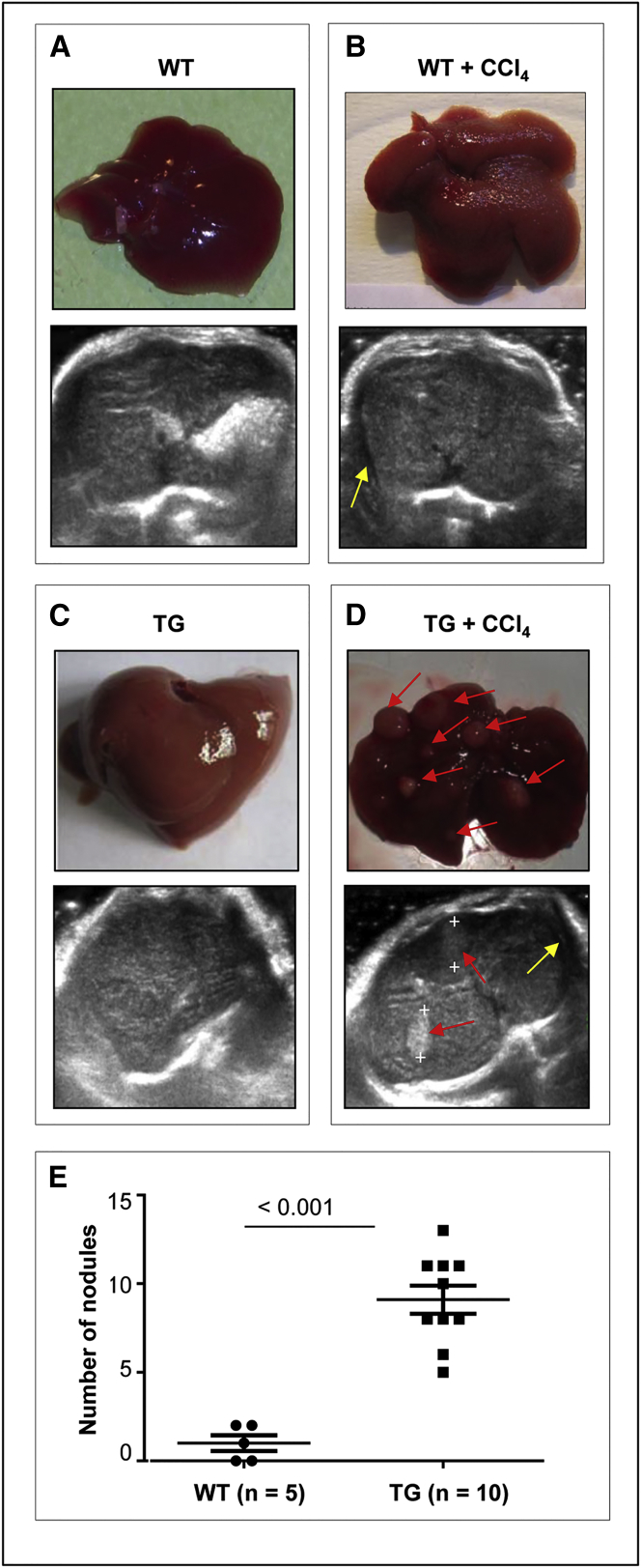
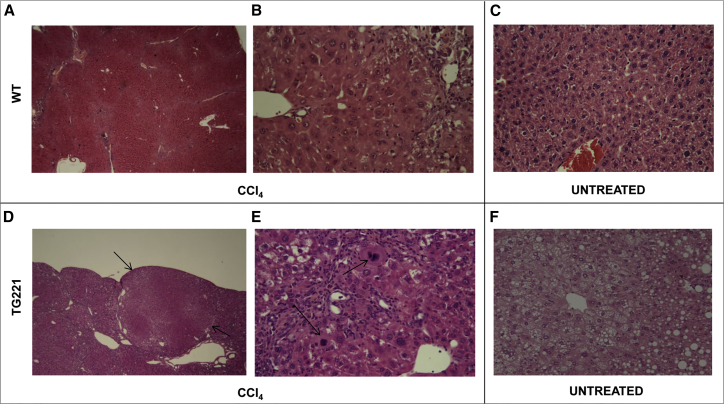
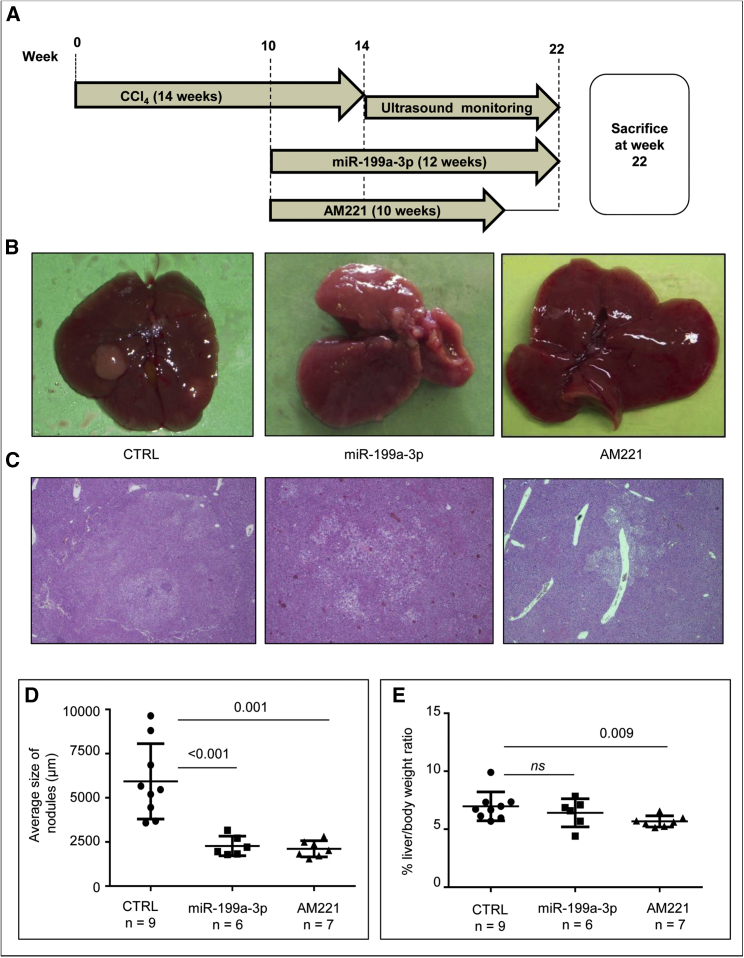
Most hepatocellular carcinomas (HCCs) arise in the context of chronic liver disease and/or cirrhosis. Thus, chemoprevention in individuals at risk represents an important but yet unproven approach. In this study, we investigated the ability of microRNA (miRNA)-based molecules to prevent liver cancer development in a cirrhotic model. To this end, we developed a mouse model able to recapitulate the natural progression from fibrosis to HCC, and then we tested the prophylactic activity of an miRNA-based approach in the model. The experiments were carried out in the TG221 transgenic mouse, characterized by the overexpression of miR-221 in the liver and predisposed to the development of liver tumors. TG221 as well as wild-type mice were exposed to the hepatotoxin carbon tetrachloride (CCl) to induce chronic liver damage. All mice developed liver cirrhosis, but only TG221 mice developed nodular lesions in 100% of cases within 6 months of age. The spectrum of lesions ranged from dysplastic foci to carcinomas. To investigate miRNA-based prophylactic approaches, anti-miR-221 oligonucleotides or miR-199a-3p mimics were administered to TG221 CCl-treated mice. Compared to control animals, a significant reduction in number, size, and, most significantly, malignant phenotype of liver nodules was observed, thus demonstrating an important prophylactic action of miRNA-based molecules. In summary, in this article, we not only report a simple model of liver cancer in a cirrhotic background but also provide evidence for a potential miRNA-based approach to reduce the risk of HCC development.
大多数肝细胞癌(HCC)发生于慢性肝病和/或肝硬化背景下。因此,对高危个体进行化学预防是一种重要但尚未得到证实的方法。在本研究中,我们研究了基于微小RNA(miRNA)的分子在肝硬化模型中预防肝癌发生的能力。为此,我们建立了一个能够重现从纤维化到HCC自然进展过程的小鼠模型,然后在该模型中测试了基于miRNA方法的预防活性。实验在TG221转基因小鼠中进行,其特征是肝脏中miR-221过表达且易发生肝肿瘤。TG221小鼠以及野生型小鼠均暴露于肝毒素四氯化碳(CCl)以诱导慢性肝损伤。所有小鼠均发展为肝硬化,但只有TG221小鼠在6月龄内100%出现结节性病变。病变范围从发育异常灶到癌。为了研究基于miRNA的预防方法,将抗miR-221寡核苷酸或miR-199a-3p模拟物给予经CCl处理的TG221小鼠。与对照动物相比,观察到肝结节的数量、大小以及最显著的恶性表型均显著减少,从而证明了基于miRNA的分子具有重要的预防作用。总之,在本文中,我们不仅报告了肝硬化背景下肝癌的一个简单模型,还为基于miRNA的降低HCC发生风险的潜在方法提供了证据。