Gene Transfer Technology Group, Institute for Women's Health, University College London, London, UK.
Dubowitz Neuromuscular Centre, Molecular Neurosciences Section, Developmental Neurosciences Programme, UCL Great Ormond Street Institute of Child Health, London, UK.
Gene Ther. 2019 Apr;26(3-4):86-92. doi: 10.1038/s41434-018-0056-1. Epub 2019 Jan 14.
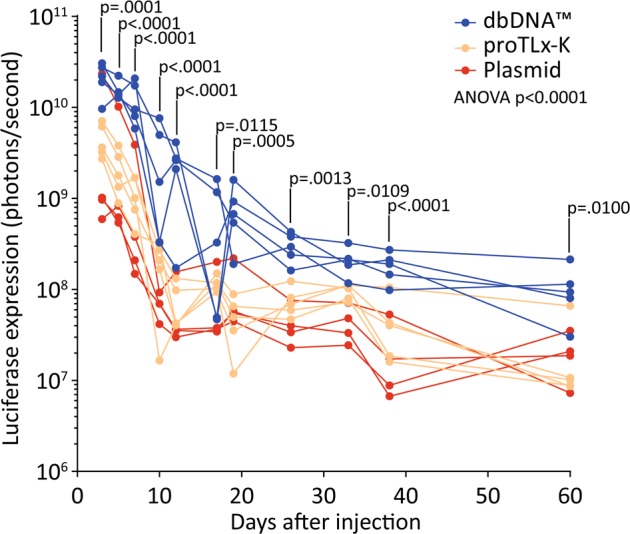
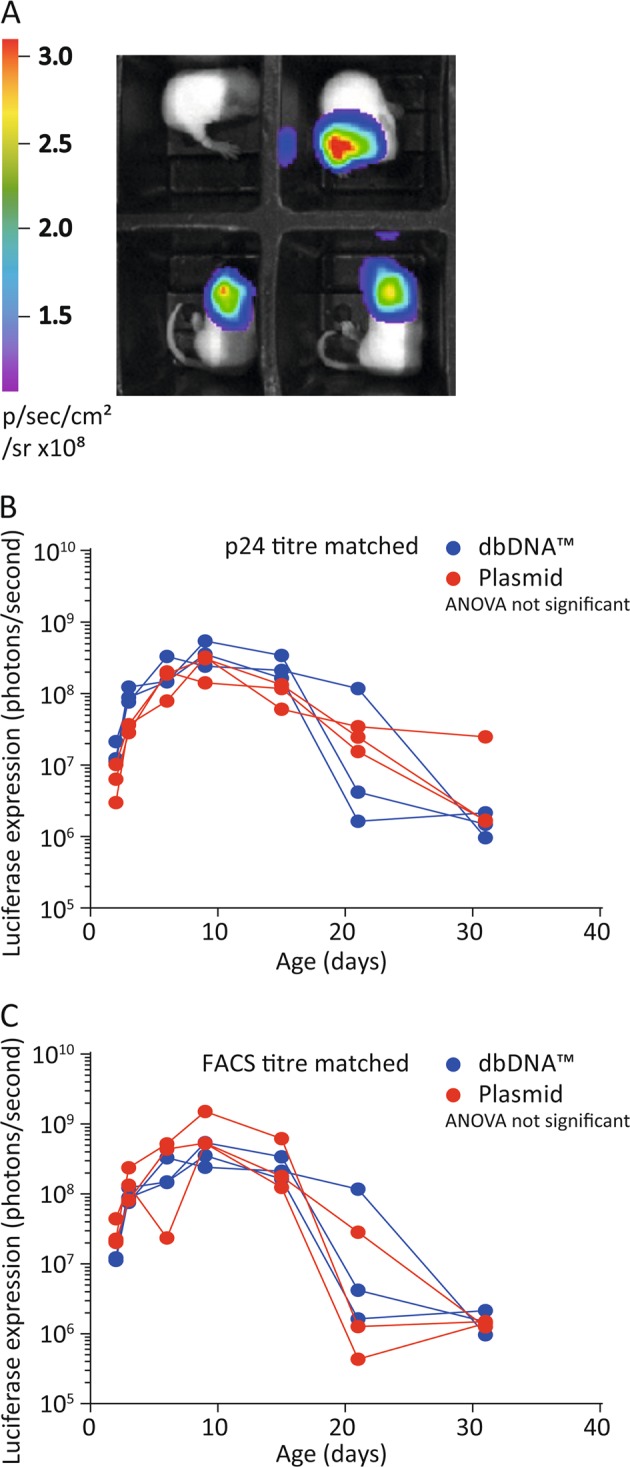
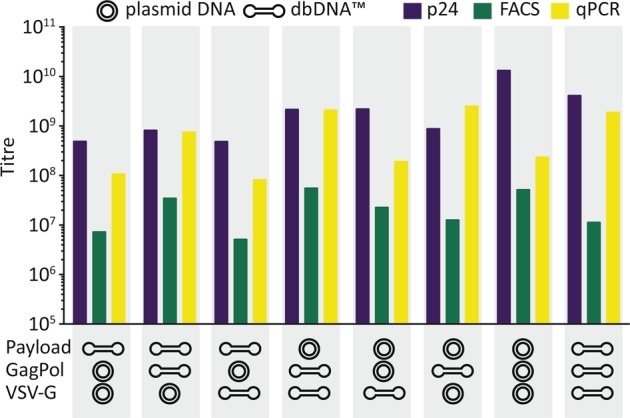
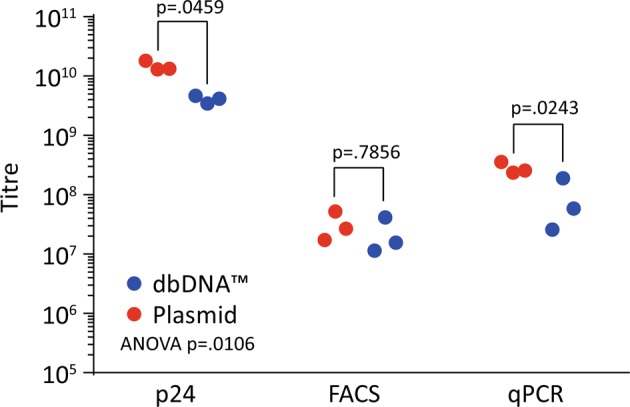
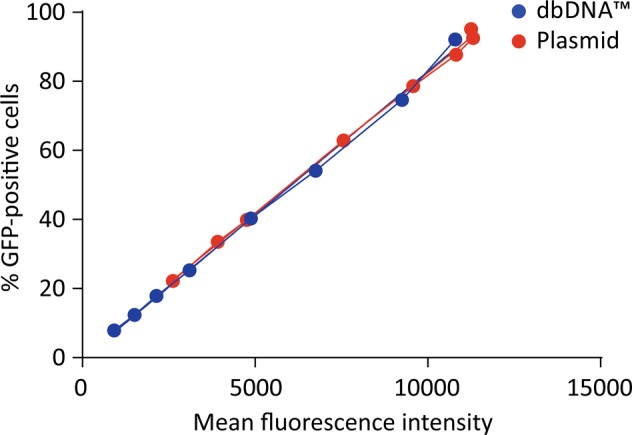
The manufacture of large quantities of high-quality DNA is a major bottleneck in the production of viral vectors for gene therapy. Touchlight Genetics has developed a proprietary abiological technology that addresses the major issues in commercial DNA supply. The technology uses 'rolling-circle' amplification to produce large quantities of concatameric DNA that is then processed to create closed linear double-stranded DNA by enzymatic digestion. This novel form of DNA, Doggybone™ DNA (dbDNA™), is structurally distinct from plasmid DNA. Here we compare lentiviral vectors production from dbDNA™ and plasmid DNA. Lentiviral vectors were administered to neonatal mice via intracerebroventricular injection. Luciferase expression was quantified in conscious mice continually by whole-body bioluminescent imaging. We observed long-term luciferase expression using dbDNA™-derived vectors, which was comparable to plasmid-derived lentivirus vectors. Here we have demonstrated that functional lentiviral vectors can be produced using the novel dbDNA™ configuration for delivery in vitro and in vivo. Importantly, this could enable lentiviral vector packaging of complex DNA sequences that have previously been incompatible with bacterial propagation systems, as dbDNA™ technology could circumvent such restrictions through its phi29-based rolling-circle amplification.
大量高质量 DNA 的制造是基因治疗中病毒载体生产的主要瓶颈。Touchlight Genetics 开发了一种专有的非生物学技术,解决了商业 DNA 供应中的主要问题。该技术使用“滚环”扩增来产生大量串联 DNA,然后通过酶消化处理将其加工成闭合的线性双链 DNA。这种新型 DNA,即犬骨 DNA(dbDNA),在结构上与质粒 DNA 不同。在这里,我们比较了来自 dbDNA 和质粒 DNA 的慢病毒载体生产。慢病毒载体通过脑室内注射递送至新生小鼠。通过全身生物发光成像在有意识的小鼠中连续定量检测荧光素酶表达。我们观察到使用 dbDNA 衍生载体的长期荧光素酶表达,与质粒衍生的慢病毒载体相当。在这里,我们已经证明可以使用新型 dbDNA 配置来生产功能性慢病毒载体,用于体外和体内递送。重要的是,这可以使以前与细菌繁殖系统不兼容的复杂 DNA 序列能够进行慢病毒载体包装,因为 dbDNA 技术可以通过其基于 phi29 的滚环扩增来规避此类限制。