Chen Dalin, Li Hongliang, Li Wen, Feng Shuo, Deng Dingsen
Gannan Health Vocational College, Ganzhou 341000, China.
College of Pharmacy, Gannan Medical University, Ganzhou 341000, China.
Evid Based Complement Alternat Med. 2018 Dec 16;2018:4057456. doi: 10.1155/2018/4057456. eCollection 2018.
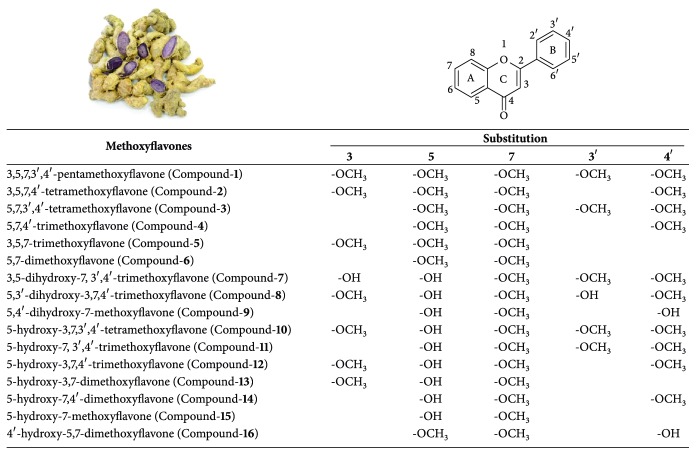
(KP), a health-promoting herb, has been traditionally used for treating a variety of diseases. Pharmacological studies have claimed the various benefits from KP and its main effective methoxyflavones, including cellular metabolism-regulating activity, anticancer activity, vascular relaxation and cardioprotective activity, sexual enhancing activity, neuroprotective activity, antiallergic, anti-inflammatory, and antioxidative activity, antiosteoarthritis activity, antimicroorganism activity, and transdermal permeable activity. These might be associated with increased mitochondrial functions and activated cGMP-NO signaling pathway. However, the underlying molecular mechanisms of KP and its methoxyflavones are still under investigation. The clinical applications of KP and its methoxyflavones may be limited due to their low bioavailability. But promising strategies are on the way. This review will comprehensively discuss the biological activities of KP and its methoxyflavones.
卡瓦胡椒(KP)是一种具有促进健康作用的草药,传统上用于治疗多种疾病。药理学研究表明,卡瓦胡椒及其主要有效成分甲氧基黄酮具有多种益处,包括调节细胞代谢活性、抗癌活性、血管舒张和心脏保护活性、增强性功能活性、神经保护活性、抗过敏、抗炎和抗氧化活性、抗骨关节炎活性、抗菌活性以及透皮渗透活性。这些可能与线粒体功能增强和cGMP-NO信号通路激活有关。然而,卡瓦胡椒及其甲氧基黄酮的潜在分子机制仍在研究中。由于其生物利用度低,卡瓦胡椒及其甲氧基黄酮的临床应用可能受到限制。但有前景的策略正在出现。本综述将全面讨论卡瓦胡椒及其甲氧基黄酮的生物活性。