Department of Chemical Biology, Helmholtz Centre for Infection Research and German Center for Infection Research (DZIF), Braunschweig, Germany.
Department of Molecular Infection Biology, Helmholtz Centre for Infection Research and German Center for Infection Research (DZIF), Braunschweig, Germany.
Sci Rep. 2019 Jan 15;9(1):138. doi: 10.1038/s41598-018-36932-w.
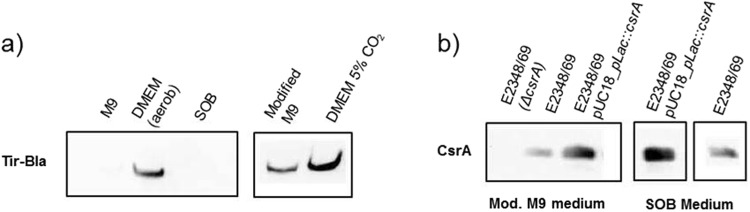
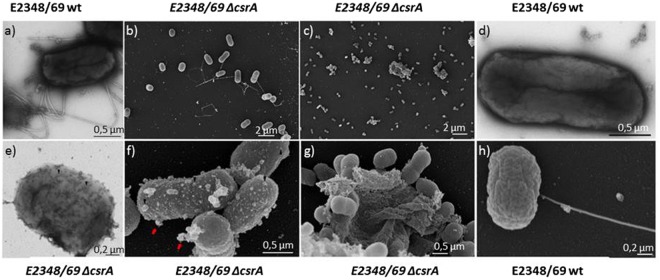
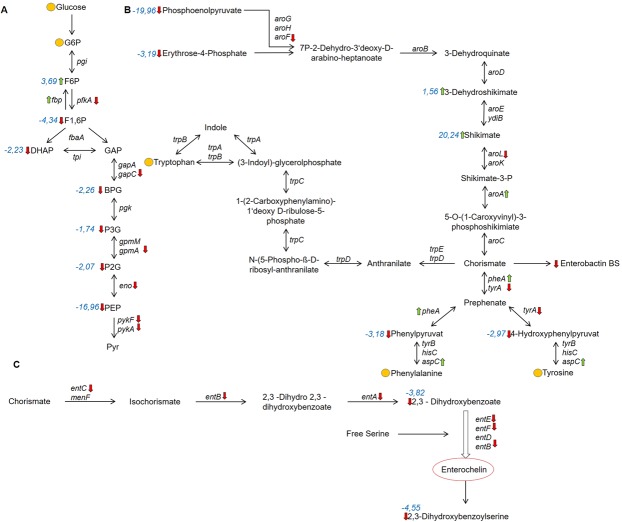
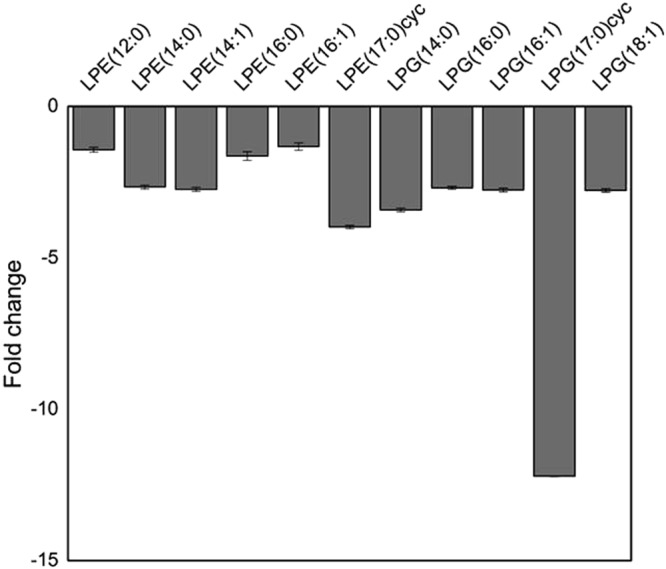
The carbon storage regulator A (CsrA) is a conserved global regulatory system known to control central carbon pathways, biofilm formation, motility, and pathogenicity. The aim of this study was to characterize changes in major metabolic pathways induced by CsrA in human enteropathogenic Escherichia coli (EPEC) grown under virulence factor-inducing conditions. For this purpose, the metabolomes and transcriptomes of EPEC and an isogenic ∆csrA mutant derivative were analyzed by untargeted mass spectrometry and RNA sequencing, respectively. Of the 159 metabolites identified from untargeted GC/MS and LC/MS data, 97 were significantly (fold change ≥ 1.5; corrected p-value ≤ 0.05) regulated between the knockout and the wildtype strain. A lack of csrA led to an accumulation of fructose-6-phosphate (F6P) and glycogen synthesis pathway products, whereas metabolites in lower glycolysis and the citric acid cycle were downregulated. Associated pathways from the citric acid cycle like aromatic amino acid and siderophore biosynthesis were also negatively influenced. The nucleoside salvage pathways were featured by an accumulation of nucleosides and nucleobases, and a downregulation of nucleotides. In addition, a pronounced downregulation of lyso-lipid metabolites was observed. A drastic change in the morphology in the form of vesicle-like structures of the ∆csrA knockout strain was visible by electron microscopy. Colanic acid synthesis genes were strongly (up to 50 fold) upregulated, and the abundance of colanic acid was 3 fold increased according to a colorimetric assay. The findings expand the scope of pathways affected by the csrA regulon and emphasize its importance as a global regulator.
碳储存调节因子 A(CsrA)是一种保守的全球调控系统,已知其控制中心碳途径、生物膜形成、运动性和致病性。本研究的目的是描述在毒力因子诱导条件下,CsrA 诱导的人肠致病性大肠杆菌(EPEC)主要代谢途径的变化。为此,通过非靶向质谱和 RNA 测序分别分析了 EPEC 和同源缺失突变体 ∆csrA 的代谢组和转录组。在非靶向 GC/MS 和 LC/MS 数据中鉴定的 159 种代谢物中,有 97 种代谢物在敲除株和野生型株之间存在显著差异(倍数变化≥1.5;校正 p 值≤0.05)。csrA 的缺失导致果糖-6-磷酸(F6P)和糖原合成途径产物的积累,而下调了低糖酵解和柠檬酸循环中的代谢物。柠檬酸循环相关途径,如芳香族氨基酸和铁载体生物合成,也受到负面影响。核苷补救途径的特征是核苷和核苷碱基的积累,以及核苷酸的下调。此外,还观察到溶脂代谢物的显著下调。电子显微镜可见 ∆csrA 敲除株的形态发生明显变化,形成囊泡样结构。粘多糖合成基因强烈上调(高达 50 倍),根据比色法测定,粘多糖的丰度增加了 3 倍。这些发现扩展了 csrA 调控子影响的途径范围,并强调了其作为全局调节剂的重要性。