Endocrine and Diabetes Platform, Department of Physiology, University of Toronto, Medical Sciences Building, Room 3352, 1 King's College Circle, Toronto, ON, M5S 1A8, Canada.
Advanced Diagnostics, Metabolism, Toronto General Hospital Research Institute, Toronto, ON, Canada.
Diabetologia. 2019 Apr;62(4):687-703. doi: 10.1007/s00125-018-4800-2. Epub 2019 Jan 15.
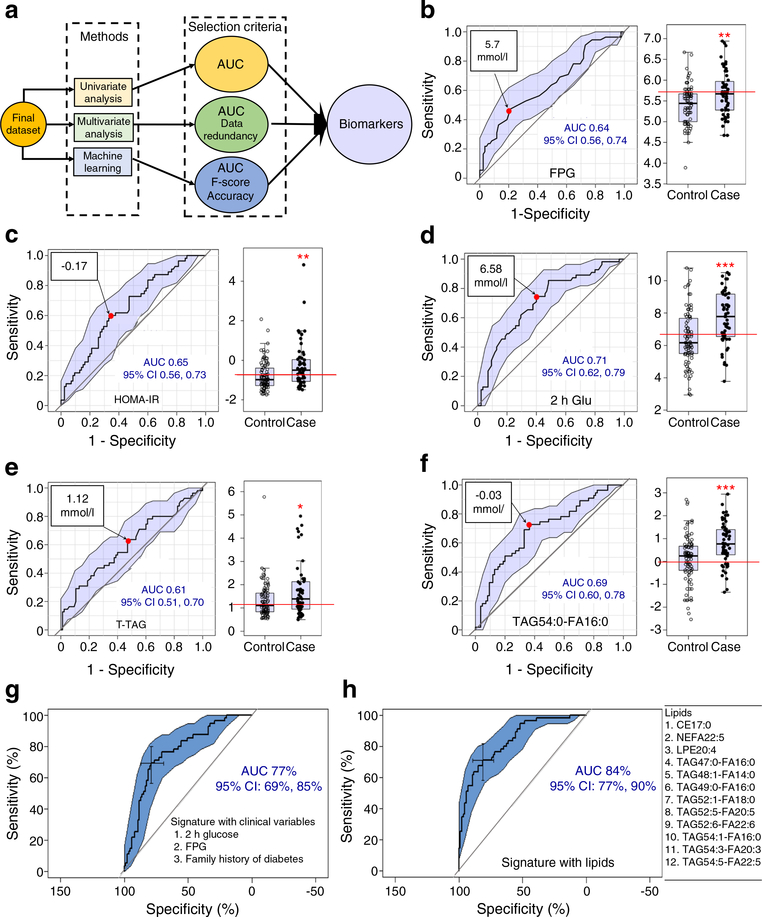
AIMS/HYPOTHESIS: Gestational diabetes mellitus (GDM) affects up to 20% of pregnancies, and almost half of the women affected progress to type 2 diabetes later in life, making GDM the most significant risk factor for the development of future type 2 diabetes. An accurate prediction of future type 2 diabetes risk in the early postpartum period after GDM would allow for timely interventions to prevent or delay type 2 diabetes. In addition, new targets for interventions may be revealed by understanding the underlying pathophysiology of the transition from GDM to type 2 diabetes. The aim of this study is to identify both a predictive signature and early-stage pathophysiology of the transition from GDM to type 2 diabetes.
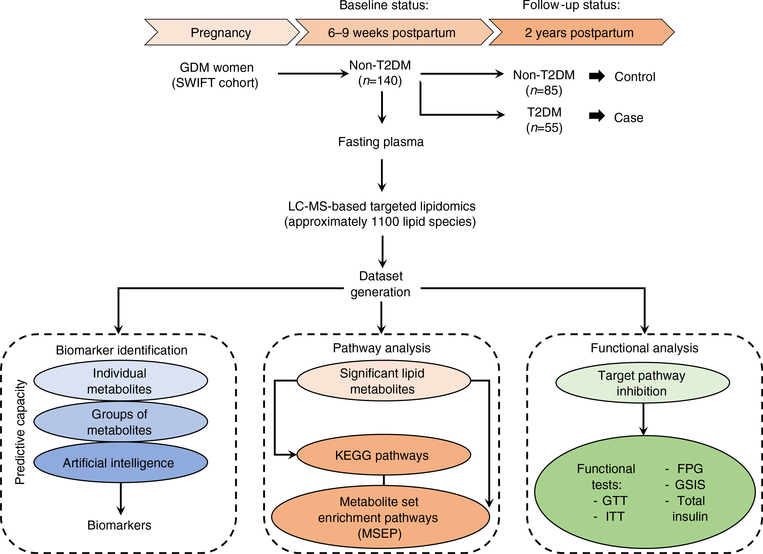
We used a well-characterised prospective cohort of women with a history of GDM pregnancy, all of whom were enrolled at 6-9 weeks postpartum (baseline), were confirmed not to have diabetes via 2 h 75 g OGTT and tested anually for type 2 diabetes on an ongoing basis (2 years of follow-up). A large-scale targeted lipidomic study was implemented to analyse ~1100 lipid metabolites in baseline plasma samples using a nested pair-matched case-control design, with 55 incident cases matched to 85 non-case control participants. The relationships between the concentrations of baseline plasma lipids and respective follow-up status (either type 2 diabetes or no type 2 diabetes) were employed to discover both a predictive signature and the underlying pathophysiology of the transition from GDM to type 2 diabetes. In addition, the underlying pathophysiology was examined in vivo and in vitro.
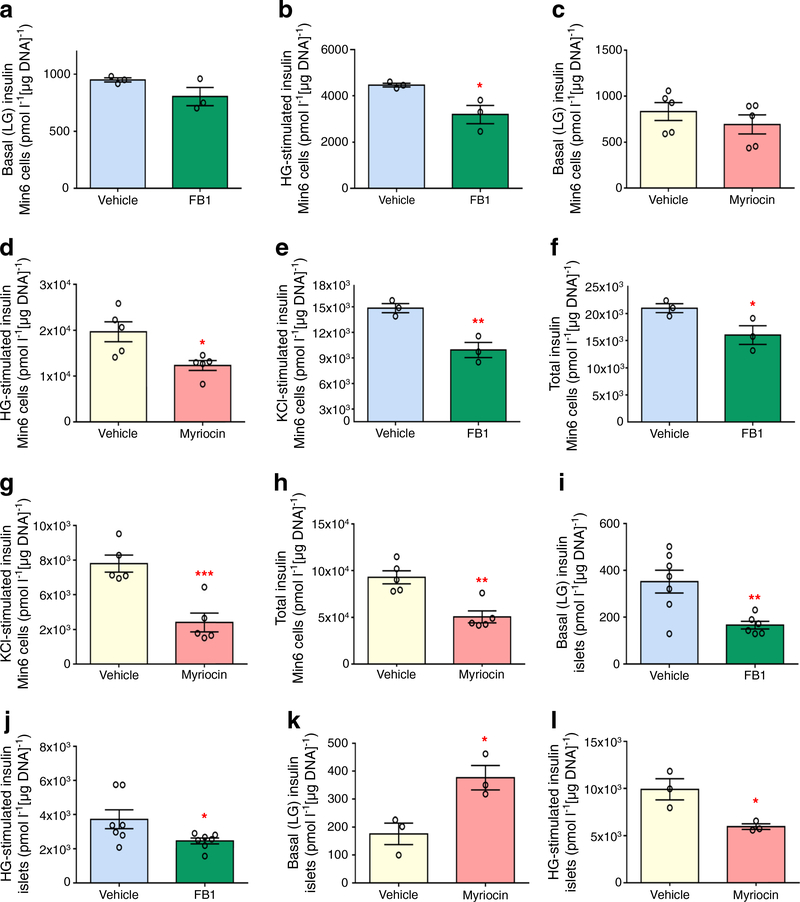
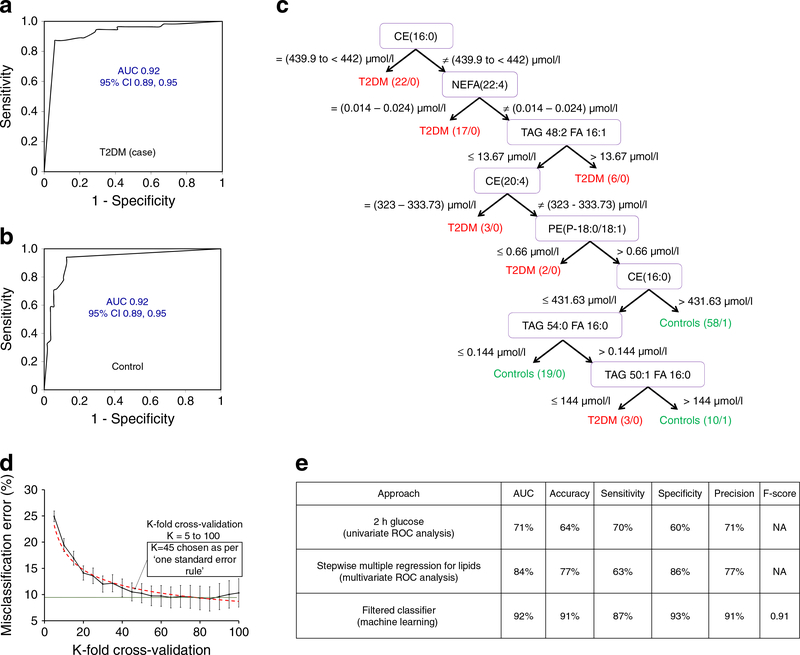
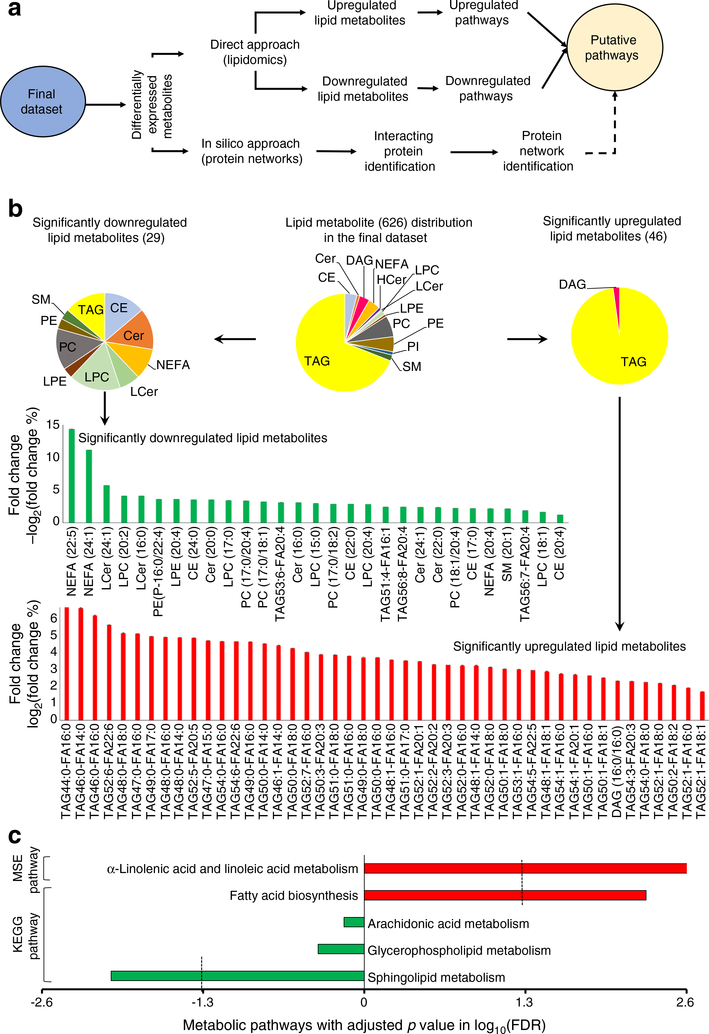
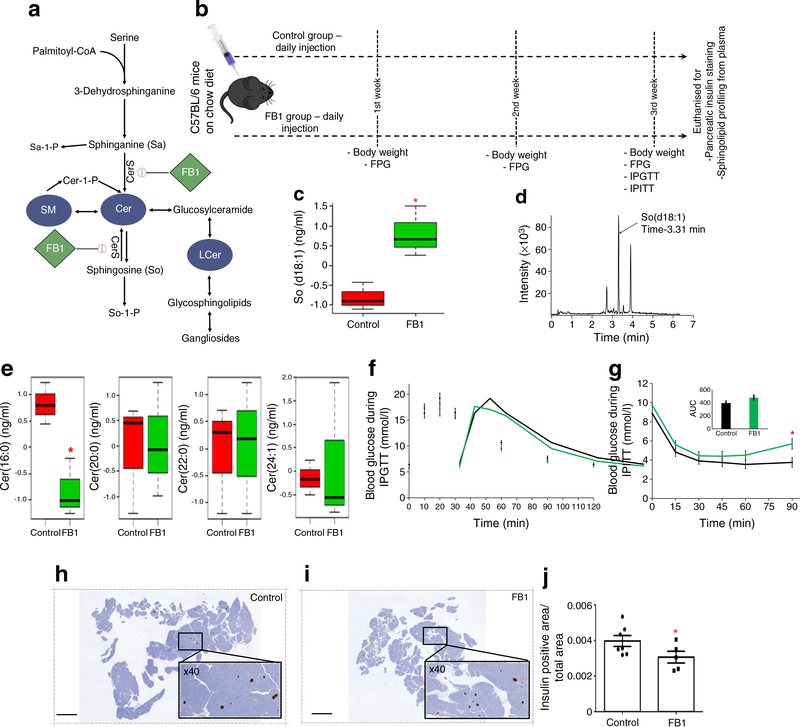
Machine learning optimisation in a decision tree format revealed a seven-lipid metabolite type 2 diabetes predictive signature with a discriminating power (AUC) of 0.92 (87% sensitivity, 93% specificity and 91% accuracy). The signature was highly robust as it includes 45-fold cross-validation under a high confidence threshold (1.0) and binary output, which together minimise the chance of data overfitting and bias selection. Concurrent analysis of differentially expressed lipid metabolite pathways uncovered the upregulation of α-linolenic/linoleic acid metabolism (false discovery rate [FDR] 0.002) and fatty acid biosynthesis (FDR 0.005) and the downregulation of sphingolipid metabolism (FDR 0.009) as being strongly associated with the risk of developing future type 2 diabetes. Focusing specifically on sphingolipids, the downregulation of sphingolipid metabolism using the pharmacological inhibitors fumonisin B1 (FB1) and myriocin in mouse islets and Min6 K8 cells (a pancreatic beta-cell like cell line) significantly impaired glucose-stimulated insulin secretion but had no significant impact on whole-body glucose homeostasis or insulin sensitivity.
CONCLUSIONS/INTERPRETATION: We reveal a novel predictive signature and associate reduced sphingolipids with the pathophysiology of transition from GDM to type 2 diabetes. Attenuating sphingolipid metabolism in islets impairs glucose-stimulated insulin secretion.
目的/假设:妊娠糖尿病(GDM)影响多达 20%的妊娠,其中近一半受影响的女性在以后的生活中会发展为 2 型糖尿病,这使得 GDM 成为未来 2 型糖尿病发展的最重要危险因素。在 GDM 后产后早期准确预测未来 2 型糖尿病风险,可以及时进行干预,预防或延迟 2 型糖尿病的发生。此外,通过了解 GDM 向 2 型糖尿病转变的潜在病理生理学,可能会发现新的干预靶点。本研究的目的是确定从 GDM 向 2 型糖尿病转变的预测特征和早期病理生理学。
我们使用了一个经过充分特征描述的、有 GDM 妊娠史的前瞻性队列,所有患者均在产后 6-9 周(基线)时入组,通过 2 h 75 g OGTT 确诊无糖尿病,并在持续基础上每年进行 2 型糖尿病检测(2 年随访)。我们采用嵌套配对病例对照设计,对基线血浆样本中的约 1100 种脂质代谢物进行了大规模靶向脂质组学研究,其中 55 例新发病例与 85 例非病例对照参与者相匹配。根据基线血浆脂质浓度与各自随访状态(2 型糖尿病或无 2 型糖尿病)之间的关系,发现了从 GDM 向 2 型糖尿病转变的预测特征和潜在病理生理学。此外,还在体内和体外研究了潜在的病理生理学。
决策树格式的机器学习优化显示,具有 0.92 判别能力(87%的敏感性、93%的特异性和 91%的准确性)的七脂质代谢物 2 型糖尿病预测特征。该特征非常稳健,因为它包括在高置信度阈值(1.0)和二进制输出下的 45 倍交叉验证,这共同最大限度地减少了数据过拟合和偏倚选择的机会。差异表达脂质代谢物途径的并发分析发现,α-亚麻酸/亚油酸代谢(错误发现率[FDR] 0.002)和脂肪酸生物合成(FDR 0.005)上调,鞘脂代谢下调(FDR 0.009)与未来发生 2 型糖尿病的风险密切相关。特别关注鞘脂,使用伏马菌素 B1(FB1)和霉菌酸在小鼠胰岛和 Min6 K8 细胞(一种类似胰腺β细胞的细胞系)中下调鞘脂代谢,显著损害葡萄糖刺激的胰岛素分泌,但对全身葡萄糖稳态或胰岛素敏感性没有显著影响。
结论/解释:我们揭示了一种新的预测特征,并将降低的鞘脂与 GDM 向 2 型糖尿病转变的病理生理学联系起来。胰岛中鞘脂代谢的衰减会损害葡萄糖刺激的胰岛素分泌。