Department of Physiology, Faculty of Medicine, University of Toronto, Toronto, Ontario, Canada.
Metabolism Research Group, Division of Advanced Diagnostics, Toronto General Research Institute, Toronto, Ontario, Canada.
PLoS Med. 2020 May 20;17(5):e1003112. doi: 10.1371/journal.pmed.1003112. eCollection 2020 May.
Women with a history of gestational diabetes mellitus (GDM) have a 7-fold higher risk of developing type 2 diabetes (T2D) during midlife and an elevated risk of developing hypertension and cardiovascular disease. Glucose tolerance reclassification after delivery is recommended, but fewer than 40% of women with GDM are tested. Thus, improved risk stratification methods are needed, as is a deeper understanding of the pathology underlying the transition from GDM to T2D. We hypothesize that metabolites during the early postpartum period accurately distinguish risk of progression from GDM to T2D and that metabolite changes signify underlying pathophysiology for future disease development.
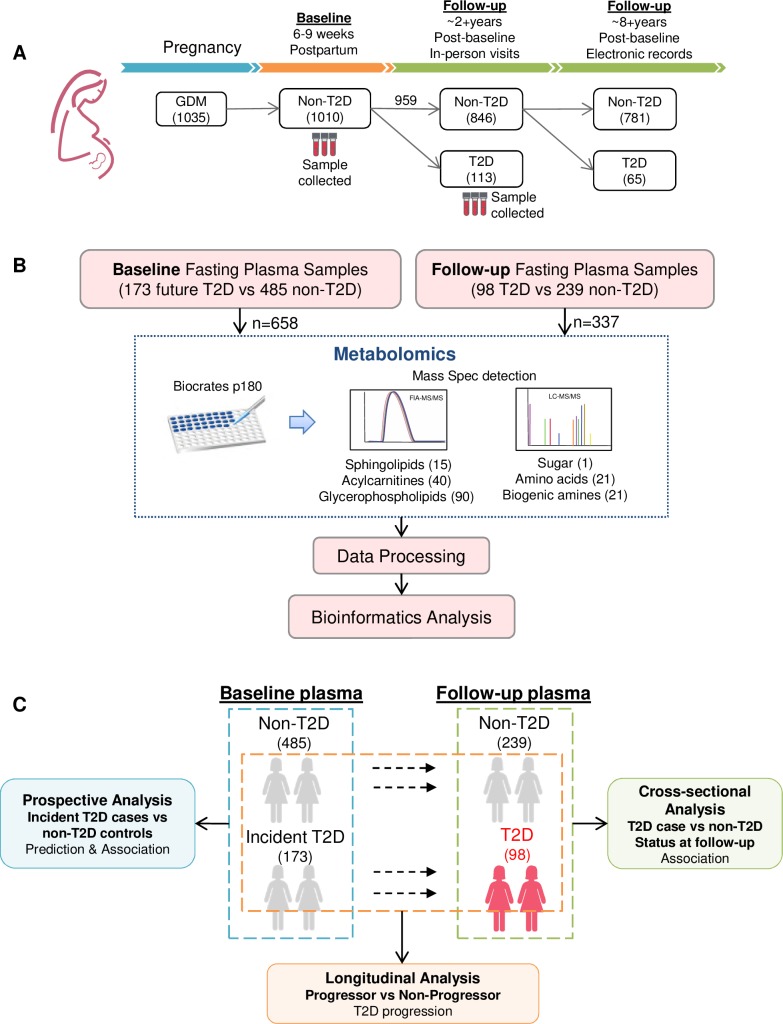
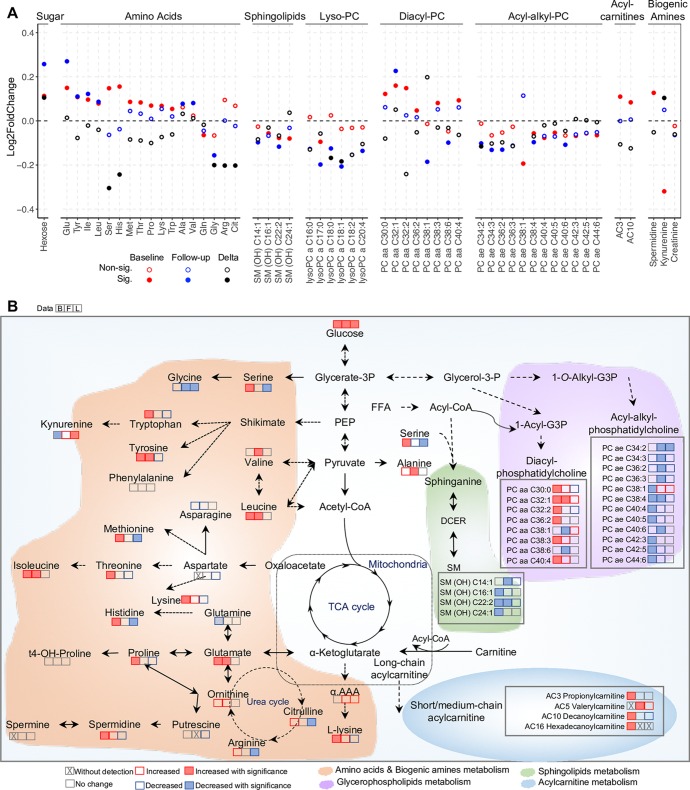
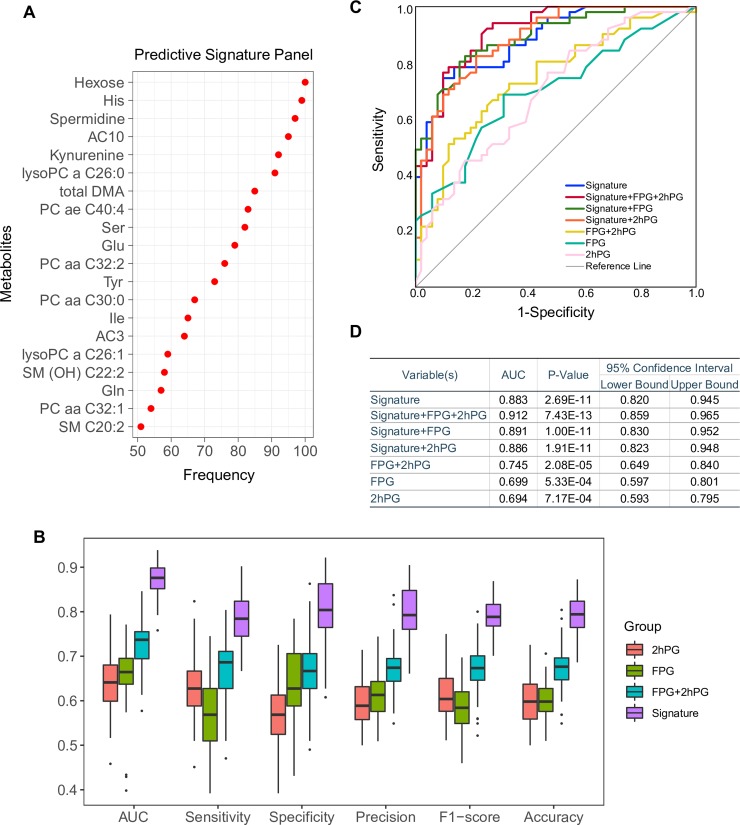
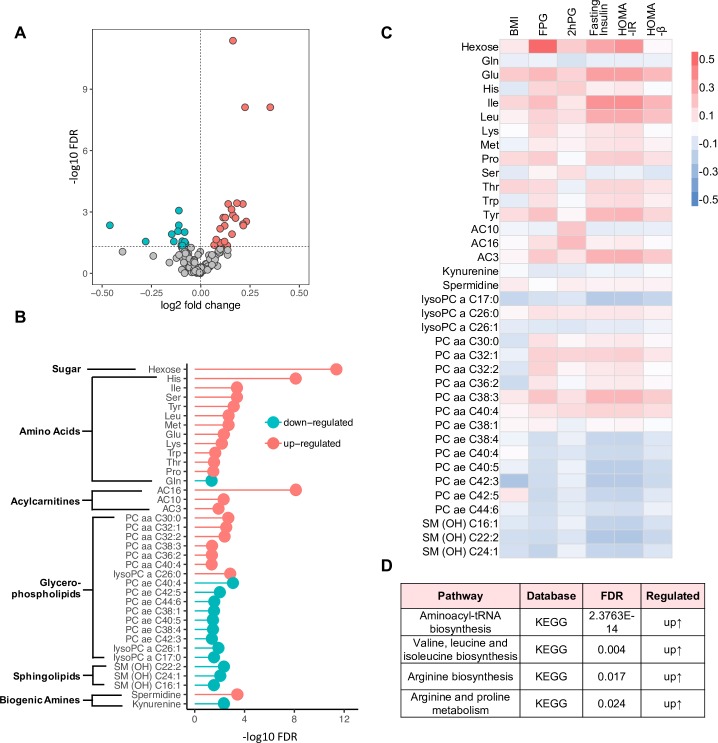
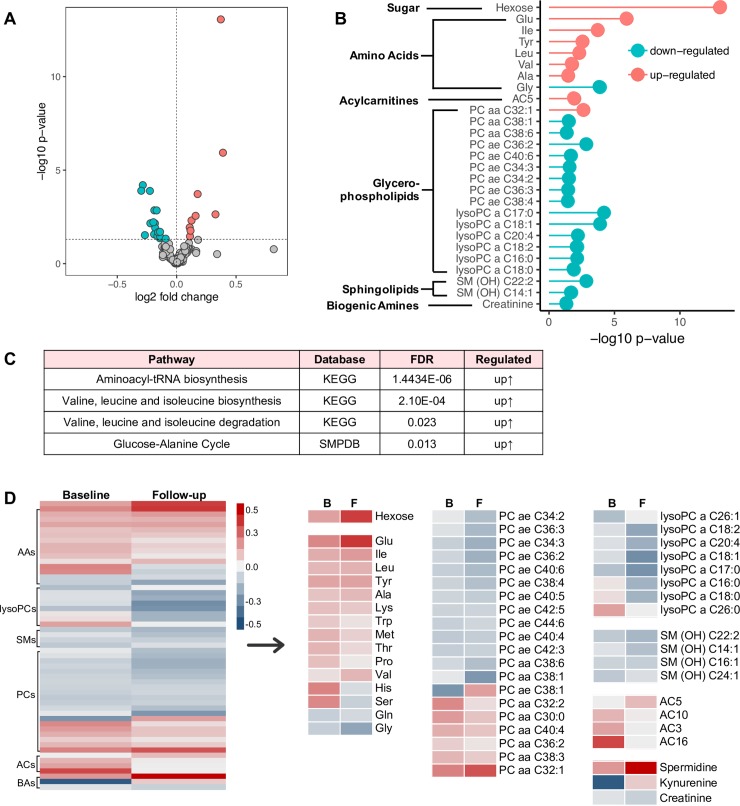
The study utilized fasting plasma samples collected from a well-characterized prospective research study of 1,035 women diagnosed with GDM. The cohort included racially/ethnically diverse pregnant women (aged 20-45 years-33% primiparous, 37% biparous, 30% multiparous) who delivered at Kaiser Permanente Northern California hospitals from 2008 to 2011. Participants attended in-person research visits including 2-hour 75-g oral glucose tolerance tests (OGTTs) at study baseline (6-9 weeks postpartum) and annually thereafter for 2 years, and we retrieved diabetes diagnoses from electronic medical records for 8 years. In a nested case-control study design, we collected fasting plasma samples among women without diabetes at baseline (n = 1,010) to measure metabolites among those who later progressed to incident T2D or did not develop T2D (non-T2D). We studied 173 incident T2D cases and 485 controls (pair-matched on BMI, age, and race/ethnicity) to discover metabolites associated with new onset of T2D. Up to 2 years post-baseline, we analyzed samples from 98 T2D cases with 239 controls to reveal T2D-associated metabolic changes. The longitudinal analysis tracked metabolic changes within individuals from baseline to 2 years of follow-up as the trajectory of T2D progression. By building prediction models, we discovered a distinct metabolic signature in the early postpartum period that predicted future T2D with a median discriminating power area under the receiver operating characteristic curve of 0.883 (95% CI 0.820-0.945, p < 0.001). At baseline, the most striking finding was an overall increase in amino acids (AAs) as well as diacyl-glycerophospholipids and a decrease in sphingolipids and acyl-alkyl-glycerophospholipids among women with incident T2D. Pathway analysis revealed up-regulated AA metabolism, arginine/proline metabolism, and branched-chain AA (BCAA) metabolism at baseline. At follow-up after the onset of T2D, up-regulation of AAs and down-regulation of sphingolipids and acyl-alkyl-glycerophospholipids were sustained or strengthened. Notably, longitudinal analyses revealed only 10 metabolites associated with progression to T2D, implicating AA and phospholipid metabolism. A study limitation is that all of the analyses were performed with the same cohort. It would be ideal to validate our findings in an independent longitudinal cohort of women with GDM who had glucose tolerance tested during the early postpartum period.
In this study, we discovered a metabolic signature predicting the transition from GDM to T2D in the early postpartum period that was superior to clinical parameters (fasting plasma glucose, 2-hour plasma glucose). The findings suggest that metabolic dysregulation, particularly AA dysmetabolism, is present years prior to diabetes onset, and is revealed during the early postpartum period, preceding progression to T2D, among women with GDM.
ClinicalTrials.gov Identifier: NCT01967030.
患有妊娠糖尿病(GDM)的女性在中年时期患 2 型糖尿病(T2D)的风险增加 7 倍,且患高血压和心血管疾病的风险也有所上升。建议在产后进行葡萄糖耐量重新分类检查,但仅有不到 40%的 GDM 女性接受了此项检查。因此,我们需要改进风险分层方法,还需要更深入地了解 GDM 向 T2D 过渡的病理机制。我们假设,产后早期的代谢产物能够准确地区分 GDM 进展为 T2D 的风险,并且代谢产物的变化预示着未来疾病发展的潜在病理生理学变化。
本研究利用了从一个经过充分特征描述的前瞻性研究中收集的 1035 名被诊断为 GDM 的女性的空腹血浆样本。该队列包括来自 Kaiser Permanente Northern California 医院的种族/民族多样化的孕妇(年龄 20-45 岁,初产妇占 33%,经产妇占 37%,多产妇占 30%),她们于 2008 年至 2011 年期间分娩。参与者参加了面对面的研究访问,包括在产后 6-9 周(基线)进行 2 小时 75g 口服葡萄糖耐量试验(OGTT),此后每年进行一次,持续 2 年,并从电子病历中检索了 8 年的糖尿病诊断数据。在嵌套病例对照研究设计中,我们在基线时未患有糖尿病的女性中收集了空腹血浆样本(n=1010),以测量随后发展为 T2D 或未发展为 T2D(非 T2D)的女性的代谢产物。我们研究了 173 例新发 T2D 病例和 485 例对照(按 BMI、年龄和种族/民族配对),以发现与新诊断的 T2D 相关的代谢产物。在基线后最多 2 年的时间内,我们分析了 98 例 T2D 病例和 239 例对照的样本,以揭示 T2D 相关的代谢变化。纵向分析跟踪了个体从基线到 2 年随访期间的代谢变化,作为 T2D 进展的轨迹。通过构建预测模型,我们发现了产后早期一个独特的代谢特征,可以以 0.883(95%CI 0.820-0.945,p<0.001)的中位数区分能力预测未来的 T2D。在基线时,最显著的发现是在患有新发 T2D 的女性中,氨基酸(AA)整体增加,二酰基甘油磷脂增加,鞘脂和酰基-烷基甘油磷脂减少。途径分析显示,在基线时 AA 代谢、精氨酸/脯氨酸代谢和支链氨基酸(BCAA)代谢上调。在 T2D 发病后的随访中,AA 的上调和鞘脂和酰基-烷基甘油磷脂的下调得到了维持或加强。值得注意的是,纵向分析仅发现了 10 种与 T2D 进展相关的代谢产物,提示 AA 和磷脂代谢与 T2D 相关。本研究的一个局限性是所有分析都是使用同一队列进行的。如果能够在具有 GDM 的女性的独立纵向队列中验证我们的发现,该队列在产后早期进行了葡萄糖耐量测试,那么这将是非常理想的。
在这项研究中,我们发现了一个代谢特征,可以在产后早期预测 GDM 向 T2D 的转变,其预测能力优于临床参数(空腹血糖、2 小时血糖)。这些发现表明,代谢失调,特别是 AA 代谢失调,在糖尿病发病前多年就已经存在,并在 GDM 女性中,在进展为 T2D 之前的产后早期阶段被揭示出来。
ClinicalTrials.gov 标识符:NCT01967030。