Tonacci Alessandro, Bagnato Gianluca, Pandolfo Gianluca, Billeci Lucia, Sansone Francesco, Conte Raffaele, Gangemi Sebastiano
Clinical Physiology Institute-National Research Council of Italy (IFC-CNR), Via Moruzzi 1, 56124 Pisa, Italy.
School and Division of Allergy and Clinical Immunology, Department of Clinical and Experimental Medicine, University Hospital "G. Martino", Via Consolare Valeria SNC, 98125 Messina, Italy.
J Clin Med. 2019 Jan 14;8(1):88. doi: 10.3390/jcm8010088.
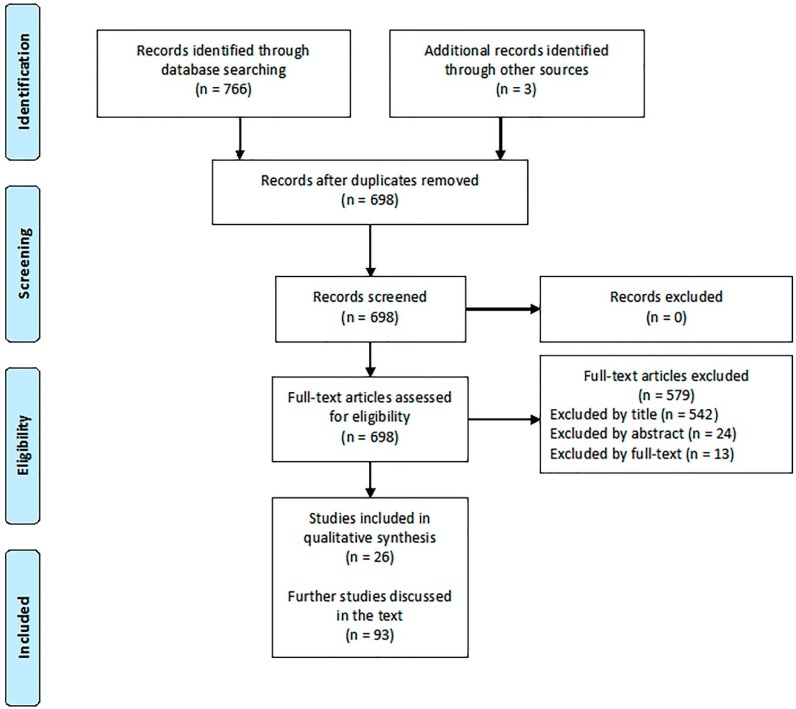
Autism Spectrum Disorder (ASD) is a category of neurodevelopmental disturbances seriously affecting social skills, to which the scientific community has paid great attention in last decades. To date, their pathogenesis is still unknown, but several studies highlighted the relevance of gene-environment interactions in the onset of ASD. In addition, an immune involvement was seen in a wide number of ASD subjects, leading several researchers to hypothesize a possible common pathogenesis between ASD and immune disturbances, including Atopic Dermatitis (AD). In general, among potential contributing factors, microRNAs (miRNAs), small molecules capable of controlling gene expression and targeting mRNA transcripts, might represent one of the major circulating link, possibly unraveling the connections between neurodevelopmental and immune conditions. Under such premises, we conducted a systematic literature review, under the PRISMA guidelines, trying to define the panel of common miRNAs involved in both ASD and AD. The review retrieved articles published between January 1, 2005, and December 13, 2018, in PubMed, ScienceDirect, PsycARTICLES, and Google Scholar. We found a handful of works dealing with miRNAs in ASD and AD, with the most overlapping dysregulated miRNAs being miR-146 and miR-155. Two possible compounds are abnormally regulated in both ASD and AD subjects, possibly cross-contributing to the interactions between the two disorders, setting the basis to investigate more precisely the possible link between ASD and AD from another, not just clinical, perspective.
自闭症谱系障碍(ASD)是一类严重影响社交技能的神经发育障碍,在过去几十年中受到了科学界的高度关注。迄今为止,其发病机制仍不清楚,但多项研究强调了基因-环境相互作用在ASD发病中的相关性。此外,在大量ASD患者中发现了免疫参与,这使得一些研究人员推测ASD与免疫紊乱(包括特应性皮炎(AD))之间可能存在共同的发病机制。一般来说,在潜在的促成因素中,微小RNA(miRNA)作为能够控制基因表达并靶向mRNA转录本的小分子,可能是主要的循环联系之一,有可能揭示神经发育和免疫状况之间的联系。在此前提下,我们按照PRISMA指南进行了一项系统的文献综述,试图确定参与ASD和AD的常见miRNA组。该综述检索了2005年1月1日至2018年12月13日期间在PubMed、ScienceDirect、PsycARTICLES和谷歌学术上发表的文章。我们发现了一些关于ASD和AD中miRNA的研究,其中最重叠的失调miRNA是miR-146和miR-155。两种可能的化合物在ASD和AD患者中均受到异常调节,可能共同促成了这两种疾病之间的相互作用,为从另一个角度(不仅仅是临床角度)更精确地研究ASD和AD之间的可能联系奠定了基础。