Mussa Alessandro, Ciuffreda Valentina Pia, Sauro Pina, Pagliardini Veronica, Pagliardini Severo, Carli Diana, Kalish Jennifer M, Fagioli Franca, Pavanello Enza, Ferrero Giovanni Battista
Department of Pediatrics and Public Health and Pediatric Sciences, University of Torino, 10126 Torino, Italy.
Neonatal Intensive Care Unit, Department of Obstetrics and Gynecology, S.Anna Hospital, Città della Salute e della Scienza, 10126 Torino, Italy.
Cancers (Basel). 2019 Jan 14;11(1):86. doi: 10.3390/cancers11010086.
Hepatoblastoma screening in the Beckwith⁻Wiedemann spectrum (BWSp) is currently based on measuring a specific serum marker alpha-fetoprotein (αFP) every three months until the fourth birthday. Frequent blood draws can be a burden for patients and their families.
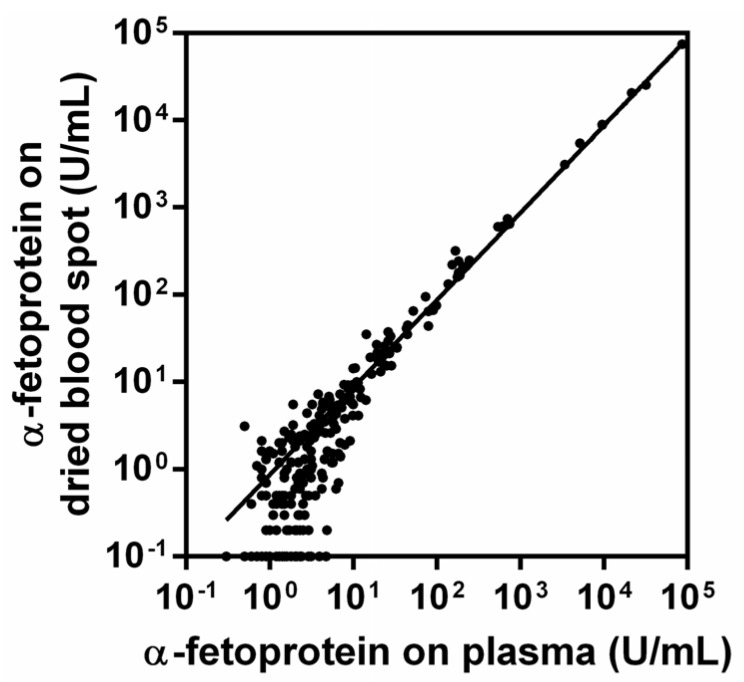
We have developed a less invasive alternative testing method based on measuring αFPs from dried blood spots (DBS). The method was validated with 259 simultaneous plasma and DBS αFP measurements in 171 children (132 controls and 39 patients with BWSp).
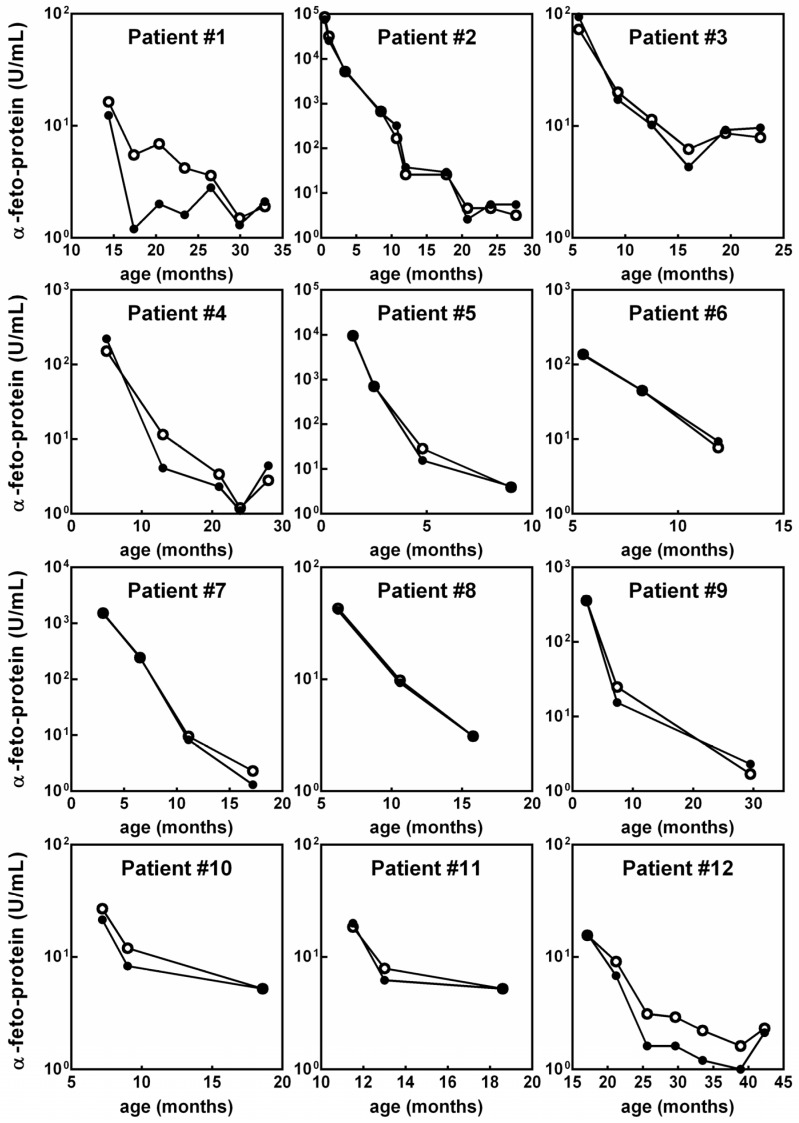
The DBS and plasma measurements overlapped across the wide range of αFP concentrations independent of patient age ( < 0.0001), demonstrating the utility of this method for longitudinal monitoring. Occasional differences between measurements by the two techniques fell within standard laboratory error and would not alter clinical management.
This novel method shows consistent overlap with the traditional blood draws, thereby demonstrating its utility for hepatoblastoma screening in this setting and alleviating the burden of frequent blood draws. This also may help increase patient compliance and reduce costs of health care screening. The DBS-based method for the measurement of cancer biomarkers may also be applied to several other chronic diseases with increased risks of αFP-producing liver tumors.
目前,贝克威思-维德曼综合征(BWSp)中的肝母细胞瘤筛查是基于每三个月测量一次特定血清标志物甲胎蛋白(αFP),直至患儿四岁生日。频繁采血对患者及其家属来说可能是一种负担。
我们开发了一种基于测量干血斑(DBS)中αFP的侵入性较小的替代检测方法。该方法在171名儿童(132名对照和39名BWSp患者)中进行了259次同步血浆和DBS αFP测量的验证。
在广泛的αFP浓度范围内,DBS和血浆测量结果相互重叠,与患者年龄无关(<0.0001),表明该方法可用于纵向监测。两种技术测量结果之间偶尔出现的差异在标准实验室误差范围内,不会改变临床管理。
这种新方法与传统采血结果显示出一致的重叠性,从而证明了其在这种情况下用于肝母细胞瘤筛查的实用性,并减轻了频繁采血的负担。这也可能有助于提高患者的依从性并降低医疗筛查成本。基于DBS的癌症生物标志物测量方法也可能适用于其他几种患产生αFP的肝肿瘤风险增加的慢性疾病。