Carli Diana, Riberi Evelise, Ferrero Giovanni Battista, Mussa Alessandro
University of Torino, Department of Pediatric and Public Health Sciences, Torino, Italy
J Clin Res Pediatr Endocrinol. 2020 Mar 19;12(1):1-16. doi: 10.4274/jcrpe.galenos.2019.2018.0249. Epub 2019 Apr 10.
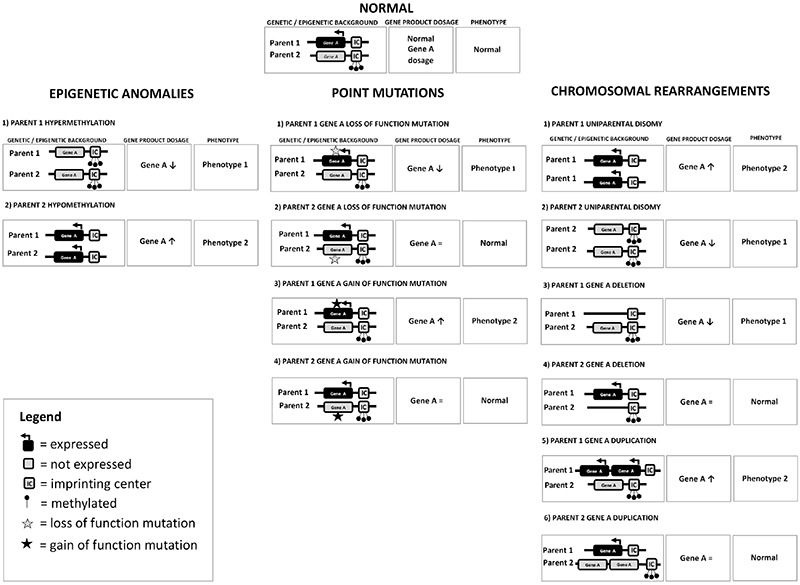
Imprinting disorders are a group of congenital diseases caused by dysregulation of genomic imprinting, affecting prenatal and postnatal growth, neurocognitive development, metabolism and cancer predisposition. Aberrant expression of imprinted genes can be achieved through different mechanisms, classified into epigenetic - if not involving DNA sequence change - or genetic in the case of altered genomic sequence. Despite the underlying mechanism, the phenotype depends on the parental allele affected and opposite phenotypes may result depending on the involvement of the maternal or the paternal chromosome. Imprinting disorders are largely underdiagnosed because of the broad range of clinical signs, the overlap of presentation among different disorders, the presence of mild phenotypes, the mitigation of the phenotype with age and the limited availability of molecular techniques employed for diagnosis. This review briefly illustrates the currently known human imprinting disorders, highlighting endocrinological aspects of pediatric interest.
印记紊乱是一组由基因组印记失调引起的先天性疾病,影响产前和产后生长、神经认知发育、代谢及癌症易感性。印记基因的异常表达可通过不同机制实现,若不涉及DNA序列改变则归类为表观遗传机制,若基因组序列改变则为遗传机制。尽管潜在机制不同,但表型取决于受影响的亲本等位基因,根据母源或父源染色体的受累情况可能产生相反的表型。由于临床体征范围广泛、不同疾病表现重叠、存在轻度表型、表型随年龄减轻以及用于诊断的分子技术有限,印记紊乱在很大程度上未得到充分诊断。本综述简要阐述了目前已知的人类印记紊乱,重点介绍了儿科领域感兴趣的内分泌学方面。