Cancer Research UK DNA Repair Enzymes Group, Genome Damage and Stability Centre, School of Life Sciences, University of Sussex, Falmer, Brighton BN1 9RQ, UK.
Cross-Faculty NMR Centre, Department of Life Sciences, Faculty of Natural Sciences, Imperial College London, London SW7 2AZ, UK.
Cell Rep. 2019 Jan 15;26(3):573-581.e5. doi: 10.1016/j.celrep.2018.12.082.
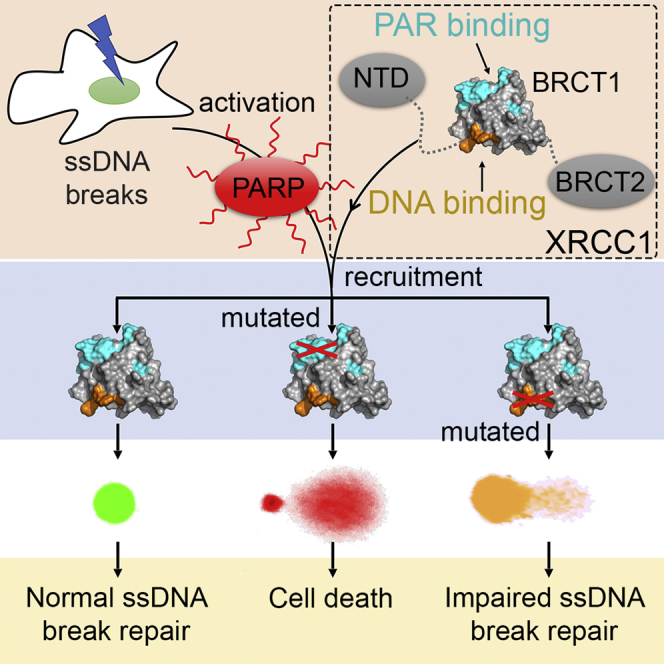
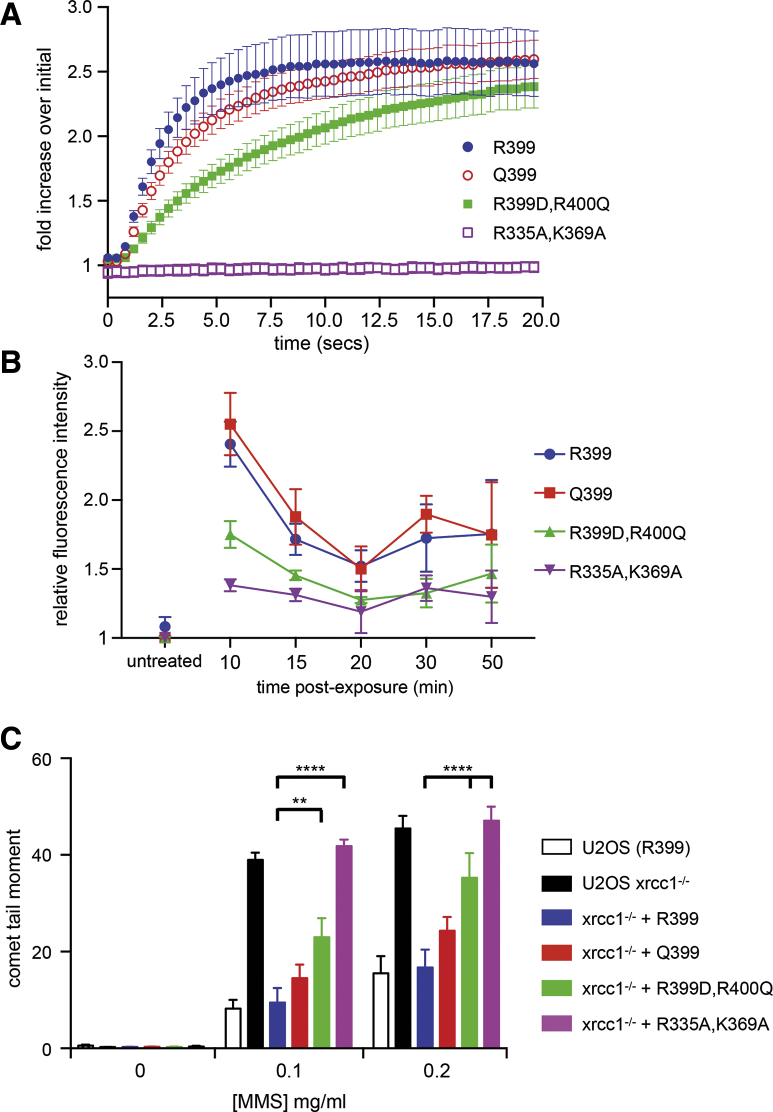
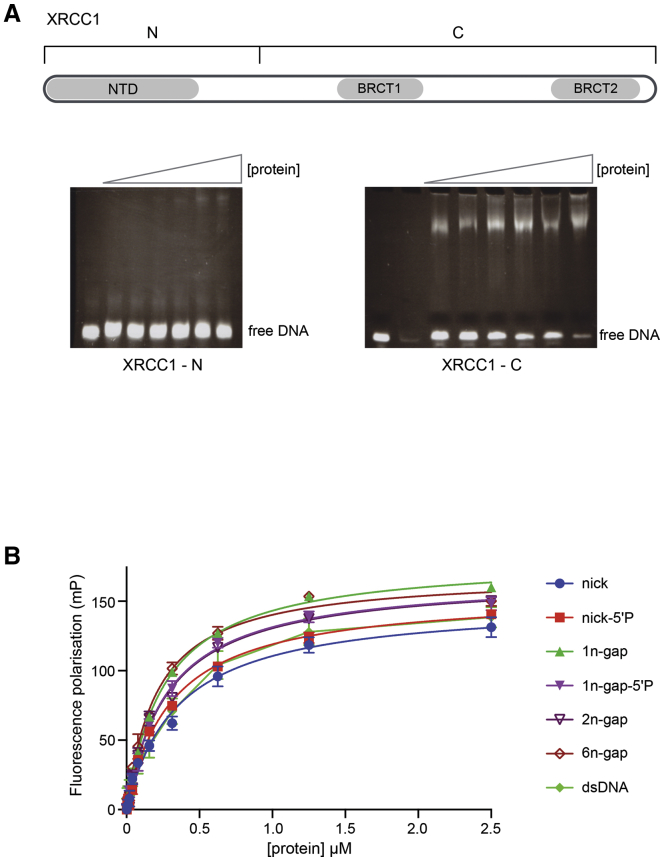
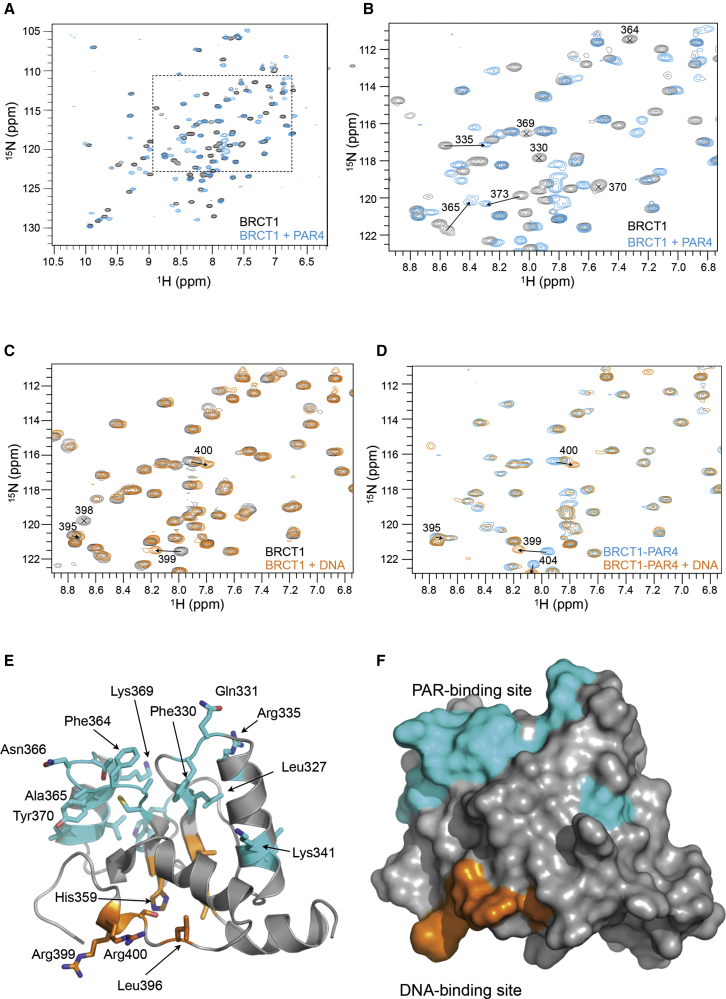
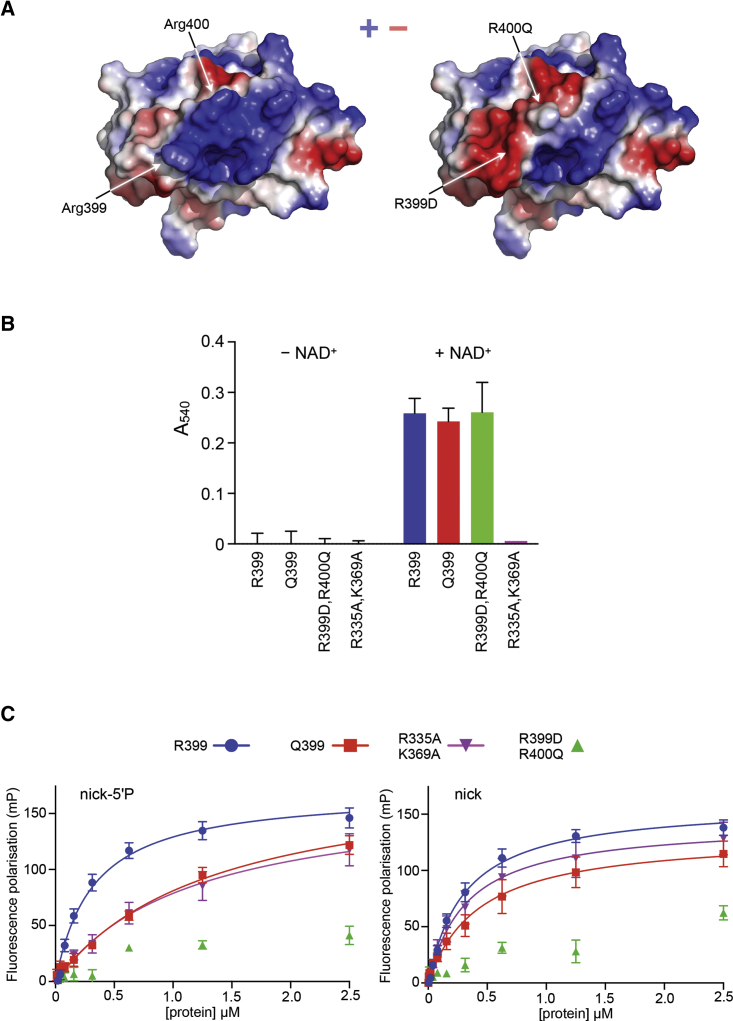
XRCC1 accelerates repair of DNA single-strand breaks by acting as a scaffold protein for the recruitment of Polβ, LigIIIα, and end-processing factors, such as PNKP and APTX. XRCC1 itself is recruited to DNA damage through interaction of its central BRCT domain with poly(ADP-ribose) chains generated by PARP1 or PARP2. XRCC1 is believed to interact directly with DNA at sites of damage, but the molecular basis for this interaction within XRCC1 remains unclear. We now show that the central BRCT domain simultaneously mediates interaction of XRCC1 with poly(ADP-ribose) and DNA, through separate and non-overlapping binding sites on opposite faces of the domain. Mutation of residues within the DNA binding site, which includes the site of a common disease-associated human polymorphism, affects DNA binding of this XRCC1 domain in vitro and impairs XRCC1 recruitment and retention at DNA damage and repair of single-strand breaks in vivo.
XRCCl 通过作为 Polβ、LigIIIα 和末端处理因子(如 PNKP 和 APTX)的募集支架蛋白,加速 DNA 单链断裂的修复。XRCCl 本身通过其中心 BRCT 结构域与 PARP1 或 PARP2 产生的聚 ADP-核糖(poly(ADP-ribose))链相互作用,被招募到 DNA 损伤部位。XRCCl 被认为在损伤部位直接与 DNA 相互作用,但 XRCCl 内这种相互作用的分子基础仍不清楚。我们现在表明,中央 BRCT 结构域通过该结构域相对面上的单独且不重叠的结合位点,同时介导 XRCCl 与聚 ADP-核糖和 DNA 的相互作用。位于 DNA 结合位点内的残基(包括一个常见疾病相关的人类多态性位点)的突变,影响该 XRCCl 结构域在体外的 DNA 结合,并损害 XRCCl 在 DNA 损伤处的募集和保留以及体内单链断裂的修复。