Barzelay Aya, Weisthal Algor Shira, Niztan Anat, Katz Sebastian, Benhamou Moshe, Nakdimon Itay, Azmon Noam, Gozlan Sandy, Mezad-Koursh Daphna, Neudorfer Meira, Goldstein Michaella, Meilik Benjamin, Loewenstein Anat, Barak Adiel
Department of Ophthalmology, Tel Aviv Sourasky Medical Center, Tel Aviv, Israel.
Sackler Faculty of Medicine, Tel Aviv University, Tel Aviv, Israel.
Stem Cells Int. 2018 Dec 13;2018:9682856. doi: 10.1155/2018/9682856. eCollection 2018.
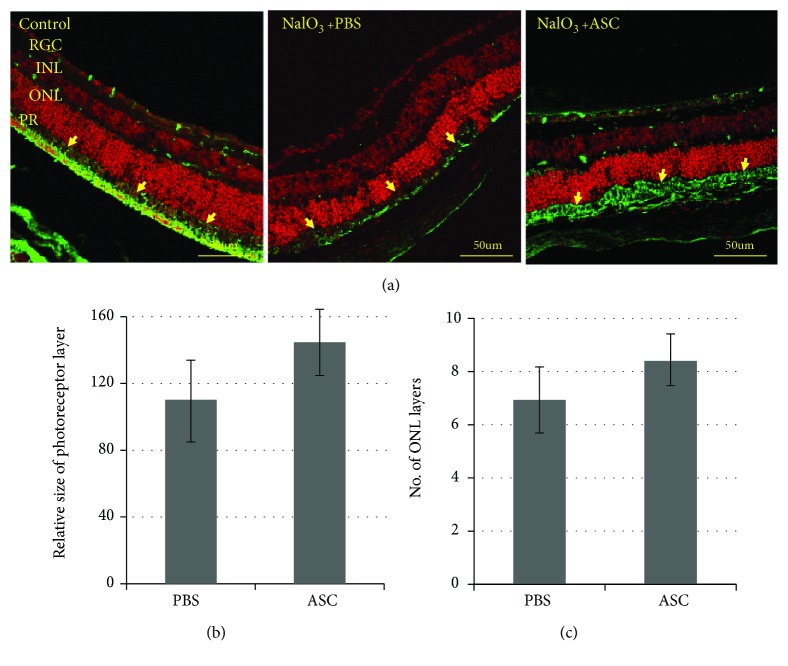
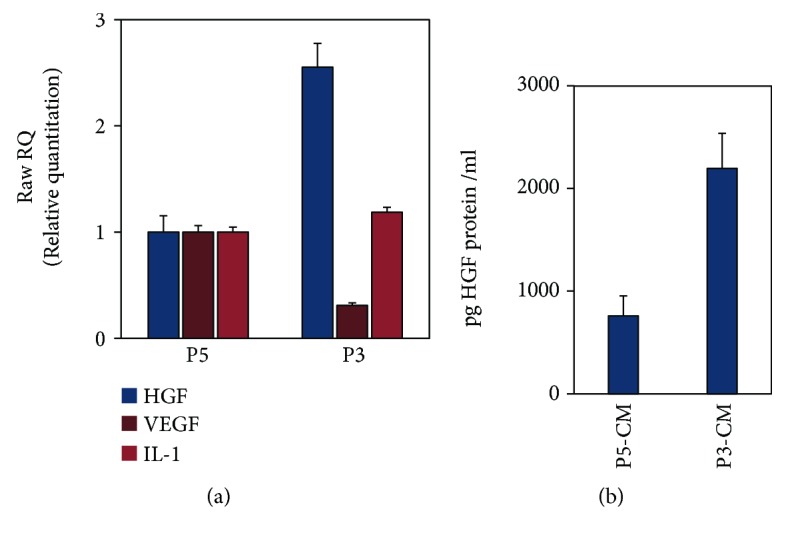
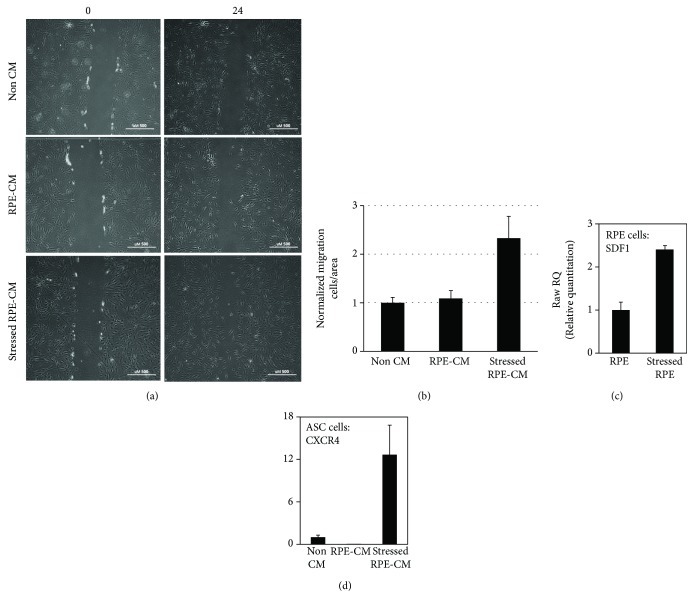
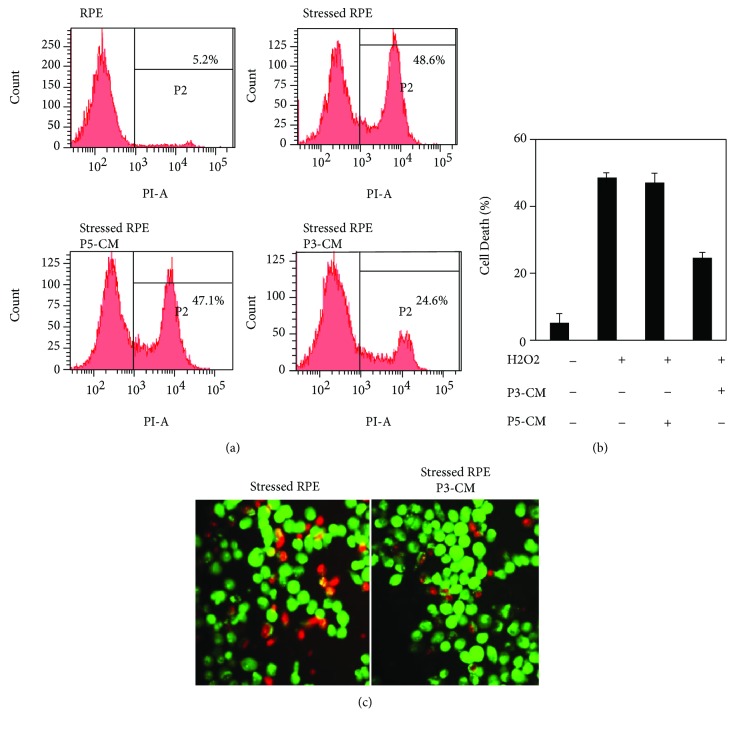
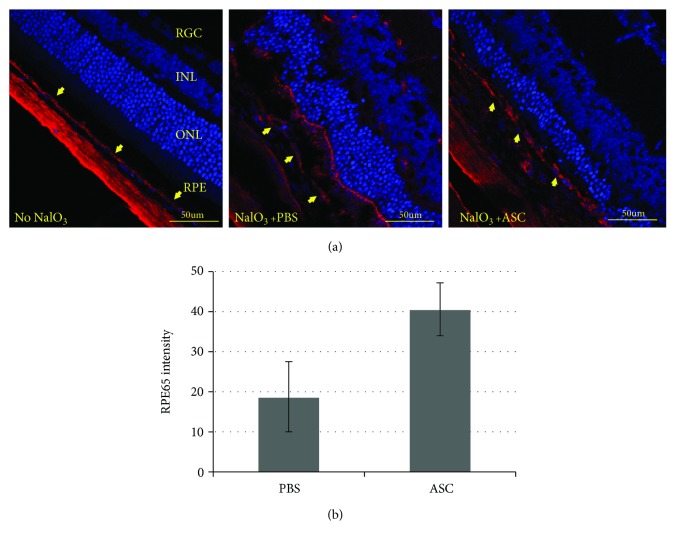
Oxidative stress leads to the degeneration of retinal pigment epithelial (RPE) and photoreceptor cells. We evaluated the potential of adipose-derived mesenchymal stem cells (ASCs) as a therapeutic tool by studying the migration capacity of ASCs and their protective effect against RPE cell death under oxidative stress and . ASCs exhibited enhanced migration when exposed to conditioned medium of oxidative stressed RPE cells obtained by hydrogen peroxide. Migration-related axis SDF-1/CXCR4 was studied, and upregulation of SDF-1 in stressed RPE and of CXCR4 in ASCs was detected. Moreover, ASCs' conditioned medium prevented HO-induced cell death of RPE cells. Early passage ASCs had high expression level of HGF, low VEGF levels, and unmodulated IL-1 levels, compared to late passage ASCs. Thus, early passage ASCs show the potential to migrate towards damaged RPE cells and protect them in a paracrine manner from cell death induced by oxidative stress. , mice received systemic injection of NaIO, and 72 h later, ASCs were transplanted in the subretinal space. Seven days after ASC transplantation, the eyes were enucleated fixed and frozen for immunohistochemical analysis. Under such conditions, ASC-treated mice showed preservation of nuclear layers in the outer nuclear layer and stronger staining of RPE and photoreceptor layer, compared to PBS-treated mice. Taken together, our results indicate that ASCs are able to home in on damaged RPE cells and protect against damage to the RPE and PR layers caused by oxidative stress. These data imply the potential that ASCs have in regenerating RPE under oxidative stress, providing the basis for a therapeutic approach to retinal degeneration diseases related to oxidative stress that could help save the eyesight of millions of people worldwide.
氧化应激会导致视网膜色素上皮(RPE)和光感受器细胞的退化。我们通过研究脂肪来源的间充质干细胞(ASCs)的迁移能力及其在氧化应激下对RPE细胞死亡的保护作用,评估了ASCs作为一种治疗工具的潜力。当暴露于用过氧化氢获得的氧化应激RPE细胞的条件培养基时,ASCs表现出增强的迁移能力。研究了迁移相关轴SDF-1/CXCR4,并检测到应激RPE中SDF-1和ASCs中CXCR4的上调。此外,ASCs的条件培养基可防止HO诱导的RPE细胞死亡。与传代后期的ASCs相比,传代早期的ASCs具有较高的HGF表达水平、较低的VEGF水平和未调节的IL-1水平。因此,传代早期的ASCs显示出向受损RPE细胞迁移并以旁分泌方式保护它们免受氧化应激诱导的细胞死亡的潜力。给小鼠全身注射NaIO,72小时后,将ASCs移植到视网膜下间隙。ASC移植7天后,摘除眼球进行固定和冷冻,用于免疫组织化学分析。在这种条件下,与PBS处理的小鼠相比,ASC处理的小鼠在外核层的核层得以保留,RPE和光感受器层的染色更强。综上所述,我们的结果表明,ASCs能够归巢到受损的RPE细胞,并防止氧化应激对RPE和PR层造成损伤。这些数据暗示了ASCs在氧化应激下再生RPE的潜力,为治疗与氧化应激相关的视网膜变性疾病提供了一种治疗方法的基础,这可能有助于挽救全球数百万人的视力。