Department of Neuroscience, The Scripps Research Institute, Jupiter, United States.
Elife. 2019 Jan 18;8:e44040. doi: 10.7554/eLife.44040.
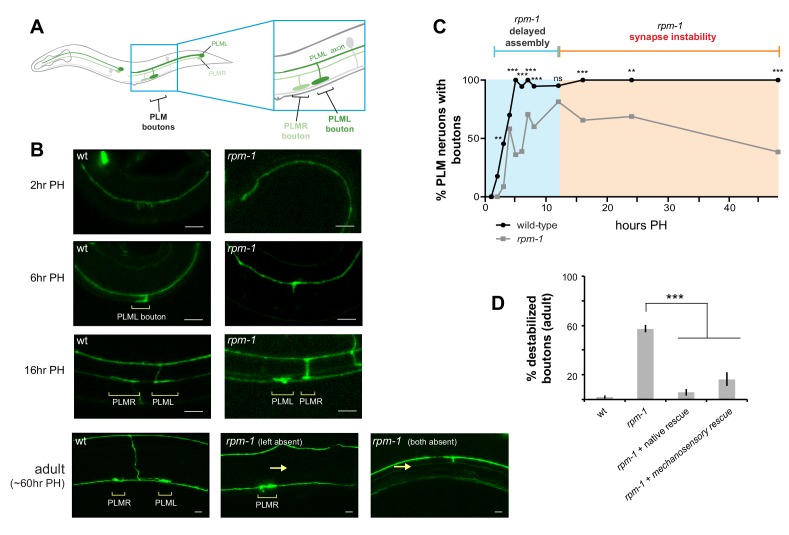
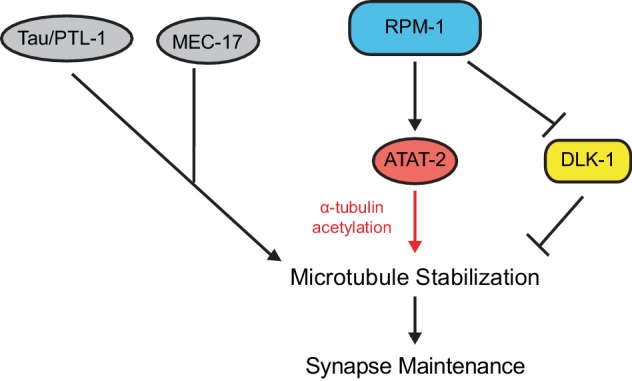
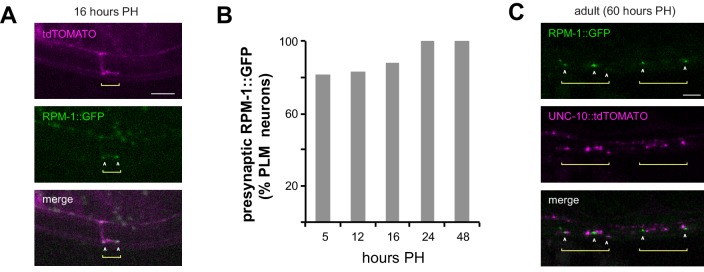
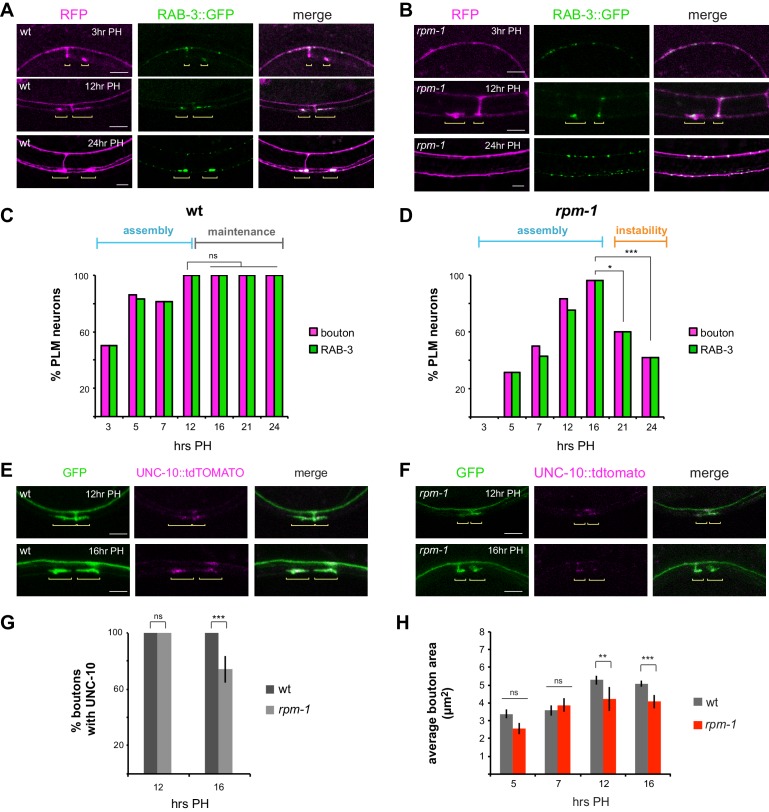
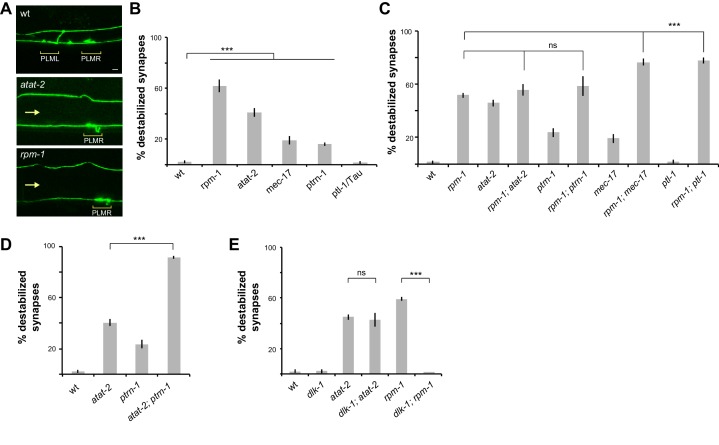
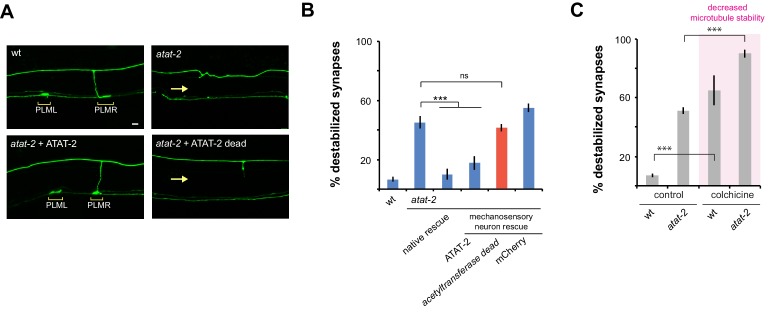
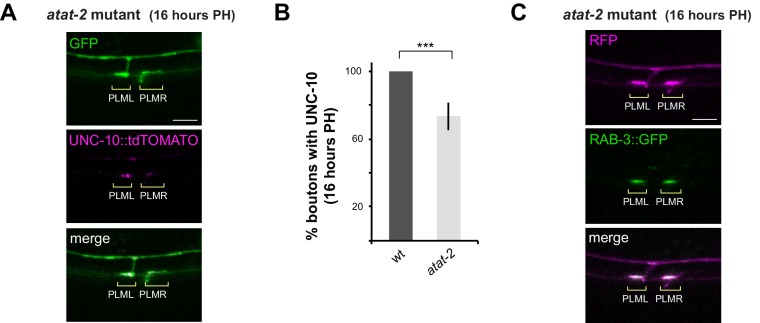
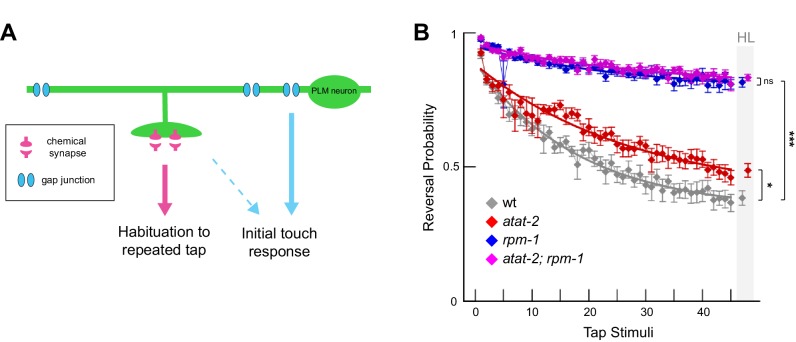
Synapse formation is comprised of target cell recognition, synapse assembly, and synapse maintenance. Maintaining established synaptic connections is essential for generating functional circuitry and synapse instability is a hallmark of neurodegenerative disease. While many molecules impact synapse formation generally, we know little about molecules that affect synapse maintenance in vivo. Using genetics and developmental time course analysis in , we show that the α-tubulin acetyltransferase ATAT-2 and the signaling hub RPM-1 are required presynaptically to maintain stable synapses. Importantly, the enzymatic acetyltransferase activity of ATAT-2 is required for synapse maintenance. Our analysis revealed that RPM-1 is a hub in a genetic network composed of ATAT-2, PTRN-1 and DLK-1. In this network, ATAT-2 functions independent of the DLK-1 MAPK and likely acts downstream of RPM-1. Thus, our study reveals an important role for tubulin acetyltransferase activity in presynaptic maintenance, which occurs via the RPM-1/ATAT-2 pathway.
突触形成包括靶细胞识别、突触组装和突触维持。维持已建立的突触连接对于产生功能性电路至关重要,而突触不稳定性是神经退行性疾病的标志。虽然许多分子普遍影响突触形成,但我们对体内影响突触维持的分子知之甚少。我们使用遗传学和发育时间过程分析在 中表明,α-微管蛋白乙酰转移酶 ATAT-2 和信号枢纽 RPM-1 在突触前维持稳定的突触是必需的。重要的是,ATAT-2 的酶乙酰转移酶活性对于突触维持是必需的。我们的分析表明,RPM-1 是由 ATAT-2、PTRN-1 和 DLK-1 组成的遗传网络中的一个枢纽。在这个网络中,ATAT-2 独立于 DLK-1 MAPK 发挥作用,可能作用于 RPM-1 的下游。因此,我们的研究揭示了微管蛋白乙酰转移酶活性在突触前维持中的重要作用,这种作用是通过 RPM-1/ATAT-2 途径发生的。