Liu Shuzhong, Zhou Xi, Song An, Huo Zhen, Li William A, Rastogi Radhika, Wang Yipeng, Liu Yong
Department of Orthopaedic Surgery, Peking Union Medical College Hospital, Peking Union Medical College and Chinese Academy of Medical Sciences.
Department of Endocrinology, Key Laboratory of Endocrinology, National Health and Family Planning Commission.
Medicine (Baltimore). 2019 Jan;98(3):e14198. doi: 10.1097/MD.0000000000014198.
Metastatic thymic carcinoma in the spine is a rare disease with no standard curative managements yet. The objective of this study is to report a very rare case of spinal metastases of thymic carcinoma successfully operated by combination of instrumentation and cement augmentation together with adjuvant treatment. The management of these unique cases has yet to be well-documented.
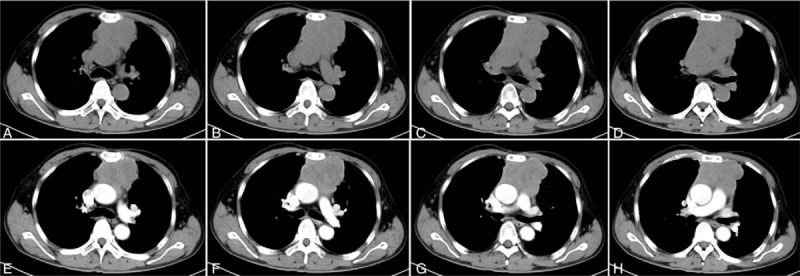
A 57-year-old man presented with a 6-month history of continuous and progressive back pain. The patient, who had been diagnosed of thymic carcinoma (stage IV B) for 3 years, received surgical treatment of median sternotomy thymectomy, followed by 3 cycles of chemotherapy and 12 cycles of radiotherapy.
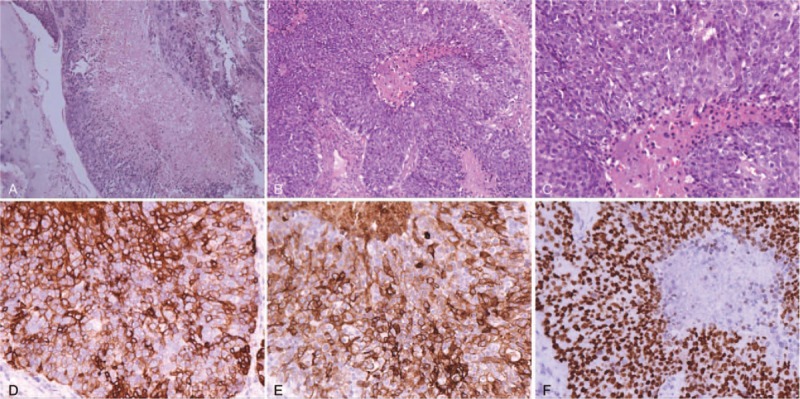
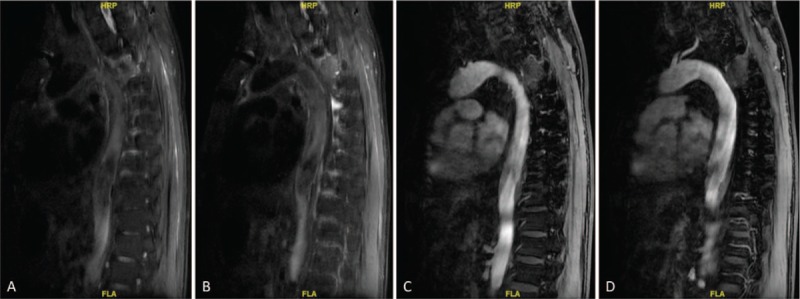
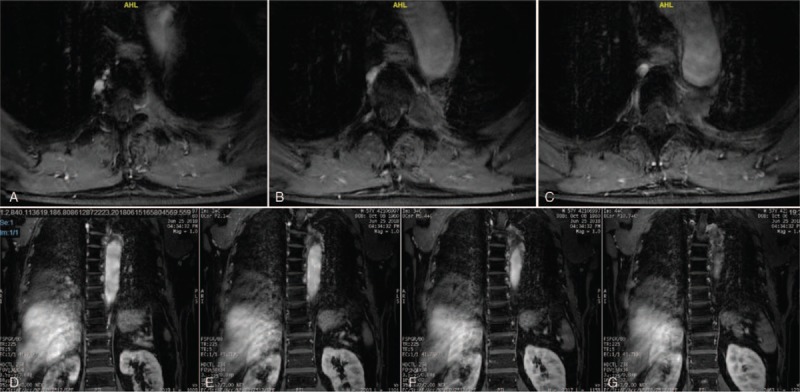
Magnetic resonance imaging (MRI) of spine showed spinal cord compression secondary to the epidural component of the T4 mass, with increased metastatic marrow infiltration of the left T4 vetebral body, which presented as a solid tumor. Post-operative pathology confirmed the diagnosis of spinal metastases of thymic carcinoma.
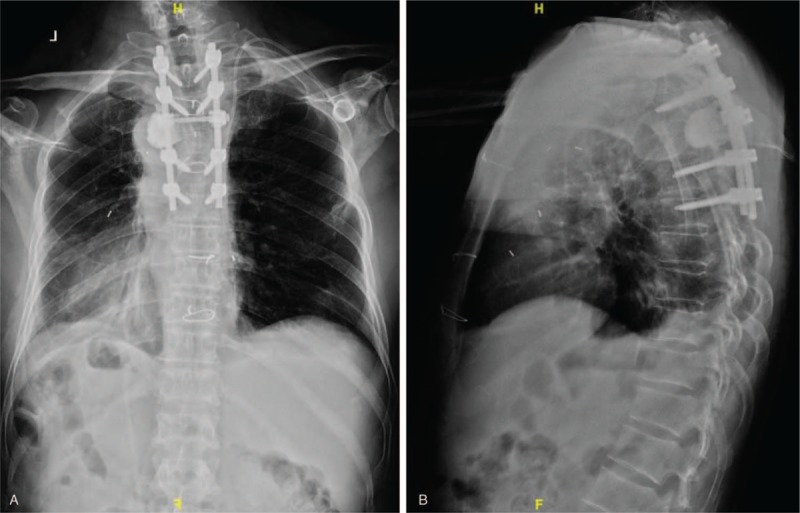
The patient underwent exploratory surgery, circumferential spinal cord decompression, cement augmentation and a stabilization procedure via a posterior approach.
The patient's neurological deficits improved significantly after the surgery, and the postoperative period was uneventful at the 3-month follow-up visit. There were no other complications associated with the operation during the follow-up period.
Taken together, the lesion's clinical features, imaging results, and pathological characteristics are unique. Combined efforts of specialists from orthopedics, neurosurgery, thoracic surgery, and medical oncology led to the successful diagnosis and management of this patient. Metastatic thymic carcinoma of the spine, although rare, should be part of the differential diagnosis when the patient has a history of thymic carcinoma and presents with back pain and radiculopathy. We recommend the posterior approach for spinal decompression of the metastatic thymic carcinoma when the tumor has caused neurological deficits. Osteoplasty by cement augmentation is also a good choice for surgical treatment.
脊柱转移性胸腺癌是一种罕见疾病,目前尚无标准的根治性治疗方法。本研究的目的是报告一例非常罕见的胸腺癌脊柱转移病例,该病例通过器械固定与骨水泥强化联合辅助治疗成功进行了手术。这些特殊病例的治疗方法尚未有充分的文献记载。
一名57岁男性,有6个月持续进行性背痛病史。该患者3年前被诊断为胸腺癌(IV B期),接受了正中胸骨切开胸腺切除术,随后进行了3个周期的化疗和12个周期的放疗。
脊柱磁共振成像(MRI)显示T4肿块硬膜外成分导致脊髓受压,左侧T4椎体转移性骨髓浸润增加,表现为实体瘤。术后病理证实为胸腺癌脊柱转移。
患者接受了后路探索性手术、环形脊髓减压、骨水泥强化和稳定手术。
术后患者神经功能缺损明显改善,3个月随访时术后恢复顺利。随访期间未出现与手术相关的其他并发症。
综合来看,该病变的临床特征、影像学结果和病理特征都很独特。骨科、神经外科、胸外科和医学肿瘤学专家的共同努力促成了该患者的成功诊断和治疗。脊柱转移性胸腺癌虽然罕见,但当患者有胸腺癌病史并出现背痛和神经根病时,应列入鉴别诊断范围。当肿瘤导致神经功能缺损时,我们推荐采用后路手术治疗转移性胸腺癌的脊柱减压。骨水泥强化椎体成形术也是手术治疗的一个不错选择。