Ali Hamdy E A, Emam Ahmed A, Zeeneldin Ahmed A, Srour Reham, Tabashy Reda, El-Desouky Eman D, Abd Elmageed Zakaria Y, Abdel-Wahab Abdel-Hady A
Department of Pharmaceutical Sciences, Rangel College of Pharmacy, Texas A&M Health Sciences Center, College Station, TX, USA; Department of Radiobiological Applications, Nuclear Research Center, Atomic Energy Authority, Cairo, Egypt.
Department of Cancer Biology, National Cancer Institute, Cairo University, Cairo, Egypt.
Clin Biochem. 2019 Mar;65:45-52. doi: 10.1016/j.clinbiochem.2019.01.002. Epub 2019 Jan 15.
A number of hepatocellular carcinoma (HCC) patients have developed resistance against transcatheter arterial chemoembolization (TACE) treatment. In this study, we aimed to develop a panel of microRNAs (miRs) biomarkers to predict clinical outcomes in HCC patients after TACE treatment.
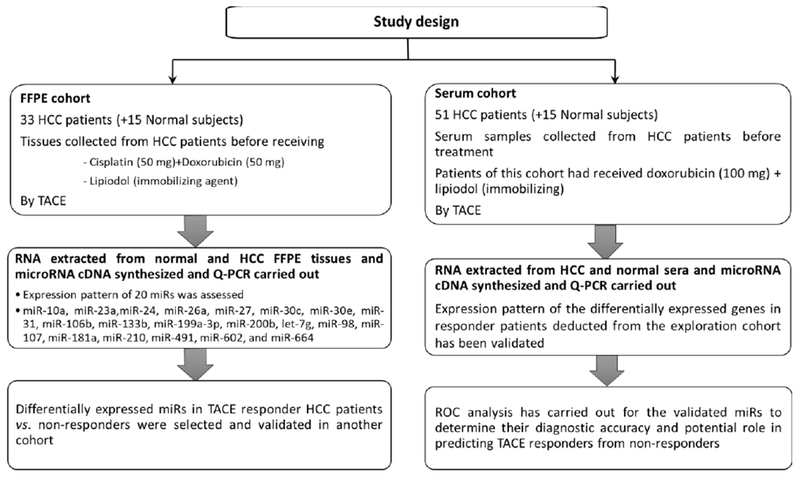
The expression level of twenty miRs was evaluated in FFPE tissues collected from 33 HCC patients. We selected four differentially expressed miRs in TACE-responders versus non-responders and re-assessed their expression in 51 serum samples. The expressions of miRs associated with overall survival (OS), progression-free survival (PFS), and treatment outcomes were investigated. The diagnostic accuracy of these miRs in predicting patients' response to TACE was also evaluated.
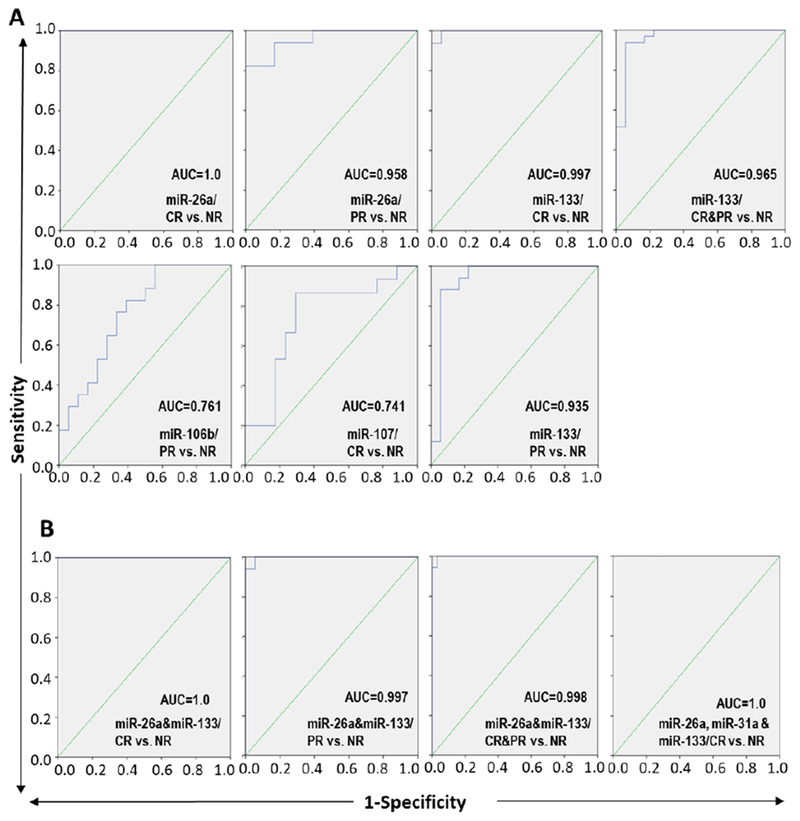
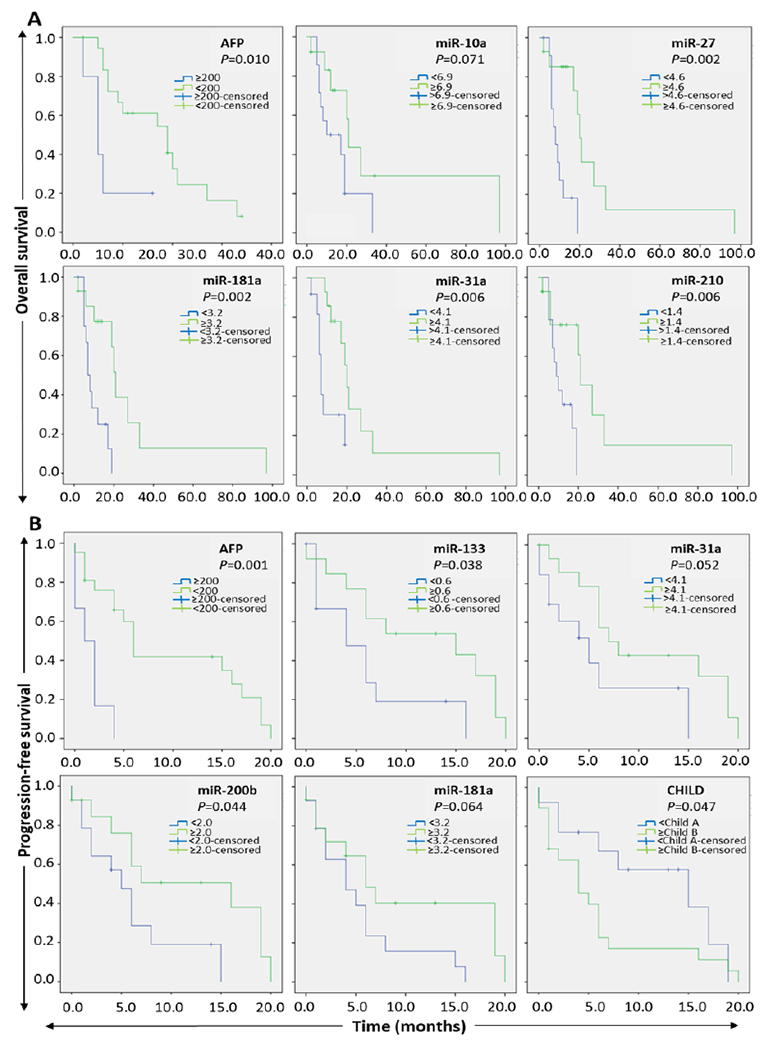
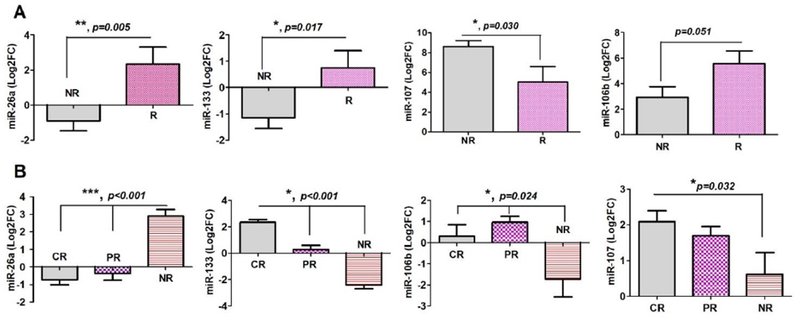
The baseline of miR-106b, miR-107 and miR-133b was significantly elevated (p < .001) in sera of TACE-responders while miR-26a was elevated (p < .001) in non-responders. miR-26a and miR-133b recorded the highest diagnostic performance as individual classifiers in response to TACE (AUC = 1.0 and 100% sensitivity and specificity). Intriguingly, miR-133b distinguished complete responders from partial responders and non-responders (AUC ≥ 0.90). The PFS was improved (p < .05) in the high expression group of miR-31, miR-200b, miR-133b and miR-181a over their low expression group.
Circulating miR-133b, miR-26a, miR-107 and miR-106 in serum are potential candidates to be utilized as prognostic biomarkers for predication of TACE treatment outcomes in HCC patients.
许多肝细胞癌(HCC)患者对经动脉化疗栓塞术(TACE)治疗产生了耐药性。在本研究中,我们旨在开发一组微小RNA(miRs)生物标志物,以预测HCC患者接受TACE治疗后的临床结果。
评估了从33例HCC患者收集的福尔马林固定石蜡包埋(FFPE)组织中20种miRs的表达水平。我们在TACE反应者与无反应者中选择了4种差异表达的miRs,并在51份血清样本中重新评估了它们的表达。研究了与总生存期(OS)、无进展生存期(PFS)和治疗结果相关的miRs的表达。还评估了这些miRs在预测患者对TACE反应方面的诊断准确性。
TACE反应者血清中miR-106b、miR-107和miR-133b的基线水平显著升高(p <.001),而无反应者中miR-26a升高(p <.001)。miR-26a和miR-133b作为TACE反应的个体分类器表现出最高的诊断性能(AUC = 1.0,敏感性和特异性均为100%)。有趣的是,miR-133b区分了完全反应者与部分反应者和无反应者(AUC≥0.90)。miR-31、miR-200b、miR-133b和miR-181a高表达组的PFS较其低表达组有所改善(p <.05)。
血清中的循环miR-133b、miR-26a、miR-107和miR-106有可能作为预测HCC患者TACE治疗结果的预后生物标志物。