Freeman Taylor J, Sayedyahossein Samar, Johnston Danielle, Sanchez-Pupo Rafael E, O'Donnell Brooke, Huang Kenneth, Lakhani Zameena, Nouri-Nejad Daniel, Barr Kevin J, Harland Luke, Latosinsky Steven, Grant Aaron, Dagnino Lina, Penuela Silvia
Department of Anatomy and Cell Biology, Schulich School of Medicine & Dentistry, University of Western Ontario, London, ON N6A5C1, Canada.
Surgery, Schulich School of Medicine & Dentistry, University of Western Ontario, London, ON N6A5C1, Canada.
Cancers (Basel). 2019 Jan 16;11(1):102. doi: 10.3390/cancers11010102.
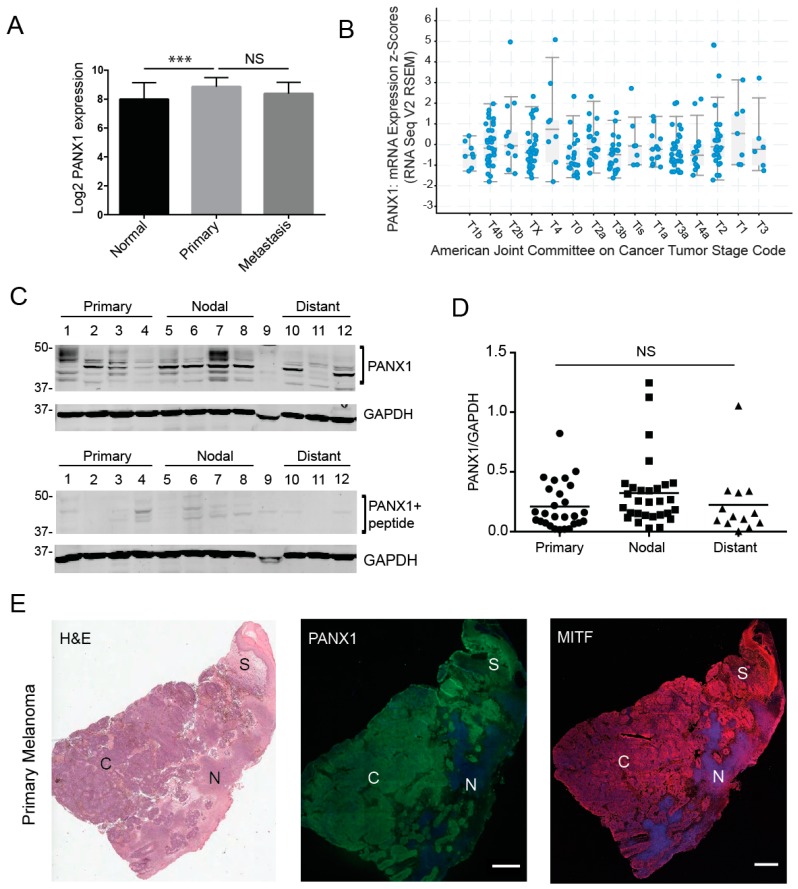
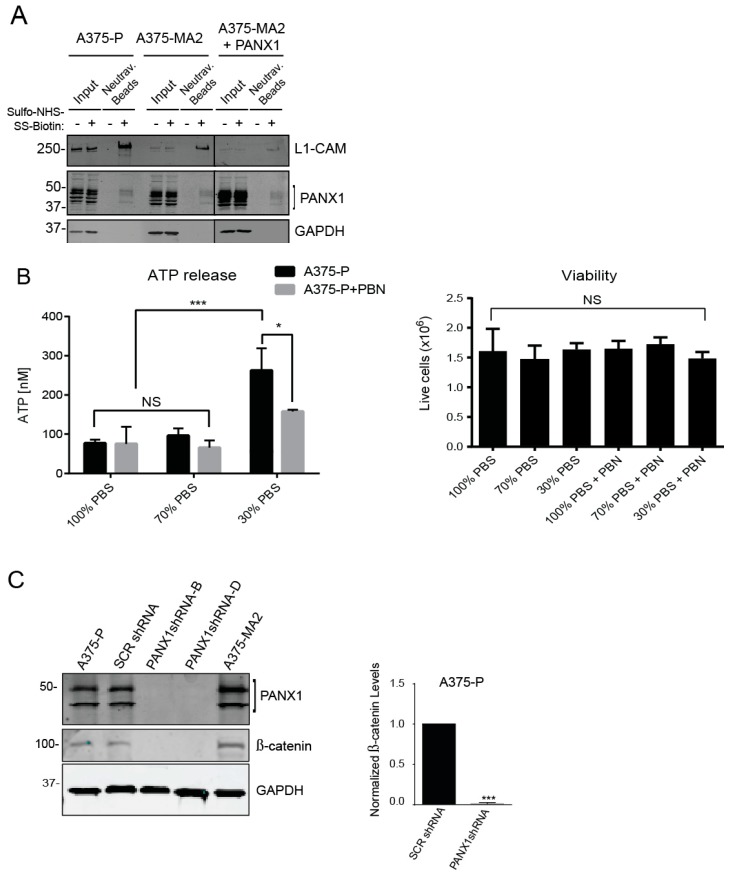
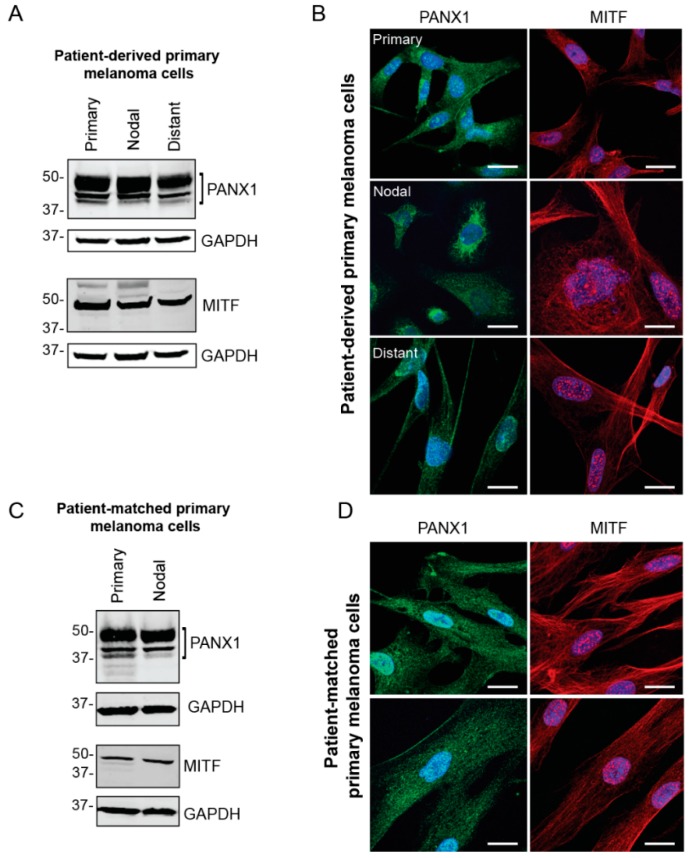
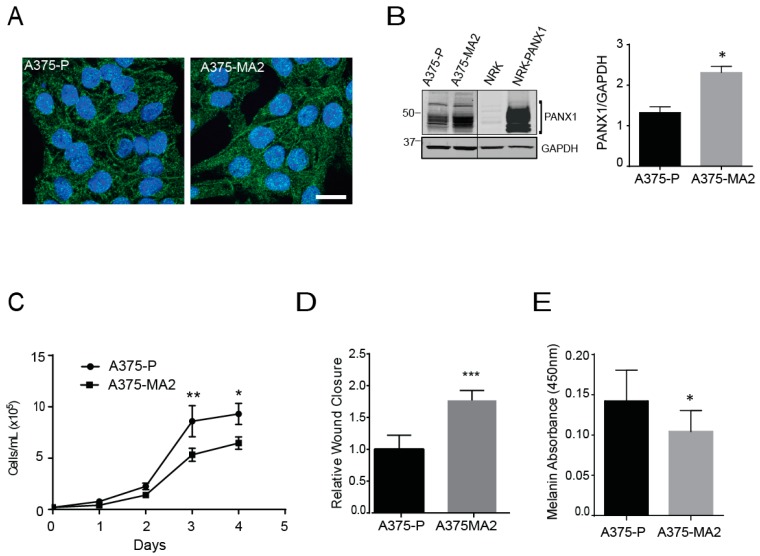
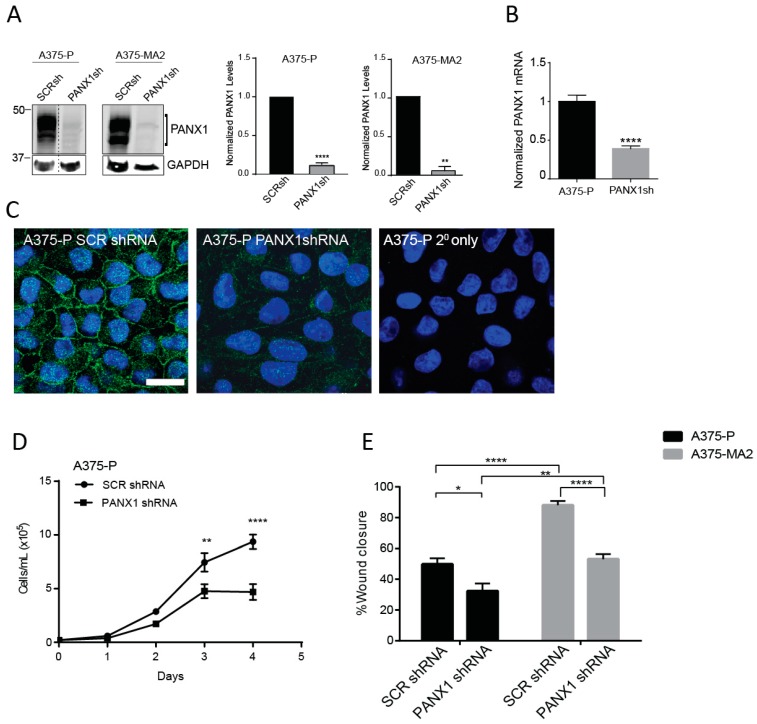
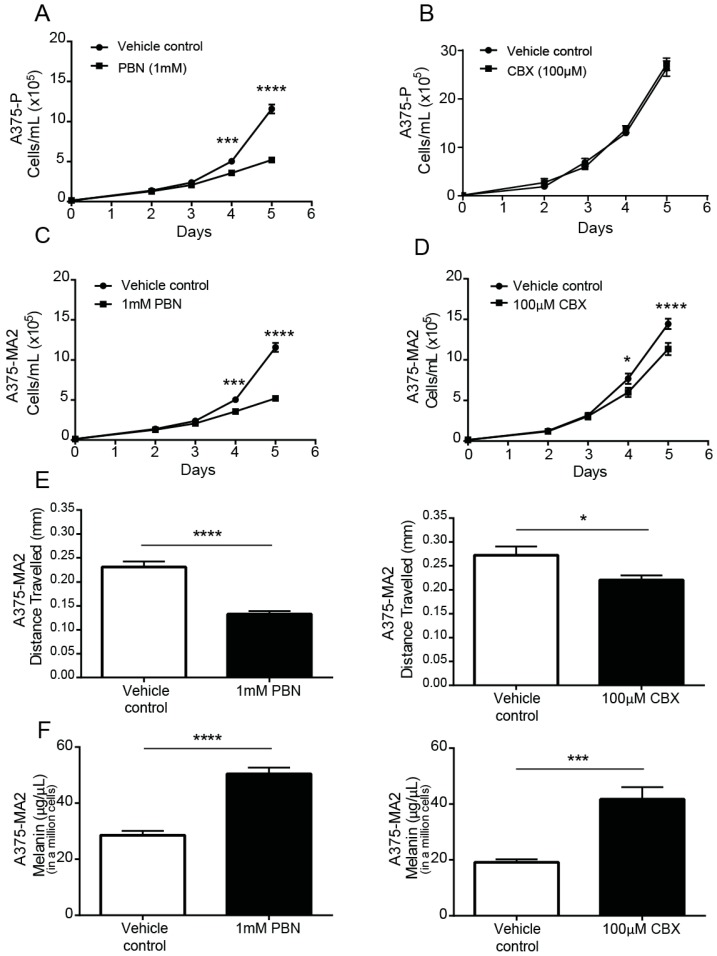
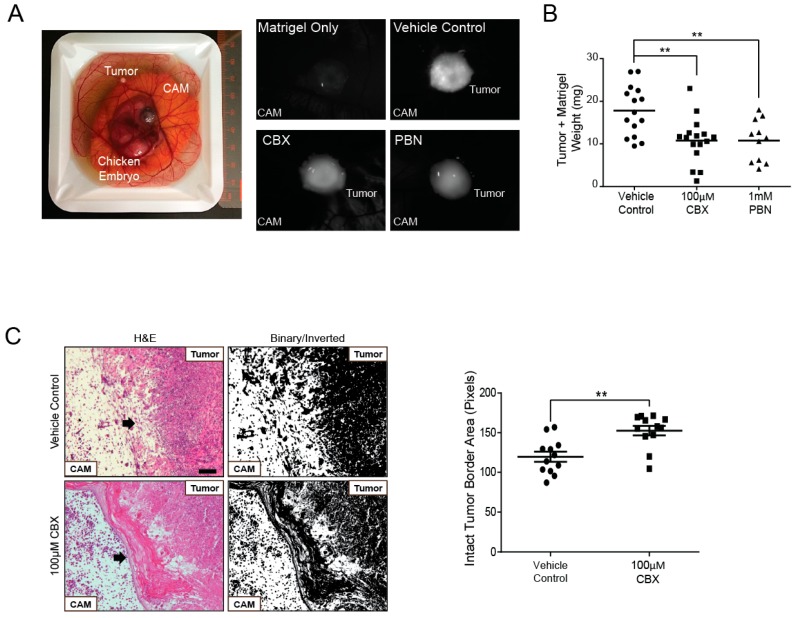
Pannexin 1 (PANX1) is a channel-forming glycoprotein expressed in many tissues including the skin. PANX1 channels allow the passage of ions and molecules up to 1 kDa, including ATP and other metabolites. In this study, we show that PANX1 is highly expressed in human melanoma tumors at all stages of disease progression, as well as in patient-derived cells and established melanoma cell lines. Reducing PANX1 protein levels using shRNA or inhibiting channel function with the channel blockers, carbenoxolone (CBX) and probenecid (PBN), significantly decreased cell growth and migration, and increased melanin production in A375-P and A375-MA2 cell lines. Further, treatment of A375-MA2 tumors in chicken embryo xenografts with CBX or PBN significantly reduced melanoma tumor weight and invasiveness. Blocking PANX1 channels with PBN reduced ATP release in A375-P cells, suggesting a potential role for PANX1 in purinergic signaling of melanoma cells. In addition, cell-surface biotinylation assays indicate that there is an intracellular pool of PANX1 in melanoma cells. PANX1 likely modulates signaling through the Wnt/β-catenin pathway, because β-catenin levels were significantly decreased upon PANX1 silencing. Collectively, our findings identify a role for PANX1 in controlling growth and tumorigenic properties of melanoma cells contributing to signaling pathways that modulate melanoma progression.
泛连接蛋白1(PANX1)是一种形成通道的糖蛋白,在包括皮肤在内的许多组织中均有表达。PANX1通道允许离子和分子量高达1 kDa的分子通过,包括ATP和其他代谢产物。在本研究中,我们发现PANX1在疾病进展各阶段的人类黑色素瘤肿瘤中均高表达,在患者来源的细胞和已建立的黑色素瘤细胞系中也高表达。使用短发夹RNA(shRNA)降低PANX1蛋白水平,或用通道阻滞剂甘珀酸(CBX)和丙磺舒(PBN)抑制通道功能,可显著降低A375 - P和A375 - MA2细胞系中的细胞生长和迁移,并增加黑色素生成。此外,用CBX或PBN处理鸡胚异种移植中的A375 - MA2肿瘤,可显著降低黑色素瘤肿瘤重量和侵袭性。用PBN阻断PANX1通道可减少A375 - P细胞中的ATP释放,这表明PANX1在黑色素瘤细胞的嘌呤能信号传导中可能发挥作用。此外,细胞表面生物素化分析表明黑色素瘤细胞中存在细胞内PANX1池。PANX1可能通过Wnt/β - 连环蛋白途径调节信号传导,因为在PANX1沉默后β - 连环蛋白水平显著降低。总体而言,我们的研究结果确定了PANX1在控制黑色素瘤细胞生长和致瘤特性中的作用,这有助于调节黑色素瘤进展的信号通路。