Ushio Norio, Rahman Md Mahfuzur, Maemura Tadashi, Lai Yu-Chang, Iwanaga Tomoko, Kawaguchi Hiroaki, Miyoshi Noriaki, Momoi Yasuyuki, Miura Naoki
Department of Clinical Veterinary Science, United Graduate School of Veterinary Science, Yamaguchi University, Yamaguchi 753-8511, Japan.
Kagoshima University Veterinary Teaching Hospital, Joint Faculty of Veterinary Medicine, Kagoshima University, Korimoto, Kagoshima 890-0065, Japan.
Oncol Lett. 2019 Jan;17(1):1080-1088. doi: 10.3892/ol.2018.9692. Epub 2018 Nov 12.
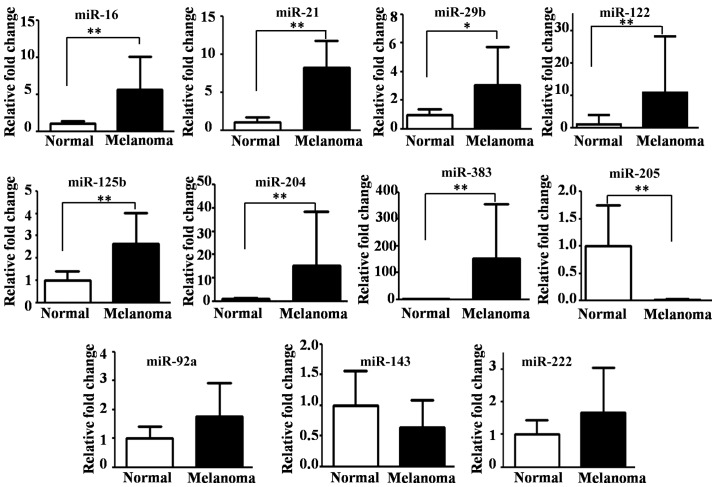
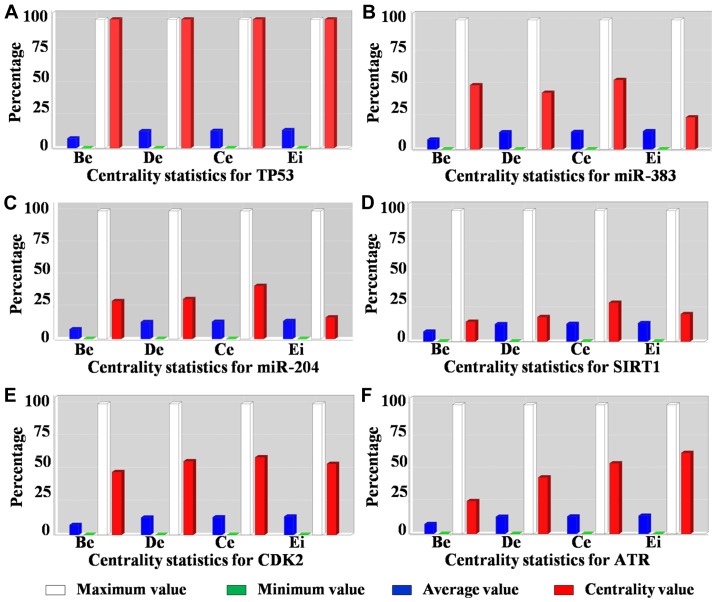
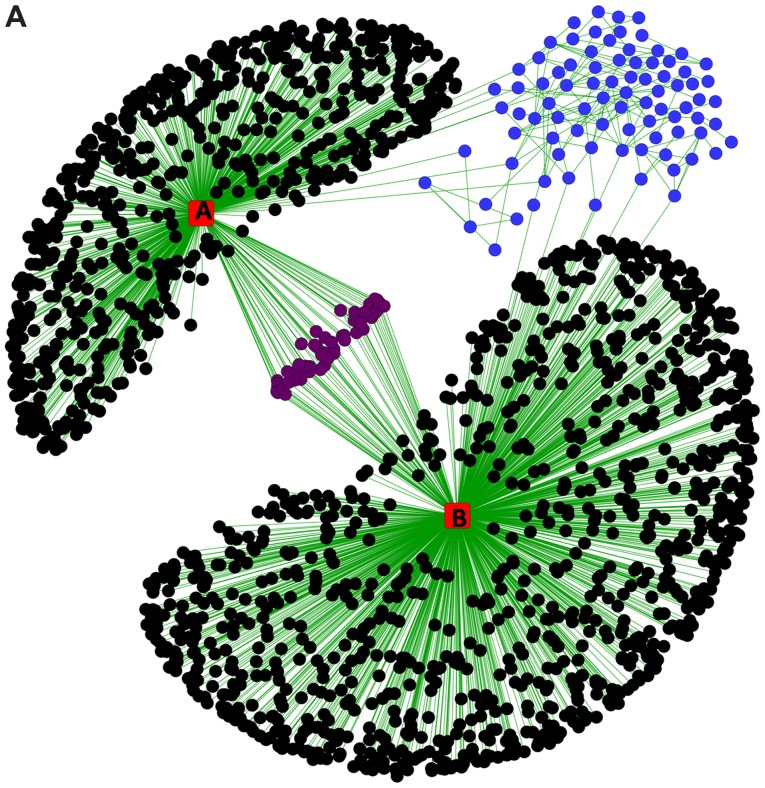
Inhibiting aberrantly upregulated microRNAs (miR/miRNAs) has emerged as a novel focus for therapeutic intervention in human melanoma. Thus, identifying upregulated miRNAs is essential for identifying additional melanoma-associated therapeutic targets. In the present study, microarray-based miRNA profiling of canine malignant melanoma (CMM) tissue obtained from the oral cavity was performed and differential expression was confirmed by a reverse transcription-quantitative polymerase chain reaction (RT-qPCR). An analysis of the microarray data revealed 17 dysregulated miRNAs; 5 were upregulated and 12 were downregulated. RT-qPCR analysis was performed for 2 upregulated (miR-204 and miR-383), 3 downregulated (miR-122, miR-143 and miR-205) and 6 additional oncogenic miRNAs (oncomiRs; miR-16, miR-21, miR-29b, miR-92a, miR-125b and miR-222). The expression levels of seven of the miRNAs, miR-16, miR-21, miR-29b, miR-122, miR-125b, miR-204 and miR-383 were significantly upregulated; however, the expression of miR-205 was downregulated in CMM tissues compared with normal oral tissues. The microarray and RT-qPCR analyses validated the upregulation of two potential oncomiRs miR-204 and miR-383. The present study additionally constructed a protein interaction network and a miRNA-target regulatory interaction network using STRING and Cytoscape. In the proposed network, cyclin dependent kinase 2 was a target for miR-383, sirtuin 1 and tumor protein p53 were targets for miR-204 and ATR serine/threonine kinase was a target for both. It was concluded that miR-383 and miR-204 were potential oncomiRs that may be involved in regulating melanoma development by evading DNA repair and apoptosis.
抑制异常上调的微小RNA(miR/miRNAs)已成为人类黑色素瘤治疗干预的新焦点。因此,鉴定上调的miRNAs对于确定其他黑色素瘤相关治疗靶点至关重要。在本研究中,对取自口腔的犬恶性黑色素瘤(CMM)组织进行了基于微阵列的miRNA谱分析,并通过逆转录定量聚合酶链反应(RT-qPCR)确认了差异表达。对微阵列数据的分析揭示了17种失调的miRNAs;5种上调,12种下调。对2种上调的(miR-204和miR-383)、3种下调的(miR-122、miR-143和miR-205)以及另外6种致癌miRNAs(致癌miR;miR-16、miR-21、miR-29b、miR-92a、miR-125b和miR-222)进行了RT-qPCR分析。其中7种miRNAs,即miR-16、miR-21、miR-29b、miR-122、miR-125b、miR-204和miR-383的表达水平显著上调;然而,与正常口腔组织相比,miR-205在CMM组织中的表达下调。微阵列和RT-qPCR分析验证了两种潜在致癌miR即miR-204和miR-383的上调。本研究还使用STRING和Cytoscape构建了蛋白质相互作用网络和miRNA-靶标调控相互作用网络。在所提出的网络中,细胞周期蛋白依赖性激酶2是miR-383的靶标,沉默调节蛋白1和肿瘤蛋白p53是miR-204的靶标,而ATR丝氨酸/苏氨酸激酶是二者的靶标。得出的结论是,miR-383和miR-204是潜在的致癌miR,可能通过逃避DNA修复和凋亡参与调节黑色素瘤的发展。