Sharma M, Nahar V K
Behavioral & Environmental Health, Jackson State University, Jackson and Health for All, Omaha, USA.
Center for Animal and Human Health in Appalachia, College of Veterinary Medicine, DeBusk College of Osteopathic Medicine, and School of Mathematics and Sciences, Lincoln Memorial University, Harrogate, TN, USA.
J Prev Med Hyg. 2018 Dec 15;59(4):E267-E276. doi: 10.15167/2421-4248/jpmh2018.59.4.847. eCollection 2018 Dec.
Physical activity and exercise offer numerous benefits to children and Centers for Disease Control and Prevention guidelines require that school children engage in at least 60 minutes of moderate to vigorous physical activity every day. Unfortunately, up to 30% elementary students do not meet these requirements and 79% elementary schools do not provide students with physical education classes every day. The transition from elementary to secondary school is particularly deleterious for levels of physical activity. Therefore, there is a need to develop educational interventions for upper elementary school children to promote physical activity. A new theory multi-theory model (MTM) of health behavior change can be utilized to develop such interventions.
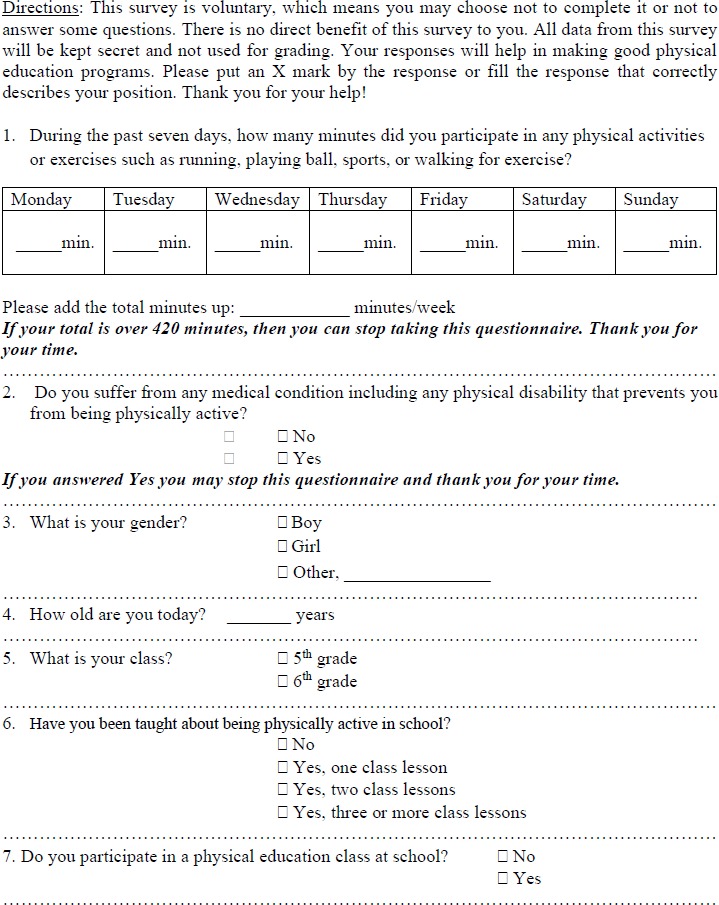
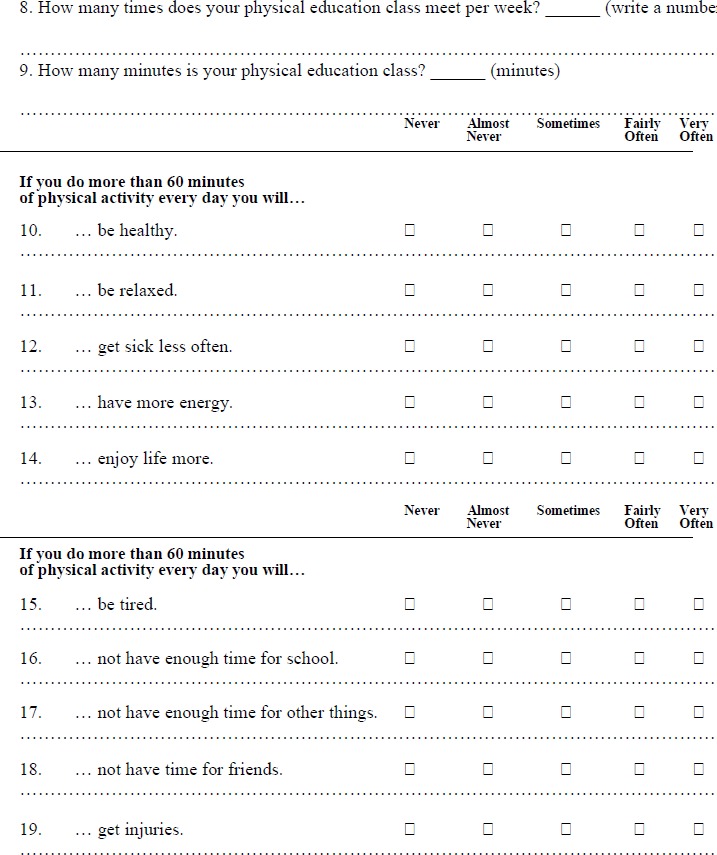
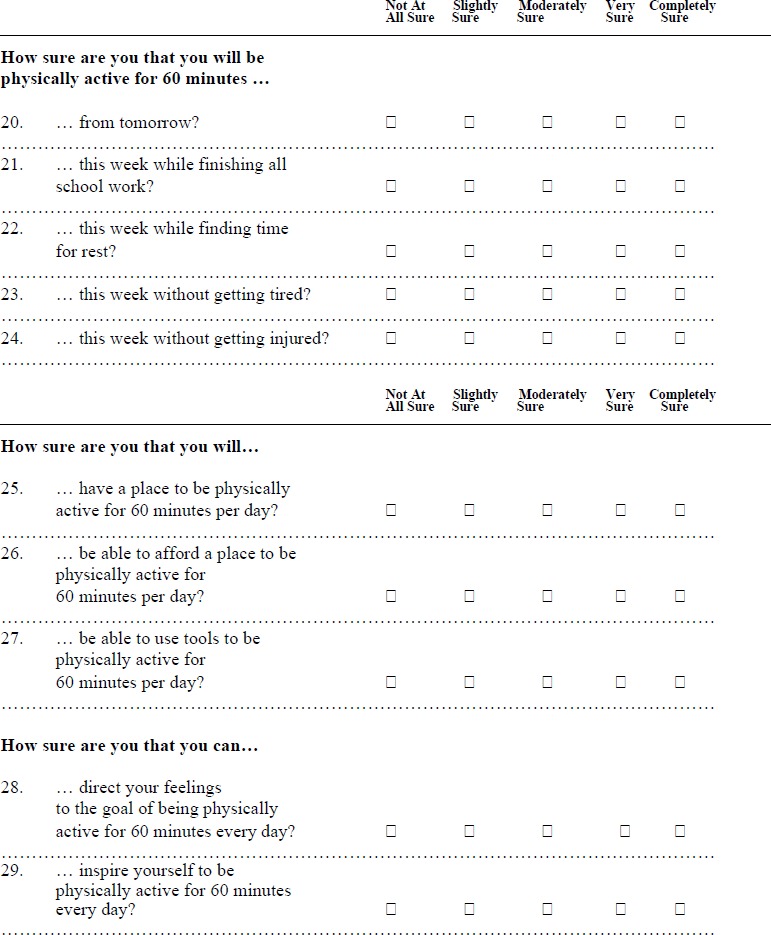
The purpose of this article was to develop and introduce an instrument based on MTM for physical activity change in upper elementary school children and propose an approach for changing this behavior among sedentary students.
A review of literature in MEDLINE, CINAHL, Google Scholar, and ERIC databases was conducted for physical activity in upper elementary children and multi-theory model of health behavior change to prepare this article.
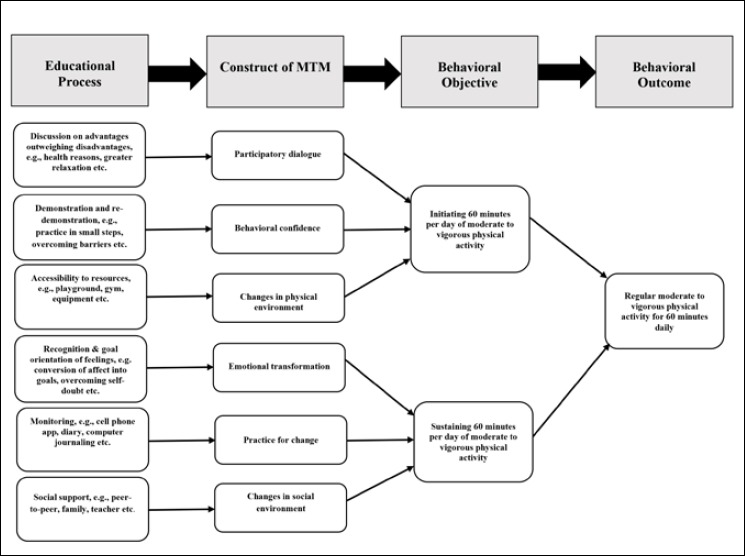
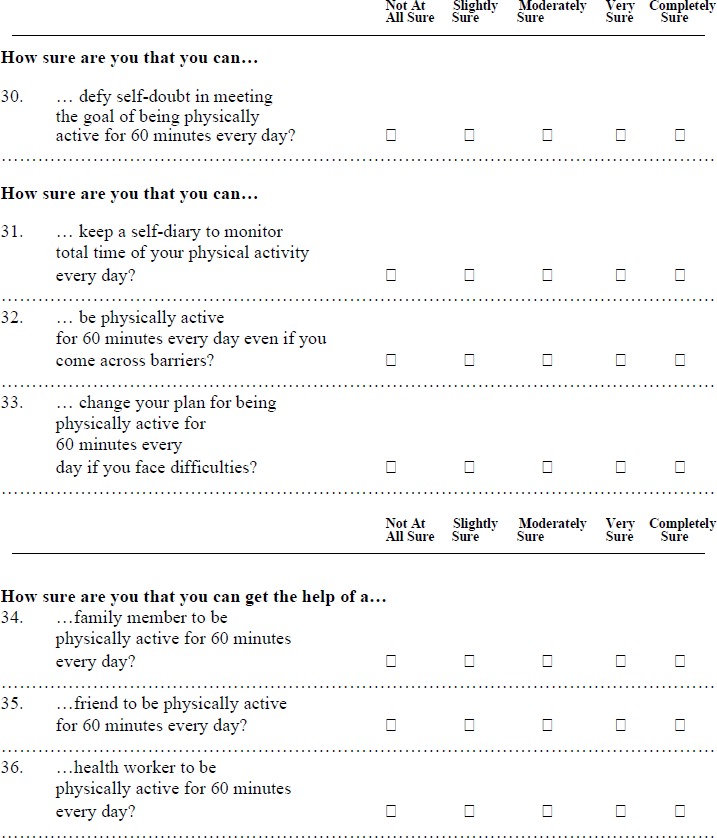
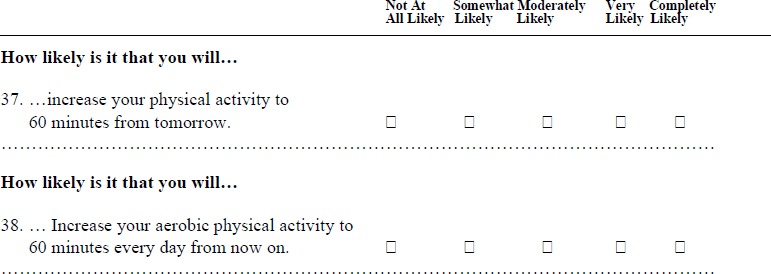
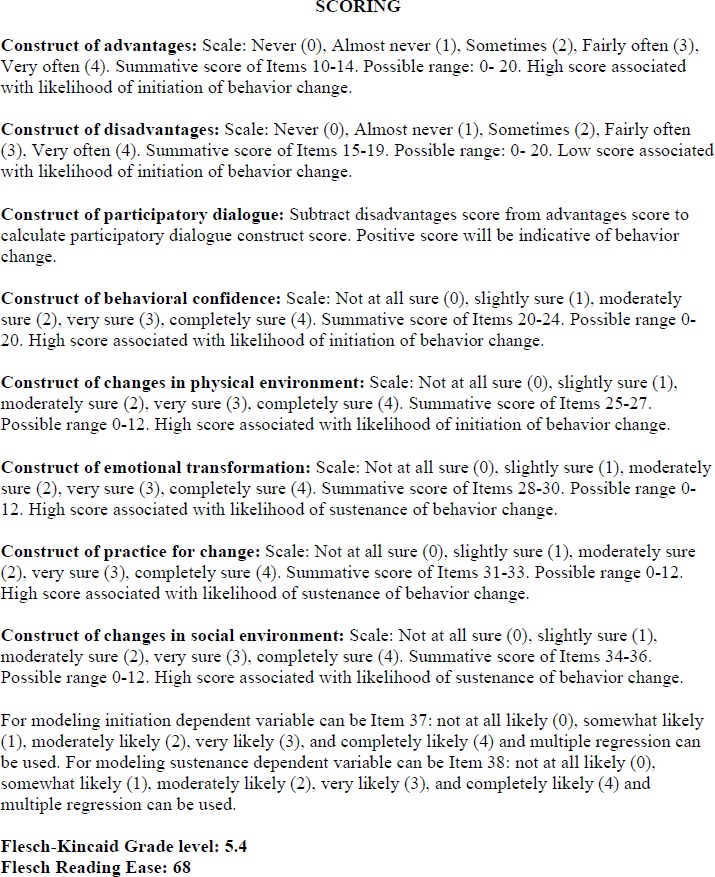
An instrument with Flesch-Kincaid Grade level of 5.4 and the Flesch Reading Ease of 68 making it suitable for administration with upper elementary school children was developed. An approach utilizing the constructs of participatory dialogue, behavioral confidence and changes in physical environment to initiate physical activity and reifying the constructs of emotional transformation, practice for change and changes in social environment to sustain physical activity in upper elementary school children is presented.
MTM offers potential to augment current educational efforts to promote physical activity in upper elementary school children.
体育活动和锻炼对儿童有诸多益处,疾病控制与预防中心的指南要求在校儿童每天进行至少60分钟的中度至剧烈体育活动。不幸的是,高达30%的小学生未达到这些要求,79%的小学未每天为学生提供体育课。从小学到中学的过渡对体育活动水平尤其有害。因此,需要为小学高年级儿童制定教育干预措施以促进体育活动。一种新的健康行为改变多理论模型(MTM)可用于制定此类干预措施。
本文旨在开发并介绍一种基于MTM的工具,用于小学高年级儿童体育活动的改变,并提出一种改变久坐学生这一行为的方法。
对MEDLINE、CINAHL、谷歌学术和教育资源信息中心数据库中关于小学高年级儿童体育活动和健康行为改变多理论模型的文献进行综述,以撰写本文。
开发了一种工具,其弗莱什 - 金凯德年级水平为5.4,弗莱什阅读简易度为68,适合用于小学高年级儿童。提出了一种方法,利用参与式对话、行为信心和物理环境变化等要素来启动体育活动,并通过情感转变、改变实践和社会环境变化等要素来维持小学高年级儿童的体育活动。
MTM为加强当前促进小学高年级儿童体育活动的教育努力提供了潜力。