Department of Surgical Oncology and General Surgery, The First Affiliated Hospital of China Medical University, 155 North Nanjing Street, Heping District, Shenyang City, 110001, People's Republic of China.
World J Surg Oncol. 2019 Jan 18;17(1):21. doi: 10.1186/s12957-019-1562-3.
Bowel obstruction (BO) is a complication that commonly affects patients with colorectal cancer (CRC). BO causes severe outcomes, and its treatment leads to a dilemma for many surgeons. Moreover, the factors correlated to BO in preoperative CRC patients remain unclear. The objectives of this study were to investigate the clinical characteristics of BO to identify risk predictors and to construct a BO prediction model with preoperative CRC patients.
A large-scale, retrospective cohort, population-based study analyzed the data of 11,814 patients obtained from the Surveillance, Epidemiology, and End Results and Medicare claims-linked databases (SEER-M database). Patients aged ≥ 66 years and primarily diagnosed with CRC from 1992 to 2009 were divided into BO and non-BO groups. Cox proportional hazards regression models were used to determine predictors, and then, a nomogram was constructed by those predictors.
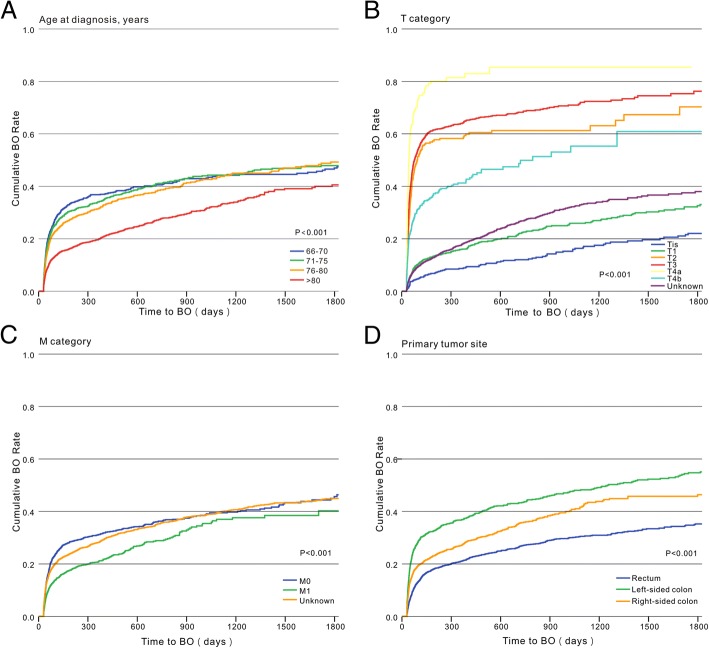
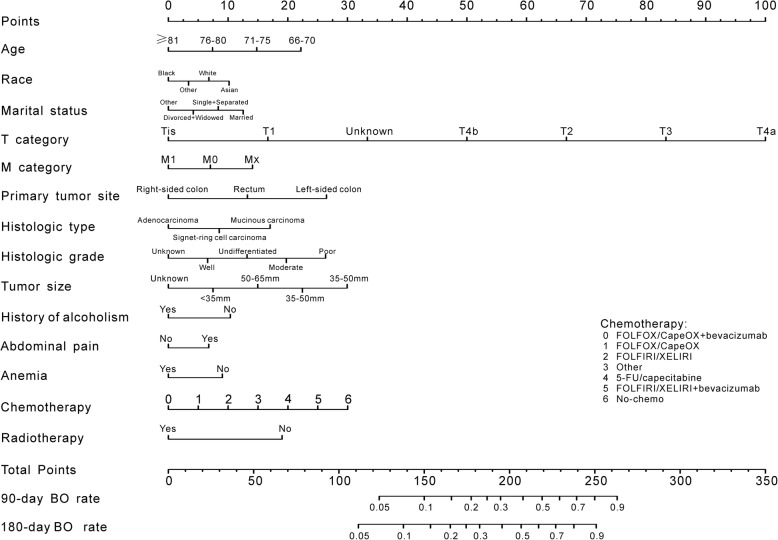
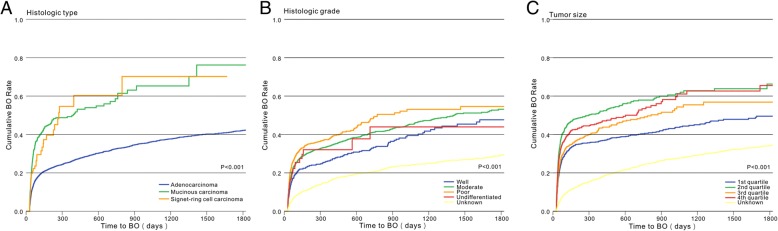
A total of 11,814 patients (5293 men and 6251 women) were identified. In multivariate analysis, 14 factors were found to be associated with BO including age, race, marital status, residence location, T category, M category, primary tumor site, histologic type, histologic grade, tumor size, history of alcoholism, chemotherapy, radiotherapy, abdominal pain, and anemia. A nomogram predicting the 90- and 180-day rates of BO was built for the preoperative CRC patients with a C-index of 0.795.
This study identified 14 BO-related factors, and a statistical model was constructed to predict the onset of BO in preoperative CRC patients. The obtained data may guide decision-making for the intervention of patients at risk for BO.
肠阻塞(BO)是一种常见的并发症,常影响结直肠癌(CRC)患者。BO 会导致严重后果,其治疗给许多外科医生带来了困境。此外,术前 CRC 患者与 BO 相关的因素仍不清楚。本研究的目的是探讨 BO 的临床特征,以确定风险预测因素,并为术前 CRC 患者构建 BO 预测模型。
一项大规模的回顾性队列、基于人群的研究分析了来自监测、流行病学和最终结果和医疗保险索赔链接数据库(SEER-M 数据库)的 11814 名患者的数据。年龄≥66 岁且主要于 1992 年至 2009 年诊断为 CRC 的患者被分为 BO 和非-BO 组。Cox 比例风险回归模型用于确定预测因素,然后根据这些预测因素构建一个列线图。
共纳入 11814 名患者(5293 名男性和 6251 名女性)。多变量分析发现,14 个因素与 BO 相关,包括年龄、种族、婚姻状况、居住地点、T 分期、M 分期、原发肿瘤部位、组织学类型、组织学分级、肿瘤大小、酗酒史、化疗、放疗、腹痛和贫血。为术前 CRC 患者构建了预测 BO 发生的 90 天和 180 天的列线图,C 指数为 0.795。
本研究确定了 14 个与 BO 相关的因素,并构建了一个统计模型来预测术前 CRC 患者 BO 的发生。获得的数据可能指导对 BO 风险患者进行干预的决策。