Anhui Province Key Laboratory of Medical Physics and Technology; Center of Medical Physics and Technology, Hefei Institutes of Physical Science, Chinese Academy of Sciences, No. 350, Shushan Hu Road, Hefei, 230031, Anhui, China.
Hefei Cancer Hospital, Chinese Academy of Sciences, No. 350, Shushan Hu Road, Hefei, Anhui, Hefei, 230031, Anhui, China.
J Exp Clin Cancer Res. 2019 Jan 18;38(1):25. doi: 10.1186/s13046-019-1033-2.
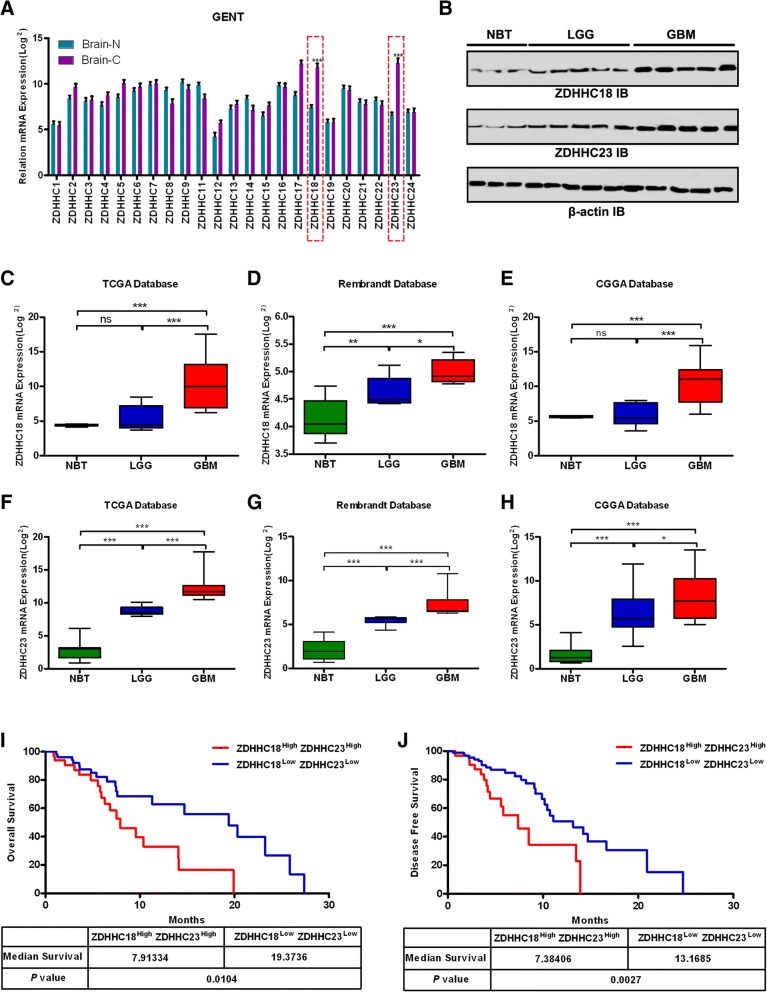
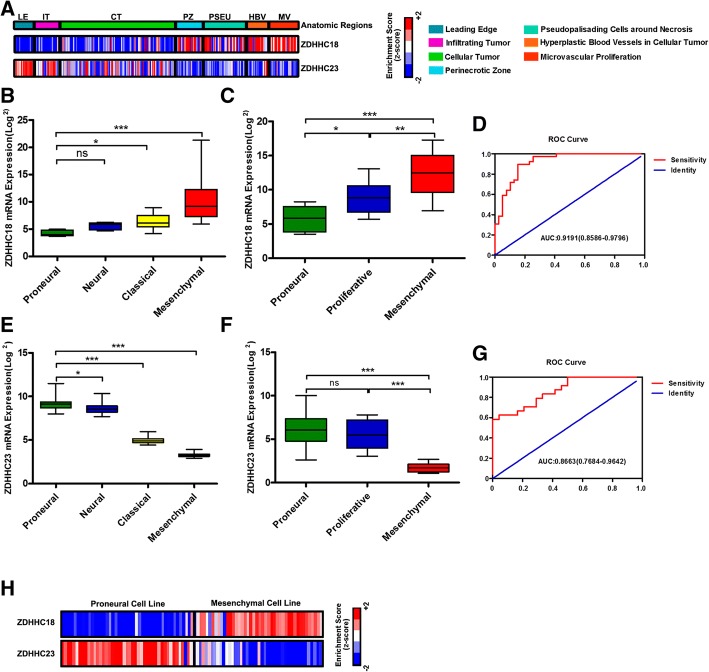
Glioblastomas (GBM) comprise different subsets that exhibit marked heterogeneity and plasticity, leading to a lack of success of genomic profiling in guiding the development of precision medicine approaches against these tumors. Accordingly, there is an urgent need to investigate the regulatory mechanisms for different GBM subsets and identify novel biomarkers and therapeutic targets relevant in the context of GBM-specific niches. The DHHC family of proteins is associated tightly with the malignant development and progression of gliomas. However, the role of these proteins in the plasticity of GBM subsets remains unclear.
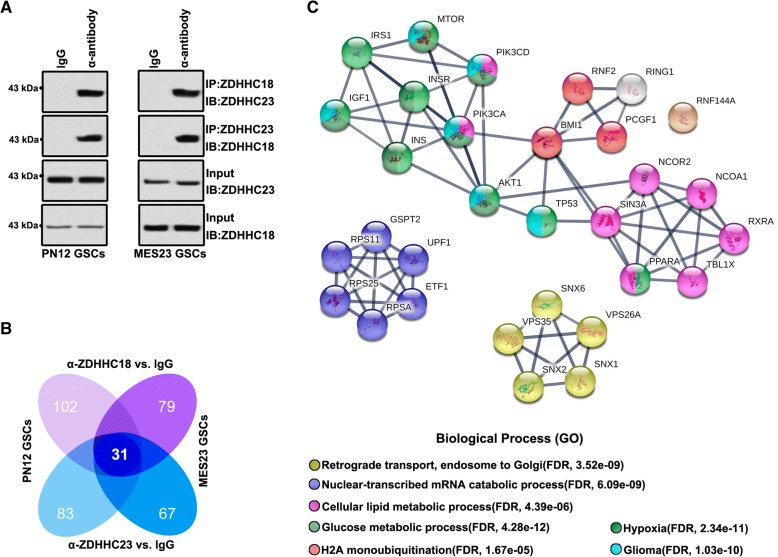
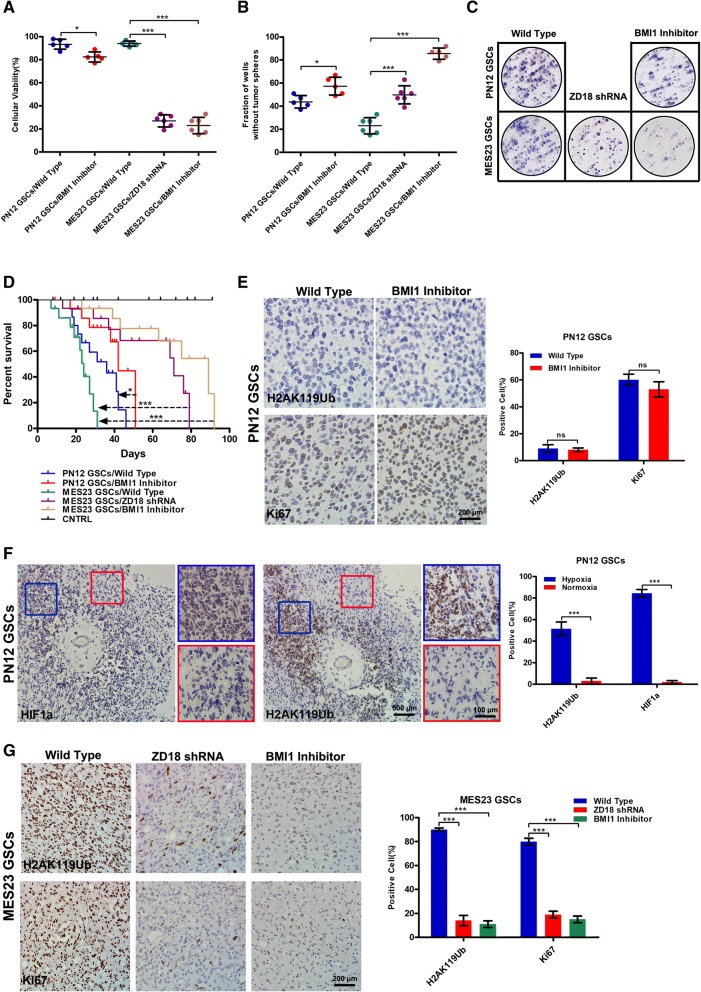
This study utilized human glioma proneural or mesenchymal stem cells as indicated. The effects of DHHC proteins on different GBM subsets were investigated through in vitro and in vivo assays (i.e., colony formation assay, flow cytometry assay, double immunofluorescence, western blot, and xenograft model). Western blot, co-immunoprecipitation, and liquid chromatograph mass spectrometer-mass spectrometry assays were used to detect the protein complexes of ZDHHC18 and ZDHHC23 in various GBM subtypes, and explore the mechanism of DHHC proteins in targeting different subsets of GSCs in specific niches.
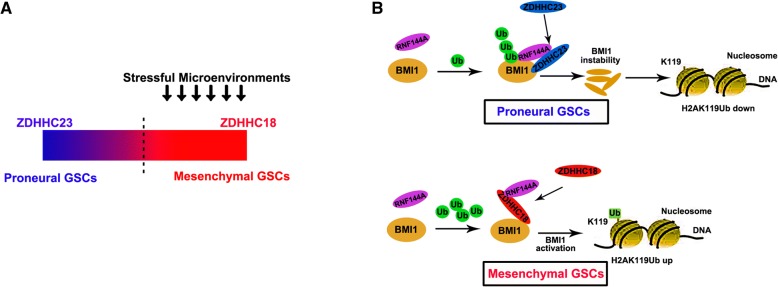
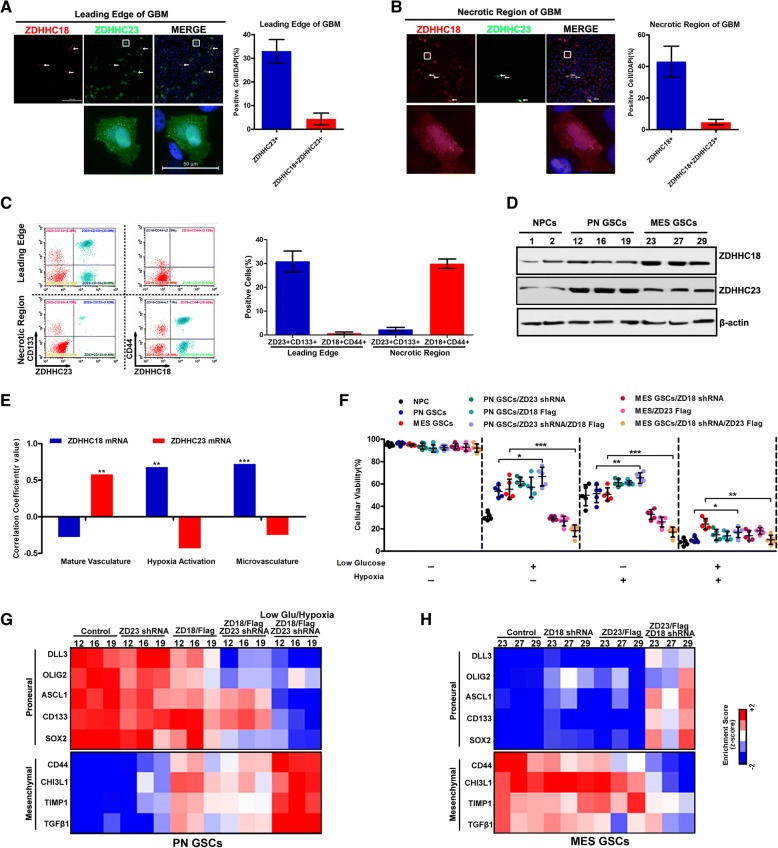
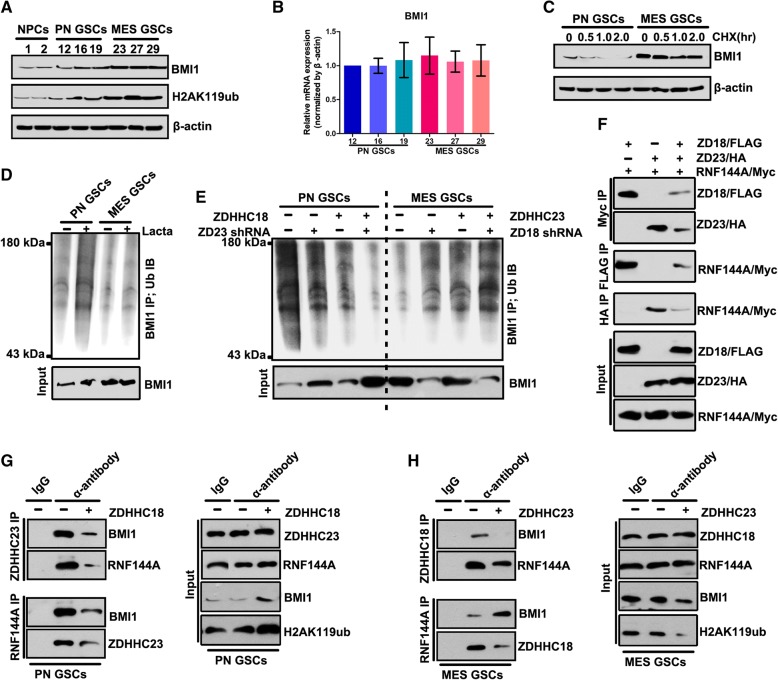
ZDHHC18 and ZDHHC23 could target the glioma stem cells of different GBM subsets in the context of their specific niches and regulate the cellular plasticity of these subtypes. Moreover, mechanistic investigations revealed that ZDHHC18 and ZDHHC23 competitively interact with a BMI1 E3 ligase, RNF144A, to regulate the polyubiquitination and accumulation of BMI1. These events contributed to the transition of glioma stem cells in GBM and cell survival under the stressful tumor microenvironment.
Our work highlights the role of DHHC proteins in the plasticity of GBM subsets and reveals that BMI1 represents a potential therapeutic target for human gliomas.
胶质母细胞瘤(GBM)包含不同的亚群,这些亚群表现出明显的异质性和可塑性,导致基因组谱分析在指导针对这些肿瘤的精准医学方法的发展方面缺乏成功。因此,迫切需要研究不同 GBM 亚群的调控机制,并确定与 GBM 特定龛位相关的新型生物标志物和治疗靶点。DHHC 蛋白家族与神经胶质瘤的恶性发展和进展密切相关。然而,这些蛋白在 GBM 亚群可塑性中的作用尚不清楚。
本研究使用了人胶质母细胞瘤神经前体细胞或间充质干细胞作为指示。通过体外和体内实验(即集落形成实验、流式细胞术分析、双免疫荧光、Western blot 和异种移植模型)研究了 DHHC 蛋白对不同 GBM 亚群的影响。Western blot、免疫共沉淀和液相色谱-质谱联用分析用于检测 ZDHHC18 和 ZDHHC23 在不同 GBM 亚型中的蛋白复合物,并探讨 DHHC 蛋白在靶向特定龛位中不同 GSCs 亚群中的作用机制。
ZDHHC18 和 ZDHHC23 可以在特定龛位的背景下靶向不同 GBM 亚群的神经胶质瘤干细胞,并调节这些亚型的细胞可塑性。此外,机制研究表明,ZDHHC18 和 ZDHHC23 竞争性地与 BMI1 E3 连接酶 RNF144A 相互作用,调节 BMI1 的多泛素化和积累。这些事件有助于 GBM 中神经胶质瘤干细胞的转化和应激肿瘤微环境下细胞的存活。
我们的工作强调了 DHHC 蛋白在 GBM 亚群可塑性中的作用,并揭示了 BMI1 代表了人类神经胶质瘤的一个潜在治疗靶点。