Xing Feng, Wang Shuo, Zhou Jianhong
Department of Obstetrics and Gynecology, Shanghai Tenth People's Hospital of Tongji University, Tongji University School of Medicine, No. 301 Middle Yan Chang Road, Shanghai, 200072, China.
Department of Ultrasound, Tongji Hospital, Tongji University School of Medicine, Shanghai, 200072, China.
Mol Ther Oncolytics. 2018 Dec 8;12:9-15. doi: 10.1016/j.omto.2018.12.002. eCollection 2019 Mar 29.
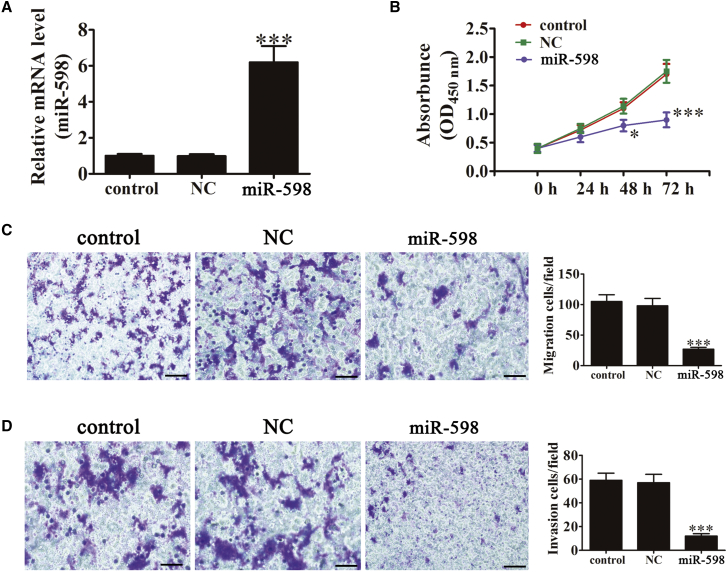
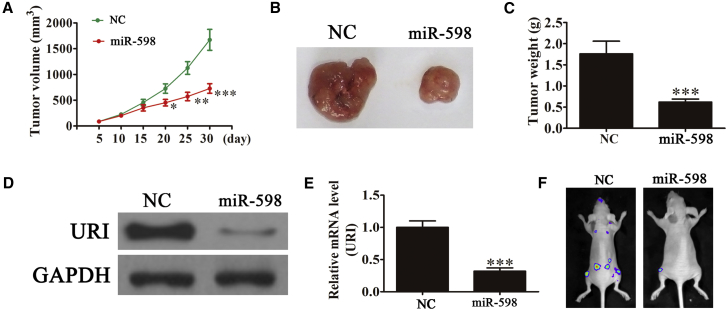
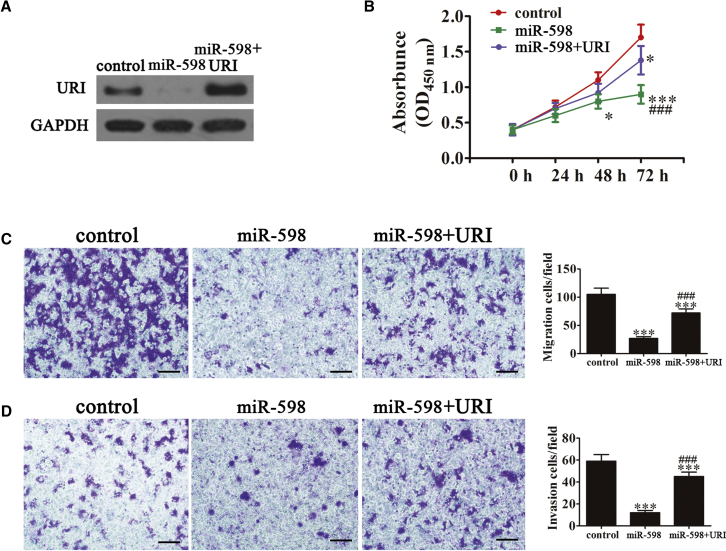
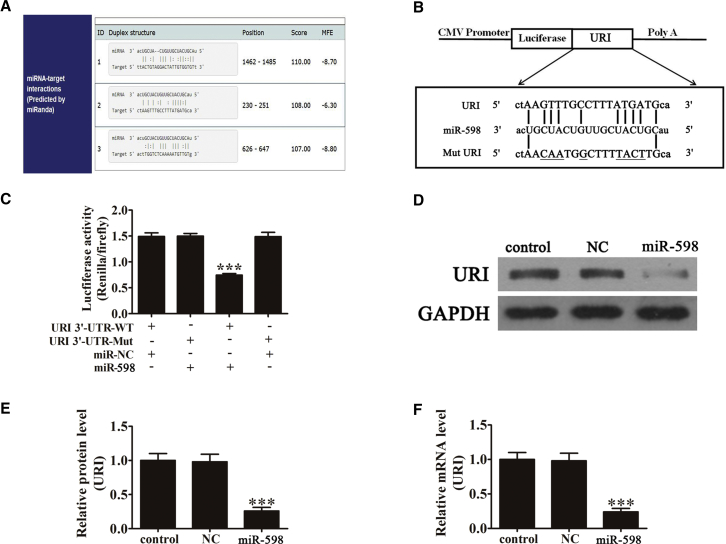
Unconventional prefoldin RPB5 interactor (URI, or RMP, a member of the prefoldin family of molecular chaperones) exhibits oncogenic activity in several types of cancer, including ovarian cancer. However, the underlying regulatory mechanism in ovarian cancer remains unclear. MicroRNAs (miRNAs) negatively regulate gene expression, and their dysregulation has been implicated in tumorigenesis. To elucidate the role of miRNAs in URI-induced ovarian cancer, miR-598 and URI were overexpressed in the SKOV3 ovarian cancer cell line. The CCK8 kit was used to determine cell proliferation, and the Transwell assay was used to measure cell invasion and migration. RT-PCR and western blotting were used to analyze the expression of miR-598 and URI, and the luciferase reporter assay was used to examine the interaction between miR-598 and URI. Nude mice were used to characterize the regulation of tumor growth . The results showed that the expression of miR-598 inhibited the proliferation, invasion, and migration of ovarian cancer cells by targeting URI. The inhibitory effect of miR-598 was reversed by overexpression of URI. The luciferase reporter assay showed that miR-598 downregulated URI by directly targeting the 3' UTR of URI. studies showed that the expression of miR-598 significantly inhibited the growth of tumors. Taken together, the results suggested that miR-598 inhibited tumor growth and metastasis by targeting URI.
非常规预折叠蛋白RPB5相互作用因子(URI,即RMP,分子伴侣预折叠蛋白家族成员)在包括卵巢癌在内的多种癌症类型中表现出致癌活性。然而,卵巢癌中潜在的调控机制仍不清楚。微小RNA(miRNA)负向调节基因表达,其失调与肿瘤发生有关。为了阐明miRNA在URI诱导的卵巢癌中的作用,在SKOV3卵巢癌细胞系中过表达了miR-598和URI。使用CCK8试剂盒测定细胞增殖,使用Transwell实验检测细胞侵袭和迁移。通过RT-PCR和蛋白质印迹分析miR-598和URI的表达,并使用荧光素酶报告基因检测法检测miR-598与URI之间的相互作用。使用裸鼠来表征肿瘤生长的调控情况。结果表明,miR-598的表达通过靶向URI抑制卵巢癌细胞的增殖、侵袭和迁移。URI的过表达逆转了miR-598的抑制作用。荧光素酶报告基因检测表明,miR-598通过直接靶向URI的3'UTR下调URI。研究表明,miR-598的表达显著抑制肿瘤生长。综上所述,结果表明miR-598通过靶向URI抑制肿瘤生长和转移。