Yamanouchi Kanako, Takeuchi Masahiro, Arima Hiroaki, Tsujiguchi Takakiyo
Graduate School of Health Sciences, Hirosaki University, 66-1 Hon-cho, Hirosaki 036-8564, Japan.
Parasite Epidemiol Control. 2018 Dec 29;4:e00081. doi: 10.1016/j.parepi.2018.e00081. eCollection 2019 Feb.
Microorganisms in environmental samples are identified by sequential screening, isolation, and culture steps, followed by the verification of physiological characteristics and morphological classification. Isolation and purification of Amoebae from soil samples is extremely complex, laborious, and time-consuming and require considerable expertise for morphological evaluation. PCR testing of soil DNA seems to be an effective means for protozoa habitat screening. In this study, we added sp. (MK strain) to soil and developed a method of extracting protozoan DNA from the soil.
Soil allophane is a known DNA adsorbing substance that inhibits the PCR reaction. After comparing the soil properties and allophane contents of 7 soil samples, we attempted to combine multiple cell disruption and DNA purification methods to design an optimal soil DNA extraction method that can be used for downstream PCR analysis.
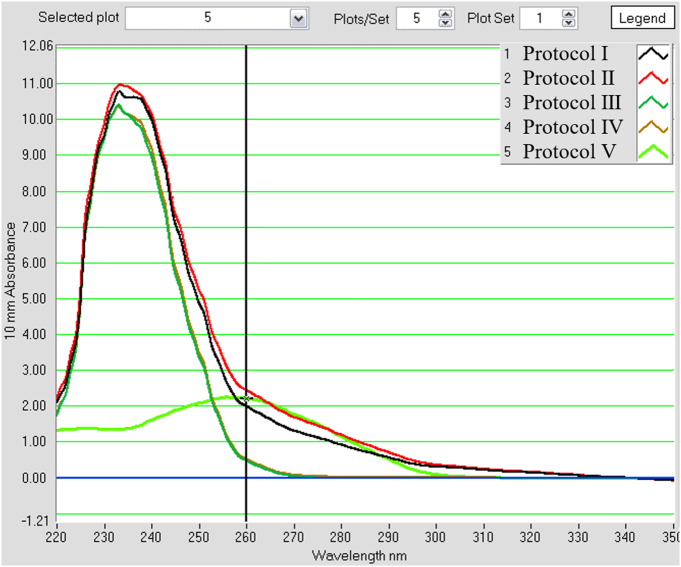
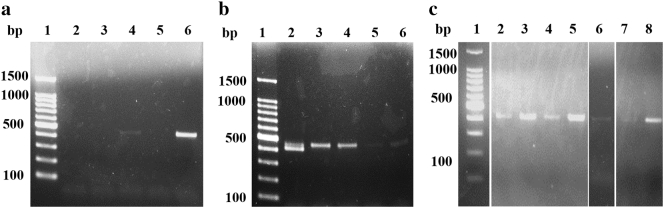
We compared five different crushing/refining methods. Amplification of the gene was confirmed by specific PCR in protocol V where the concentration of in soil (1.0 × 10/g) was the detection limit of PCR.
The soil DNA extraction method following protocol V allows DNA amplification of protozoa, including Amoeba, which is difficult to cultivate, thus simplifying the investigation of protozoa habitats and genetic analyses.
环境样本中的微生物通过依次进行筛选、分离和培养步骤来鉴定,随后对生理特征进行验证并进行形态学分类。从土壤样本中分离和纯化变形虫极其复杂、费力且耗时,并且需要相当专业的知识来进行形态学评估。对土壤DNA进行PCR检测似乎是原生动物栖息地筛选的一种有效手段。在本研究中,我们向土壤中添加了 sp.(MK菌株),并开发了一种从土壤中提取原生动物DNA的方法。
土壤中的硅铝石是一种已知的会抑制PCR反应的DNA吸附物质。在比较了7个土壤样本的土壤性质和硅铝石含量后,我们尝试结合多种细胞破碎和DNA纯化方法,设计一种可用于下游PCR分析的最佳土壤DNA提取方法。
我们比较了五种不同的破碎/提纯方法。在方案V中,通过特异性PCR确认了基因的扩增,其中土壤中 的浓度(1.0×10/g)是PCR的检测限。
遵循方案V的土壤DNA提取方法能够对包括难以培养的变形虫在内的原生动物进行DNA扩增,从而简化了原生动物栖息地调查和遗传分析。